
2026 Nobel Prize in Physiology or Medicine Awarded for Optogenetics Innovations
Why it matters
Optogenetics is poised to transform neuroscience research and clinical applications, potentially leading to breakthroughs in treating conditions like epilepsy and vision loss.
What happened (in 30 seconds)
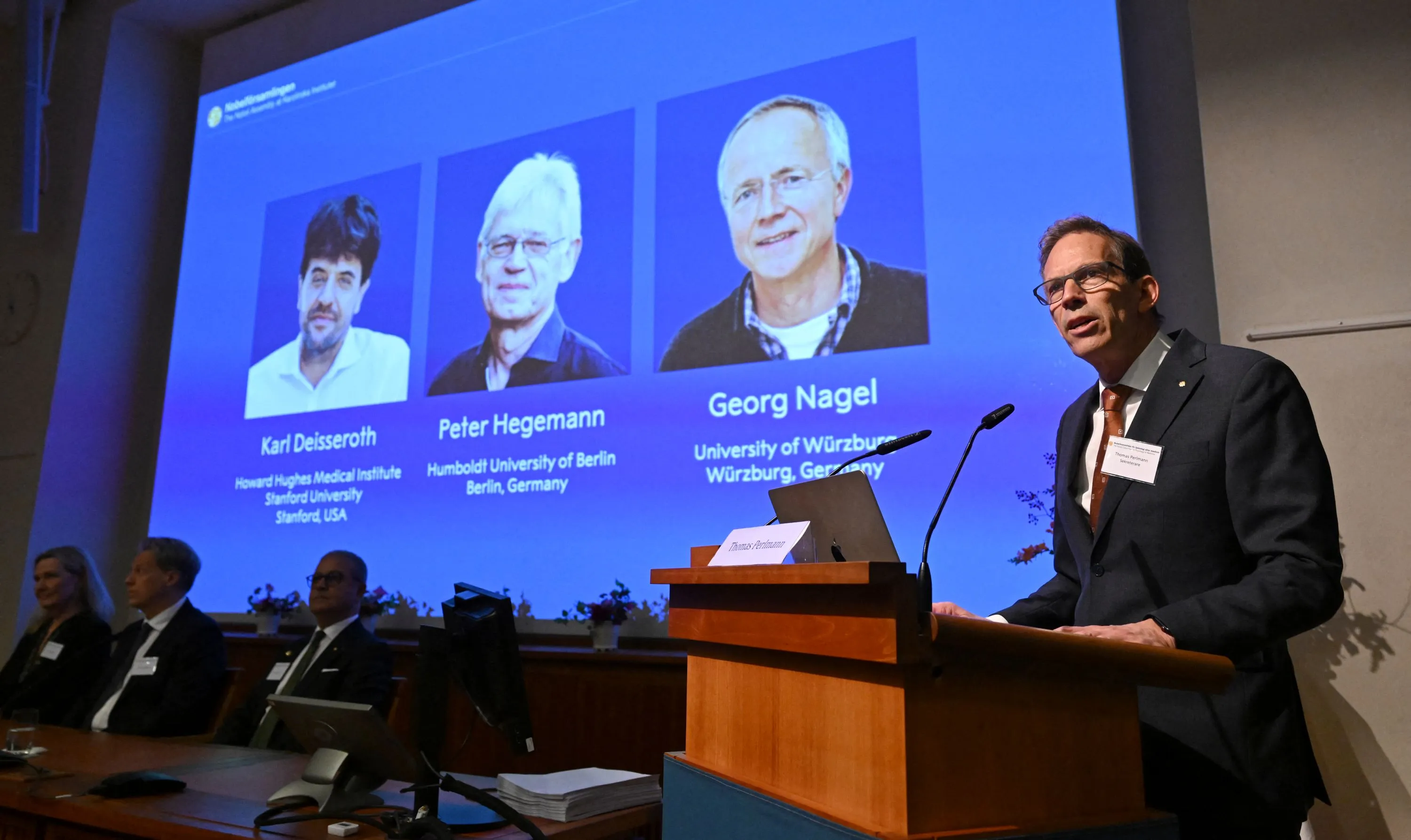
- The 2026 Nobel Prize in Physiology or Medicine was awarded to Karl Deisseroth, Peter Hegemann, and Georg Nagel for their pioneering work in optogenetics.
- Optogenetics allows scientists to control individual neurons with light, enabling precise mapping of brain circuits and understanding of neural activity.
- This technology addresses long-standing challenges in neuroscience, paving the way for new therapies for neurological disorders and enhancing our understanding of brain functions.
The context you actually need
- Prior to optogenetics, neuroscience lacked effective tools for manipulating specific neurons in living brains, limiting causal studies of neural activity.
- Research on the alga Chlamydomonas reinhardtii in the late 20th century led to the discovery of light-sensitive proteins, which became the foundation for optogenetic techniques.
- The term "optogenetics" emerged in 2006, and since then, the field has rapidly expanded, with applications in behavioral studies and potential clinical trials for various neurological conditions.
What's really happening
The 2026 Nobel Prize awarded to Karl Deisseroth, Peter Hegemann, and Georg Nagel marks a significant milestone in neuroscience, recognizing their contributions to the development of optogenetics. This technology, which enables the precise control of neurons using light, has transformed the landscape of neuroscience research. Prior to these discoveries, researchers faced significant limitations in manipulating specific neurons within living brains, which hindered the ability to establish causal relationships in neural activity.
The journey began with the study of the alga Chlamydomonas reinhardtii, where researchers identified light-sensitive proteins that could trigger rapid responses. Hegemann's work in the 1990s hypothesized the existence of light-gated ion channels, leading to the identification of channelrhodopsin genes after the sequencing of the Chlamydomonas genome. This foundational research laid the groundwork for the subsequent breakthroughs in optogenetics.
In 2005, Deisseroth introduced channelrhodopsin-2 (ChR2) into rat neurons, successfully demonstrating light-triggered electrical impulses. This pivotal moment opened the door to a new era of neuroscience, allowing researchers to manipulate neuronal activity with unprecedented precision. The subsequent collaborations among scientists led to the identification of additional opsins, enabling multi-wavelength control of neuronal activity.
The implications of optogenetics are profound. By allowing researchers to switch neurons on and off with light, this technology has shifted the focus from correlational studies to causal investigations in neuroscience. It has facilitated the mapping of brain circuits with millisecond precision, providing insights into memory, emotion, and psychiatric conditions. The rapid global adoption of optogenetics in academic and biotech sectors underscores its significance in advancing our understanding of the brain.
As optogenetics continues to evolve, early clinical trials are exploring its potential applications in treating neurological disorders such as epilepsy, vision restoration, and pain management. The Nobel Assembly's recognition of this technology highlights its role in addressing longstanding challenges in neuroscience and its potential to revolutionize therapeutic approaches.
Who feels it first (and how)
- Neuroscientists: Gain new tools for causal manipulation of neural circuits, enhancing research capabilities.
- Healthcare professionals: May see new treatment options for patients with neurological disorders.
- Biotech companies: Stand to benefit from advancements in optogenetic therapies and related technologies.
- Patients with neurological conditions: Could experience improved treatment outcomes and quality of life through emerging therapies.
What to watch next
- Clinical trial outcomes: Monitor results from ongoing trials exploring optogenetics for vision restoration and epilepsy treatment, as they could lead to new therapies.
- Research publications: Keep an eye on the volume of new studies utilizing optogenetics, as increased citations indicate growing adoption and innovation in the field.
- Biotech investments: Watch for shifts in funding towards companies developing optogenetic technologies, which may signal market confidence in their potential.
Optogenetics has transformed neuroscience research and is being rapidly adopted in academic settings.
Continued expansion of optogenetics into clinical applications will occur, particularly in treating neurological disorders.
The long-term market impact of optogenetics on healthcare costs and patient outcomes remains to be fully understood.
Frequently Asked Questions
- Why it matters?
- Optogenetics is poised to transform neuroscience research and clinical applications, potentially leading to breakthroughs in treating conditions like epilepsy and vision loss.
- What happened (in 30 seconds)?
- The 2026 Nobel Prize in Physiology or Medicine was awarded to Karl Deisseroth, Peter Hegemann, and Georg Nagel for their pioneering work in optogenetics. Optogenetics allows scientists to control individual neurons with light, enabling precise mapping of brain circuits and understanding of neural activity. This technology addresses long-standing challenges in neuroscience, paving the way for new therapies for neurological disorders and enhancing our understanding of brain functions.
- What's really happening?
- The 2026 Nobel Prize awarded to Karl Deisseroth, Peter Hegemann, and Georg Nagel marks a significant milestone in neuroscience, recognizing their contributions to the development of optogenetics. This technology, which enables the precise control of neurons using light, has transformed the landscape of neuroscience research. Prior to these discoveries, researchers faced significant limitations in manipulating specific neurons within living brains, which hindered the ability to establish causal r
- Who feels it first (and how)?
- Neuroscientists: Gain new tools for causal manipulation of neural circuits, enhancing research capabilities. Healthcare professionals: May see new treatment options for patients with neurological disorders. Biotech companies: Stand to benefit from advancements in optogenetic therapies and related technologies. Patients with neurological conditions: Could experience improved treatment outcomes and quality of life through emerging therapies.
- What to watch next?
- Clinical trial outcomes: Monitor results from ongoing trials exploring optogenetics for vision restoration and epilepsy treatment, as they could lead to new therapies. Research publications: Keep an eye on the volume of new studies utilizing optogenetics, as increased citations indicate growing adoption and innovation in the field. Biotech investments: Watch for shifts in funding towards companies developing optogenetic technologies, which may signal market confidence in their potential.
Emerging technologies, digital transformation, IT, and cultural impact of tech.
"WIRED covers the intersection of technology, culture, and politics with a progressive, forward-looking editorial stance."
— A47 Editor
The Science Behind the Nobel-Winning Technology That Controls Neurons With Light
The recent Nobel Prize in Medicine was awarded to Dr. Karl Deisseroth for his pioneering work in optogenetics, a revolutionary technology that uses light to control neurons. This groundbreaking approach has its origins in light-sensitive algae, highl...
Tech, science, and startup news including AI.
"Irish tech outlet covering innovation and AI."
— A47 Editor
Foundational brain researchers win Nobel Prize
Karl Deisseroth, Peter Hegemann, and Georg Nagel have been awarded the 2026 Nobel Prize in Physiology or Medicine for their groundbreaking discoveries related to light-gated ion channels and the development of optogenetics, a technique that allows fo...
Updates on health, medicine, public health policy, and medical research worldwide.
"France 24 is viewed as a globally focused outlet with moderate and balanced editorial coverage, offering a European perspective on international affairs."
— A47 Editor
Switching on brain cells: the Nobel-winning science of optogenetics
The Nobel Prize in Medicine was awarded to US psychiatrist and neurologist Karl Deisseroth, alongside German scientists Peter Hegemann and Georg Nagel, for their groundbreaking work in optogenetics, a field that allows for the control of neurons thro...
24/7 international news from a French perspective in multiple languages.
"France 24 is viewed as a globally focused outlet with balanced coverage and a European perspective."
— A47 Editor
Switching on brain cells: the Nobel-winning science of optogenetics
The Nobel Prize in Medicine was awarded to US psychiatrist and neurologist Karl Deisseroth, alongside German scientists Peter Hegemann and Georg Nagel, for their groundbreaking work in optogenetics, a field that allows for the control of neurons thro...
Health trends, medical research, and fitness reporting.
"The New York Times is a globally recognized newspaper offering authoritative reporting with a center-left editorial stance."
— A47 Editor
Nobel Prize in Physiology or Medicine Is Awarded for Discoveries in Neuroscience
The Nobel Prize in Physiology or Medicine has been awarded to Karl Deisseroth, Peter Hegemann, and Georg Nagel for their groundbreaking discoveries in neuroscience, specifically their work on light-gated ion channels and the development of optogeneti...
Scientific research, space, environment, and health coverage.
"The New York Times is a globally recognized newspaper offering authoritative reporting with a center-left editorial stance."
— A47 Editor
Nobel Prize in Physiology or Medicine Is Awarded for Discoveries in Neuroscience
The Nobel Prize in Physiology or Medicine has been awarded to Karl Deisseroth, Peter Hegemann, and Georg Nagel for their groundbreaking discoveries in neuroscience, specifically their work on light-gated ion channels and the development of optogeneti...
English-language news from Qatar covering domestic and regional affairs.
"Gulf Times reflects Qatari perspectives on regional developments."
— A47 Editor
US, German scientists win Nobel medicine prize for work on light and brain
American scientist Karl Deisseroth and German researchers Peter Hegemann and Georg Nagel have been awarded the 2026 Nobel Prize in Physiology or Medicine for their pioneering work in optogenetics, a technique that utilizes light to control neuronal a...
International news coverage curated for readers in the UAE and Gulf region.
"Emirates 24|7 world coverage presents global developments through a UAE-facing and Gulf-relevant editorial lens."
— A47 Editor
US and German scientists win Nobel medicine prize for work on light and brain
American scientist Karl Deisseroth and German researchers Peter Hegemann and Georg Nagel were awarded the 2026 Nobel Prize in Physiology or Medicine for their pioneering work in optogenetics, a technique that utilizes light to control individual nerv...
In-depth reporting on tech, policy, and science including AI.
"Respected analysis for technically savvy readers, including AI topics."
— A47 Editor
Controlling the brain with light earns a physiology Nobel
Dr. Karl Deisseroth, a California scientist, has been awarded the Nobel Prize in Medicine for his groundbreaking contributions to optogenetics, a field that utilizes light to control brain activity, which has its origins in light-seeking algae.
In-depth coverage of hardware, software, science, and policy.
"Ars Technica provides expert technology news, hardware reviews, and analysis for a technically savvy audience."
— A47 Editor
Controlling the brain with light earns a physiology Nobel
Dr. Karl Deisseroth, a California scientist, has been awarded the Nobel Prize in Medicine for his groundbreaking contributions to optogenetics, a field that utilizes light to control brain activity, which has its origins in light-seeking algae.
Tech business coverage, major deals, product launches, and Silicon Valley trends.
"WSJ’s tech section offers authoritative reporting on the intersection of technology and business, including exclusive industry analysis."
— A47 Editor
Trio Awarded Nobel Prize in Physiology or Medicine for Neuroscience Discoveries
Karl Deisseroth, Peter Hegemann, and Georg Nagel have been awarded the Nobel Prize in Physiology or Medicine for their groundbreaking research in optogenetics, a field that enables the study of neurological and psychiatric disorders through innovativ...
Health, medicine, wellness, and public health coverage with a UAE angle.
"Emirates 24|7 health coverage leans toward accessible reporting on healthcare updates, medical milestones, and wellness topics."
— A47 Editor
US and German scientists win 2026 Nobel Prize in Medicine for pioneering optogenetics
American scientist Karl Deisseroth and German researchers Peter Hegemann and Georg Nagel have been awarded the 2026 Nobel Prize in Physiology or Medicine for their groundbreaking work in optogenetics, a technique that enables the control of nerve cel...
Science and technology stories including AI.
"Longstanding science magazine with thoughtful AI coverage."
— A47 Editor
2026 Nobel Prize in Physiology or Medicine awarded to Karl Deisseroth, Georg Nagel and Peter Hegemann for work on optogenetics
The 2026 Nobel Prize in Physiology or Medicine has been awarded to Karl Deisseroth, Georg Nagel, and Peter Hegemann for their pioneering work in optogenetics, a technique that utilizes light and genetics to manipulate individual cells. This groundbre...
Scientific research, technology, environment, and society.
"Scientific American is one of the oldest and most authoritative science magazines, known for deep dives into science, technology, and society."
— A47 Editor
2026 Nobel Prize in Physiology or Medicine awarded to Karl Deisseroth, Georg Nagel and Peter Hegemann for work on optogenetics
The 2026 Nobel Prize in Physiology or Medicine has been awarded to Karl Deisseroth, Georg Nagel, and Peter Hegemann for their pioneering work in optogenetics, a technique that utilizes light and genetics to manipulate individual cells. This groundbre...