
Microsoft Announces Multi-Gigawatt Azure Maia AI Chip Deployments Starting 2027
Why it matters
This move signifies a shift in the AI hardware landscape, reducing reliance on third-party GPUs and enhancing service efficiency.
What happened (in 30 seconds)
- Microsoft announced plans to scale its Azure Maia AI chips to multi-gigawatt levels starting in 2027.
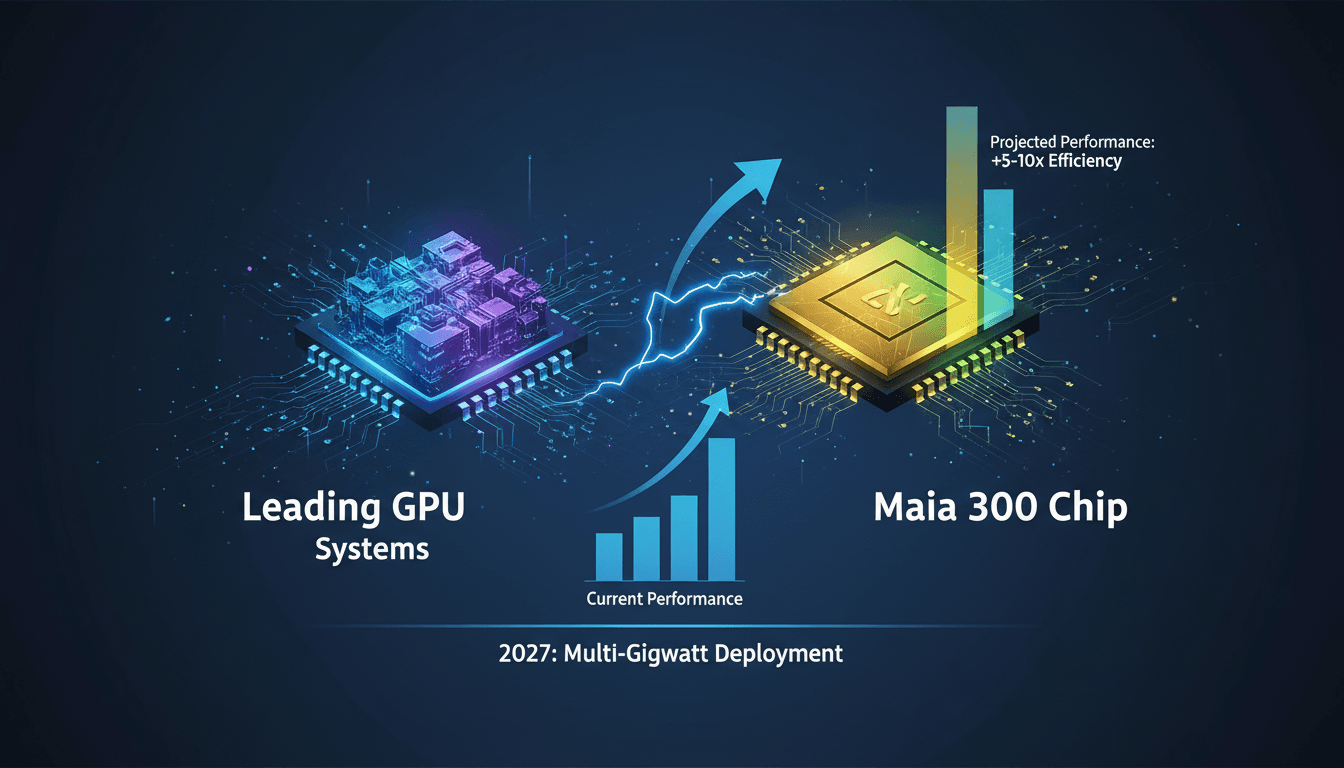
- The Maia 300 chip will feature advanced architecture and is projected to deliver 40% more tokens per megawatt than leading GPU systems.
- This initiative aims to support growing AI workloads and reduce dependence on Nvidia and AMD accelerators.
The context you actually need
- Custom silicon development has become crucial for tech giants like Microsoft to meet surging AI demand and mitigate supply chain constraints.
- The Maia 200 chip, already in production, is currently powering services like Copilot and is set for broader deployment by the end of 2026.
- The partnership with TSMC for chip production is vital, as it will determine the performance and availability of the Maia 300.
What's really happening
On October 12, 2026, Microsoft unveiled its ambitious plans to scale its Azure Maia AI chips to multi-gigawatt levels, marking a significant pivot in its hardware strategy. The Maia family of chips, particularly the upcoming Maia 300, is designed to serve as the backbone for Microsoft’s AI services, including Copilot and various OpenAI models. This shift is not merely about enhancing performance; it’s a strategic move to reduce the company’s long-standing reliance on third-party GPU providers like Nvidia and AMD.
The Maia 300 chip is set to leverage advanced chiplet architecture built on TSMC's N2P process, boasting an impressive 288 GB of HBM4 memory. This configuration is expected to deliver a staggering 40% increase in tokens per megawatt compared to existing GPU systems. Such efficiency gains are crucial as AI workloads continue to expand, necessitating more robust and scalable infrastructure. The projected throughput of up to 7x rack-scale performance positions Microsoft to handle the increasing demands of AI applications effectively.
The implications of this announcement extend beyond just performance metrics. By investing heavily in custom silicon, Microsoft is signaling a broader industry trend toward hyperscaler custom solutions. This shift could lead to significant cost savings for the company and potentially reshape the competitive landscape in the AI hardware market. Analysts have noted that this move could catalyze a transition away from traditional GPU reliance, prompting other tech giants to consider similar strategies.
However, the execution of this plan is not without risks. The partnership with TSMC is critical, as any capacity constraints or performance validation issues could hinder Microsoft’s ambitious rollout. Additionally, the market will be watching closely to see how quickly Microsoft can transition from the Maia 200 to the Maia 300 and whether it can maintain the projected performance improvements.
In summary, Microsoft’s commitment to scaling its Azure Maia AI chips represents a pivotal moment in the tech industry, with potential ripple effects across various sectors reliant on AI technologies. As the company moves forward, its ability to execute this strategy will be closely scrutinized, with implications for both its competitive positioning and the broader market dynamics.
Who feels it first (and how)
- AI Developers: They will experience improved performance and efficiency in applications powered by Microsoft’s AI chips.
- Businesses using Microsoft services: Companies leveraging Azure for AI solutions can expect enhanced capabilities and reduced costs.
- Tech Industry Analysts: They will monitor shifts in the GPU market and the impact of custom silicon on competition.
What to watch next
- Production timelines: Keep an eye on the rollout schedule for Maia 300 and its performance benchmarks.
- Market reactions: Watch how competitors respond to Microsoft’s shift toward custom silicon and any potential innovations they may introduce.
- Partnership developments: Any updates regarding TSMC’s capacity and performance validation will be crucial for Microsoft’s plans.
Microsoft is scaling its Azure Maia AI chips to multi-gigawatt levels starting in 2027.
The shift will reduce reliance on Nvidia and AMD, impacting the AI hardware market.
The execution risks tied to TSMC’s production capacity and performance validation remain uncertain.
Frequently Asked Questions
- Why it matters?
- This move signifies a shift in the AI hardware landscape, reducing reliance on third-party GPUs and enhancing service efficiency.
- What happened (in 30 seconds)?
- Microsoft announced plans to scale its Azure Maia AI chips to multi-gigawatt levels starting in 2027. The Maia 300 chip will feature advanced architecture and is projected to deliver 40% more tokens per megawatt than leading GPU systems. This initiative aims to support growing AI workloads and reduce dependence on Nvidia and AMD accelerators.
- What's really happening?
- On October 12, 2026, Microsoft unveiled its ambitious plans to scale its Azure Maia AI chips to multi-gigawatt levels, marking a significant pivot in its hardware strategy. The Maia family of chips, particularly the upcoming Maia 300, is designed to serve as the backbone for Microsoft’s AI services, including Copilot and various OpenAI models. This shift is not merely about enhancing performance; it’s a strategic move to reduce the company’s long-standing reliance on third-party GPU providers li
- Who feels it first (and how)?
- AI Developers: They will experience improved performance and efficiency in applications powered by Microsoft’s AI chips. Businesses using Microsoft services: Companies leveraging Azure for AI solutions can expect enhanced capabilities and reduced costs. Tech Industry Analysts: They will monitor shifts in the GPU market and the impact of custom silicon on competition.
- What to watch next?
- Production timelines: Keep an eye on the rollout schedule for Maia 300 and its performance benchmarks. Market reactions: Watch how competitors respond to Microsoft’s shift toward custom silicon and any potential innovations they may introduce. Partnership developments: Any updates regarding TSMC’s capacity and performance validation will be crucial for Microsoft’s plans.
Daily AI news: models, tools, and policy.
"Independent outlet tracking the fast pace of AI."
— A47 Editor
Microsoft plans to scale its own Maia AI chips to gigawatt levels by 2027
Microsoft has announced plans to scale its in-house Azure Maia AI chips to gigawatt levels by 2027, positioning them as the primary AI inference system across its products. The Maia 300 is expected to outperform leading GPU systems by delivering 40% ...
Curated tech headlines including AI stories.
"Influential aggregator surfacing the day’s top tech/AI links."
— A47 Editor
Microsoft says Maia 300 racks will hold 96 chips and use ~167 kW of power and plans to roll out "multi-gigawatt deployments" of the chip starting next year (Reuters)
Microsoft has announced the Maia 300, a new generation of custom AI chips that will be housed in racks capable of holding 96 chips each, consuming approximately 167 kW of power. The company plans to initiate multi-gigawatt deployments of these chips ...
Consumer tech news, reviews, and buying guides for gadgets and electronics.
"TechRadar is known for comprehensive buying advice, hardware reviews, and consumer tech news targeted at mainstream audiences."
— A47 Editor
Microsoft unveils Maia 300, its most powerful AI chip yet - and it might make using Teams, Copilot and Cowork much better at last
Microsoft has introduced the Maia 300, its most advanced AI chip, aimed at enhancing the performance of applications like Teams, Copilot, and Cowork. This chip is designed to handle next-generation AI workloads with improved efficiency and power, mar...