
Israeli Ad-Tech Infrastructure Used for Zero-Click Spyware Delivery to Journalists
Why it matters
This incident highlights the vulnerabilities in digital advertising systems that can be exploited for cyber espionage, affecting trust in online platforms.
What happened (in 30 seconds)
- On October 17, 2026, TechRadar disclosed the AdFection campaign, revealing that Israeli ad-tech enabled zero-click spyware delivery.
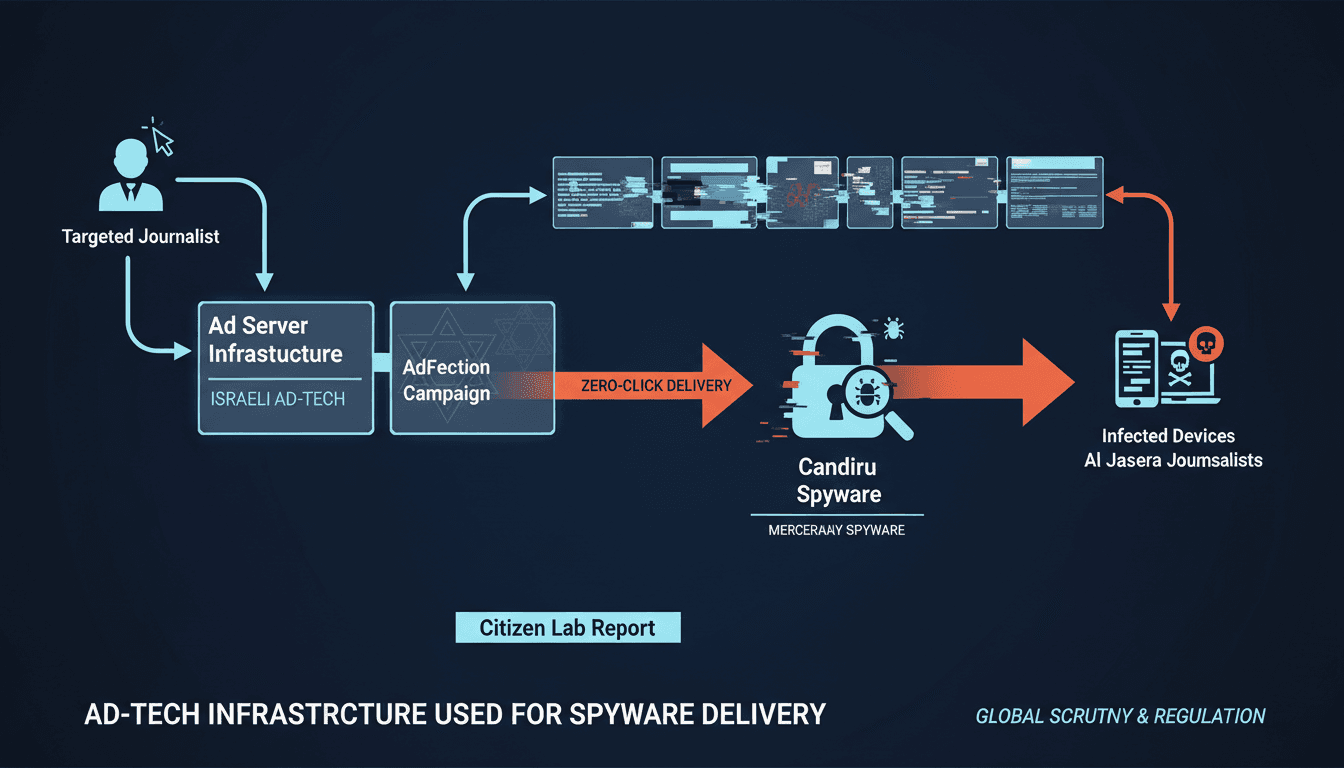
- Citizen Lab identified at least 45 devices belonging to Al Jazeera journalists infected through targeted ads between 2024 and 2025.
- Discover-Tech's platform was implicated in serving ads that executed exploits, allowing data theft without user interaction.
The context you actually need
- Mercenary spyware vendors like Candiru have historically provided surveillance tools to governments, raising concerns about privacy and security.
- Ad-tech advancements have created real-time bidding systems that can profile users extensively, increasing the risk of exploitation.
- The AdFection campaign marks the first documented case of legitimate ad networks being used for spyware delivery, signaling a new frontier in cyber threats.
What's really happening
The AdFection campaign represents a significant evolution in the landscape of cyber espionage, where traditional boundaries between advertising and malicious activity are blurring. The campaign utilized Discover-Tech's demand-side platform, which has been operational since 2020 and was approved by major players like Google and IAB Europe. This platform allowed for the profiling of users at scale, enabling the delivery of targeted ads that contained zero-click exploits.
The spyware, developed by Candiru, was able to infiltrate devices without any user interaction, a method that poses a severe threat to privacy and security. The infections primarily affected Al Jazeera journalists, who reported unusual device behavior, prompting a forensic investigation by Citizen Lab. Their analysis revealed that the ads served through Discover-Tech connected devices to Candiru's command infrastructure, facilitating extensive data exfiltration, including sensitive files, credentials, keystrokes, and even audio and video recordings.
The implications of this campaign extend beyond the immediate infections. It raises critical questions about the integrity of ad networks and the responsibilities of ad-tech companies in safeguarding user data. As the advertising industry faces increased scrutiny, the reputational risks for intermediaries involved in these platforms could lead to a reevaluation of compliance and security measures. The lack of immediate regulatory responses further complicates the landscape, leaving organizations vulnerable to similar attacks.
As the digital advertising ecosystem continues to evolve, the potential for exploitation will likely increase unless robust security measures are implemented. The AdFection campaign serves as a wake-up call for both advertisers and consumers, emphasizing the need for vigilance in an increasingly interconnected world.
Who feels it first (and how)
- Journalists and media organizations: Increased risk of surveillance and data breaches.
- Ad-tech companies: Potential reputational damage and compliance challenges.
- Consumers: Heightened concerns over privacy and data security in online interactions.
What to watch next
- Regulatory responses: Monitor for any new regulations or guidelines from governments regarding ad-tech security. This could reshape industry standards.
- Ad-tech security measures: Watch for enhancements in vetting processes among ad platforms to prevent similar incidents. This will impact how ads are served.
- Emerging spyware technologies: Keep an eye on developments in spyware capabilities and delivery methods, as they may evolve rapidly in response to this incident.
The AdFection campaign successfully infected at least 45 devices belonging to Al Jazeera journalists.
Increased scrutiny and potential regulatory actions in the ad-tech industry following this incident.
The full extent of the impact on other sectors and the long-term implications for digital advertising security.
Frequently Asked Questions
- Why it matters?
- This incident highlights the vulnerabilities in digital advertising systems that can be exploited for cyber espionage, affecting trust in online platforms.
- What happened (in 30 seconds)?
- On October 17, 2026, TechRadar disclosed the AdFection campaign, revealing that Israeli ad-tech enabled zero-click spyware delivery. Citizen Lab identified at least 45 devices belonging to Al Jazeera journalists infected through targeted ads between 2024 and 2025. Discover-Tech's platform was implicated in serving ads that executed exploits, allowing data theft without user interaction.
- What's really happening?
- The AdFection campaign represents a significant evolution in the landscape of cyber espionage, where traditional boundaries between advertising and malicious activity are blurring. The campaign utilized Discover-Tech's demand-side platform, which has been operational since 2020 and was approved by major players like Google and IAB Europe. This platform allowed for the profiling of users at scale, enabling the delivery of targeted ads that contained zero-click exploits. The spyware, developed by
- Who feels it first (and how)?
- Journalists and media organizations: Increased risk of surveillance and data breaches. Ad-tech companies: Potential reputational damage and compliance challenges. Consumers: Heightened concerns over privacy and data security in online interactions.
- What to watch next?
- Regulatory responses: Monitor for any new regulations or guidelines from governments regarding ad-tech security. This could reshape industry standards. Ad-tech security measures: Watch for enhancements in vetting processes among ad platforms to prevent similar incidents. This will impact how ads are served. Emerging spyware technologies: Keep an eye on developments in spyware capabilities and delivery methods, as they may evolve rapidly in response to this incident.
Consumer tech news, reviews, and buying guides for gadgets and electronics.
"TechRadar is known for comprehensive buying advice, hardware reviews, and consumer tech news targeted at mainstream audiences."
— A47 Editor
Just when we thought targeted ads couldn't get any worse, these were found serving malware
Al Jazeera journalists were infected, but the number of victims could be a lot bigger. null
Global news coverage with extensive reporting on Middle Eastern conflicts and geopolitics.
"Al Jazeera is a Qatar-based broadcaster known for wide regional coverage and alternative perspectives."
— A47 Editor
How Israeli spyware used ‘zero click’ hack on Al Jazeera staff
In 2024, Israeli spyware firms successfully hacked into the devices of Al Jazeera staff using a new method known as 'adfection,' which allows for a 'zero-click' exploit that does not require user interaction. This technique has raised serious concern...
Comprehensive coverage of Middle Eastern and global issues.
"Al Jazeera is a prominent voice from the Global South, especially the Middle East, with an emphasis on underreported stories."
— A47 Editor
How Israeli spyware used ‘zero click’ hack on Al Jazeera staff
In 2024, Israeli spyware firms successfully hacked into the devices of Al Jazeera staff using a new method known as 'adfection,' which allows for a 'zero-click' exploit that does not require user interaction. This technique has raised serious concern...
Global news coverage with extensive reporting on Middle Eastern conflicts and geopolitics.
"Al Jazeera is a Qatar-based broadcaster known for wide regional coverage and alternative perspectives."
— A47 Editor
Israeli ‘ad’ firm helped infect spyware into Al Jazeera devices
An Israeli advertising firm has been implicated in the infiltration of spyware into the devices of journalists at Al Jazeera, raising significant concerns about digital security and press freedom. This spyware, disguised as a digital advertisement, h...
Comprehensive coverage of Middle Eastern and global issues.
"Al Jazeera is a prominent voice from the Global South, especially the Middle East, with an emphasis on underreported stories."
— A47 Editor
Israeli ‘ad’ firm helped infect spyware into Al Jazeera devices
An Israeli advertising firm has been implicated in the infiltration of spyware into the devices of journalists at Al Jazeera, raising significant concerns about digital security and press freedom. This spyware, disguised as a digital advertisement, h...
Startup news with frequent AI coverage.
"Covers launches, funding, and product updates in AI."
— A47 Editor
Governments are hacking people with ‘zero-click’ spyware by showing them online ads
A recent investigation by a digital rights unit revealed that numerous devices belonging to the media organization Al Jazeera were compromised through malicious online advertisements, highlighting the use of 'zero-click' spyware by governments.