
Israeli Firm Discover-Tech Allegedly Used Online Ads for Global Surveillance and Spyware Delivery
Why it matters
The intersection of advertising technology and surveillance poses significant risks to user privacy and trust in digital platforms.
What happened (in 30 seconds)
- Investigations revealed that Israeli firm Discover-Tech allegedly used online ads for global surveillance and spyware delivery.
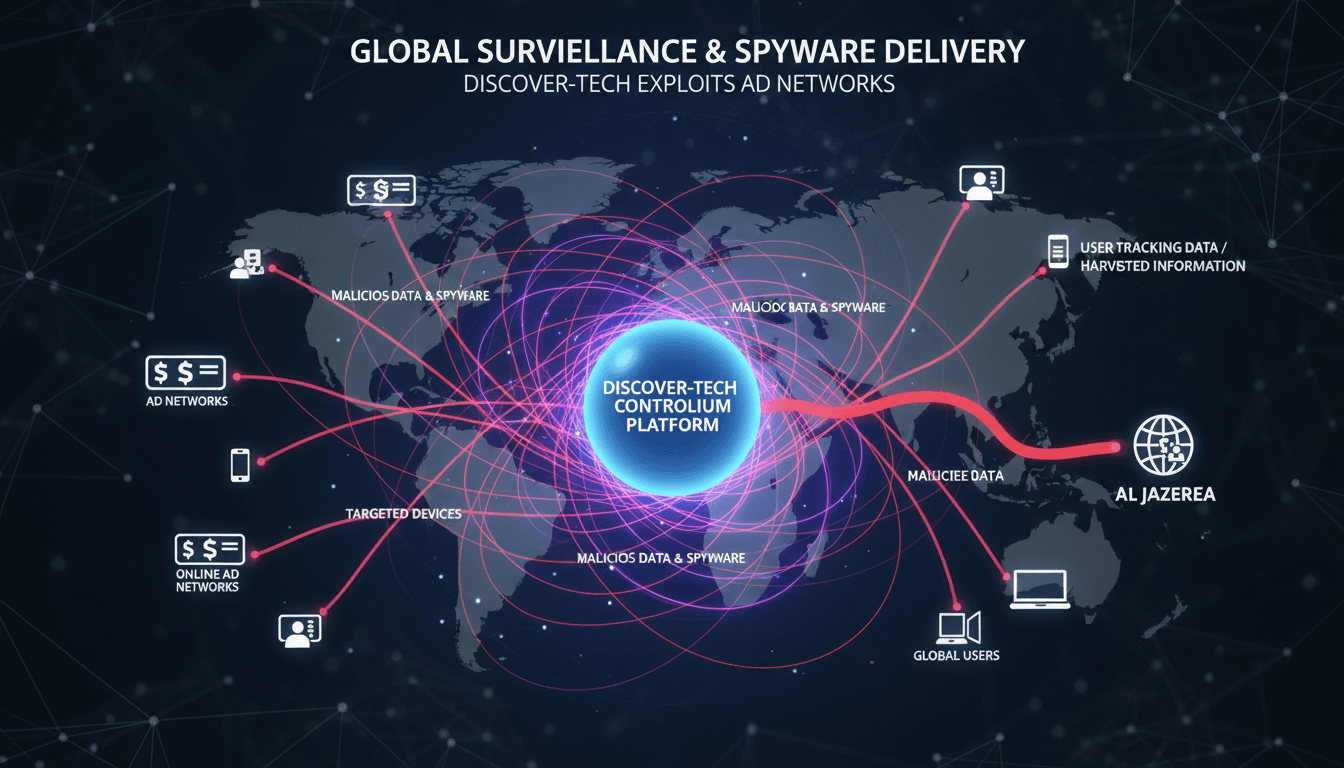
- The Controlium platform reportedly facilitated data harvesting and zero-click spyware deployment, affecting devices at Al Jazeera and beyond.
- Major ad platforms like Google and IAB Europe have suspended Discover-Tech following these revelations.
The context you actually need
- The adtech ecosystem has evolved to enable real-time bidding and extensive data sharing, creating vulnerabilities that can be exploited for surveillance.
- Mercenary spyware has become a lucrative market, with firms like Candiru providing tools for state actors, raising ethical concerns about their use.
- Previous reports have highlighted the risks associated with ad intelligence tools, which can be integrated into spyware delivery mechanisms.
What's really happening
Discover-Tech, founded in 2020, positioned itself as a legitimate advertising agency while allegedly operating the Controlium system to convert ad auctions into surveillance tools. Between March and June 2026, its ads appeared across nearly 200,000 websites and apps, enabling the harvesting of user fingerprints, cookies, and identifiers. This extensive reach allowed Discover-Tech to serve approximately 10 million ad impressions daily, tracking hundreds of millions of users globally.
The reports published on October 15, 2026, by Citizen Lab and Confiant detailed how Discover-Tech's operations facilitated the delivery of Candiru spyware through a method dubbed "AdFection." This zero-click delivery mechanism was confirmed to have infected 45 devices at Al Jazeera, a significant media outlet, raising alarms about press freedom and the integrity of information dissemination.
The implications of this operation extend beyond individual privacy concerns; they highlight systemic vulnerabilities within the adtech ecosystem. The integration of spyware delivery mechanisms into advertising platforms creates a dual-use technology scenario where legitimate business practices can be weaponized for surveillance. This raises ethical questions about the responsibilities of adtech firms and the need for stricter regulations to protect user data.
As the investigations unfolded, major advertising platforms took immediate action. Google removed Discover-Tech from its ad services, and IAB Europe suspended its status, reflecting a growing awareness of the risks associated with adtech vulnerabilities. However, the lack of public responses from Discover-Tech or Candiru indicates a potential cover-up or denial of the allegations, which could further erode trust in digital advertising.
The broader industry discussions that have emerged from this incident underscore the urgent need for enhanced security measures and transparency in the adtech sector. As digital advertising continues to evolve, stakeholders must grapple with the balance between innovation and user privacy, ensuring that the tools designed for marketing do not become instruments of surveillance.
Who feels it first (and how)
- Digital advertisers: Increased scrutiny and potential loss of trust from consumers.
- Media organizations: Heightened concerns over press freedom and data security.
- Consumers: Growing awareness of privacy risks associated with online advertising.
- Regulatory bodies: Pressure to implement stricter regulations on adtech practices.
What to watch next
- Regulatory responses: Monitor for potential new regulations targeting adtech firms and surveillance practices, which could reshape the industry landscape.
- Public sentiment: Watch for shifts in consumer trust towards digital advertising platforms, which may impact advertising effectiveness.
- Industry standards: Look for the emergence of new security standards in adtech to prevent similar incidents in the future.
Discover-Tech allegedly used ad networks for surveillance and spyware delivery.
Increased regulatory scrutiny and potential changes in adtech practices.
The long-term impact on consumer trust and the effectiveness of digital advertising.
Frequently Asked Questions
- Why it matters?
- The intersection of advertising technology and surveillance poses significant risks to user privacy and trust in digital platforms.
- What happened (in 30 seconds)?
- Investigations revealed that Israeli firm Discover-Tech allegedly used online ads for global surveillance and spyware delivery. The Controlium platform reportedly facilitated data harvesting and zero-click spyware deployment, affecting devices at Al Jazeera and beyond. Major ad platforms like Google and IAB Europe have suspended Discover-Tech following these revelations.
- What's really happening?
- Discover-Tech, founded in 2020, positioned itself as a legitimate advertising agency while allegedly operating the Controlium system to convert ad auctions into surveillance tools. Between March and June 2026, its ads appeared across nearly 200,000 websites and apps, enabling the harvesting of user fingerprints, cookies, and identifiers. This extensive reach allowed Discover-Tech to serve approximately 10 million ad impressions daily, tracking hundreds of millions of users globally. The reports
- Who feels it first (and how)?
- Digital advertisers: Increased scrutiny and potential loss of trust from consumers. Media organizations: Heightened concerns over press freedom and data security. Consumers: Growing awareness of privacy risks associated with online advertising. Regulatory bodies: Pressure to implement stricter regulations on adtech practices.
- What to watch next?
- Regulatory responses: Monitor for potential new regulations targeting adtech firms and surveillance practices, which could reshape the industry landscape. Public sentiment: Watch for shifts in consumer trust towards digital advertising platforms, which may impact advertising effectiveness. Industry standards: Look for the emergence of new security standards in adtech to prevent similar incidents in the future.
RT is a Russian state-funded network covering global events from a Russian perspective.
"RT is widely criticized for promoting pro-Kremlin narratives and is considered by many to be a state propaganda outlet."
— A47 Editor
Wired for War: Israeli firm ran global surveillance operation through online ads, investigation finds
An investigation has revealed that the Israeli firm Discover-Tech conducted a global surveillance operation by exploiting digital advertising infrastructure to track targets and deliver spyware. This operation reportedly utilized online ads to deploy...
Arabic tech news covering startups, apps, AI, and gadgets.
"AITnews is a well-known Arabic technology outlet covering regional tech developments."
— A47 Editor
اختراق دون نقرات.. شركة إسرائيلية تخترق الأجهزة بصمت بالإعلانات الرقمية
A joint security investigation has revealed that an Israeli company specializing in digital advertising has collaborated with spyware firms to silently infiltrate user devices through targeted online ads, marking a significant breach that does not re...
English-language digital publication covering business, politics, technology, and current affairs.
"The Arabian Post mixes original and syndicated-style coverage with a broad regional and global business-news orientation."
— A47 Editor
Israeli advertising firm linked to global spyware campaign
An Israeli advertising company, Discover-Tech, has been linked to a global spyware campaign that uses online advertisements to track users and facilitate spyware infections, potentially affecting hundreds of millions worldwide. Investigations by the ...
UAE-based English-language newspaper covering regional politics, economics, and global affairs.
"The National reflects Emirati policy perspectives while maintaining international editorial standards."
— A47 Editor
Israeli company used online ads to run spy operation against 'hundreds of millions of people'
An Israeli company has reportedly utilized online advertisements to conduct a spy operation targeting hundreds of millions of individuals worldwide. This operation raises significant concerns regarding privacy and the ethical implications of using di...
UK and international business news, economics, and corporate coverage.
"The Guardian’s business section covers finance and markets with a progressive editorial tone."
— A47 Editor
Online ads weaponised to deliver ‘zero-click’ spyware, researchers say
Researchers from the University of Toronto's Citizen Lab have reported that the Israeli advertising agency Discover-Tech has been using online advertisements to deliver 'zero-click' spyware, potentially compromising devices at the Qatari broadcaster ...
Top international stories selected by The Guardian editors.
"The Guardian is known for its progressive editorial stance and in-depth analysis."
— A47 Editor
Online ads weaponised to deliver ‘zero-click’ spyware, researchers say
Researchers from the University of Toronto's Citizen Lab have reported that the Israeli advertising agency Discover-Tech has been using online advertisements to deliver 'zero-click' spyware, potentially compromising devices at the Qatari broadcaster ...
Tech culture, product news, and critical takes on the tech industry's social impact.
"The Guardian's tech coverage blends mainstream news, critical analysis, and cultural commentary on emerging technologies and digital trends."
— A47 Editor
Online ads weaponised to deliver ‘zero-click’ spyware, researchers say
Researchers from the University of Toronto's Citizen Lab have reported that the Israeli advertising agency Discover-Tech has been using online advertisements to deliver 'zero-click' spyware, potentially compromising devices at the Qatari broadcaster ...