
Expansion of AI Surveillance in UK Workplaces Raises Employee Concerns
Why it matters
The rise of AI monitoring tools reflects a significant shift in workplace dynamics, impacting employee trust and productivity across sectors.
What happened (in 30 seconds)
- The Guardian reported on October 15, 2026, detailing the rise of AI surveillance in UK workplaces, particularly in legal services and customer support.
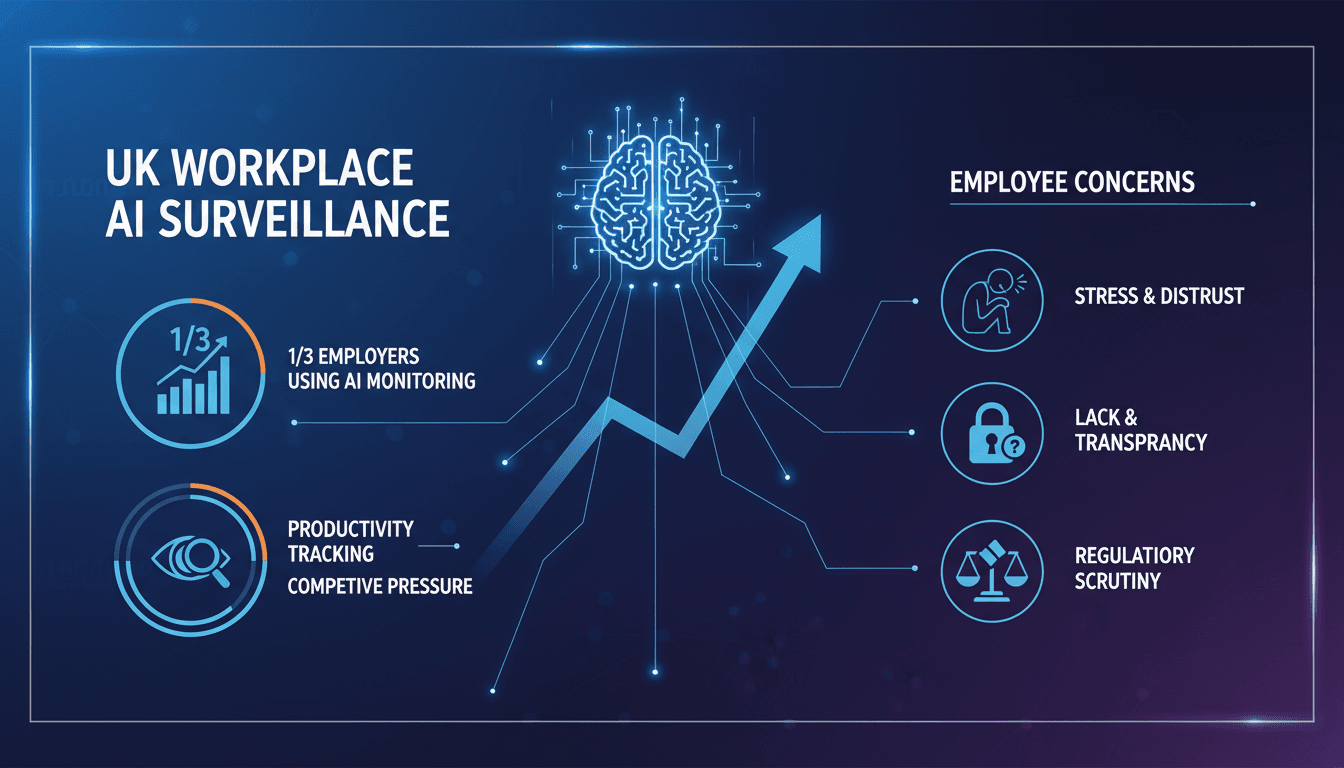
- One third of UK employers are now using bossware technology to monitor employees' online activities, raising concerns about stress and counterproductive outcomes.
- Whistleblowers have criticized these systems as oppressive, leading to calls for regulatory disclosure of AI monitoring practices.
The context you actually need
- Workplace monitoring has evolved from simple output targets to sophisticated AI systems that analyze employee behavior in real-time.
- Co-op Legal Services has implemented AI models to score customer interactions, exemplifying the trend toward algorithmic management.
- Experts warn that constant monitoring can lead to increased employee stress and a toxic work environment, countering the intended productivity gains.
What's really happening
The October 15, 2026, report from The Guardian highlights a growing trend in the UK where employers are increasingly adopting AI-enhanced bossware to monitor employee activities. This shift is driven by a desire to boost productivity and ensure accountability in a competitive job market. The technology allows employers to analyze vast amounts of data, including call content, keystrokes, and behavioral metrics, in real-time.
Historically, workplace monitoring focused on output targets, but the introduction of AI has transformed this landscape. Companies like Co-op Legal Services have begun using AI to evaluate customer interactions, which has raised ethical concerns among employees. Whistleblowers have described these systems as dystopian, citing the oppressive nature of constant surveillance and the erosion of trust between employers and employees.
The implications of this trend are significant. While employers may see short-term productivity gains, the long-term effects on employee morale and mental health could be detrimental. Experts have pointed out that heightened stress levels can lead to burnout, decreased job satisfaction, and ultimately, higher turnover rates. This creates a paradox where the very tools designed to enhance productivity may end up undermining it.
Moreover, the use of AI in monitoring raises questions about privacy and consent. Employees may feel uncomfortable knowing they are being watched at all times, leading to a culture of distrust. As a result, there are increasing calls for regulatory frameworks to ensure transparency in AI monitoring practices. Advocates argue that employees should be informed about the extent of surveillance and have a say in how their data is used.
In summary, while AI-enhanced bossware may offer immediate benefits to employers, the potential for negative consequences on employee well-being and workplace culture cannot be overlooked. As this trend continues to evolve, it will be essential for both employers and employees to navigate the complexities of AI surveillance thoughtfully.
Who feels it first (and how)
- Employees in legal services: Facing real-time monitoring of interactions, leading to stress and anxiety.
- Customer support staff: Constant evaluation of performance metrics can create a high-pressure environment.
- HR professionals: Tasked with managing the fallout from employee dissatisfaction and potential turnover.
- Regulatory bodies: Under pressure to establish guidelines for ethical AI use in workplaces.
What to watch next
- Regulatory developments: Keep an eye on potential legislation aimed at governing AI surveillance practices in the workplace, as this could reshape employer-employee dynamics.
- Employee advocacy movements: Watch for increased organization among workers pushing back against invasive monitoring practices, which may lead to significant policy changes.
- Technological advancements: Monitor how AI tools evolve and whether they incorporate features that prioritize employee well-being alongside productivity metrics.
AI surveillance is being widely adopted in various sectors, with one third of UK employers currently using bossware technology.
Increased scrutiny and calls for regulation around AI monitoring practices will continue to grow as employee concerns mount.
The long-term effects of AI surveillance on workplace culture and employee retention remain to be fully understood.
Frequently Asked Questions
- Why it matters?
- The rise of AI monitoring tools reflects a significant shift in workplace dynamics, impacting employee trust and productivity across sectors.
- What happened (in 30 seconds)?
- The Guardian reported on October 15, 2026, detailing the rise of AI surveillance in UK workplaces, particularly in legal services and customer support. One third of UK employers are now using bossware technology to monitor employees' online activities, raising concerns about stress and counterproductive outcomes. Whistleblowers have criticized these systems as oppressive, leading to calls for regulatory disclosure of AI monitoring practices.
- What's really happening?
- The October 15, 2026, report from The Guardian highlights a growing trend in the UK where employers are increasingly adopting AI-enhanced bossware to monitor employee activities. This shift is driven by a desire to boost productivity and ensure accountability in a competitive job market. The technology allows employers to analyze vast amounts of data, including call content, keystrokes, and behavioral metrics, in real-time. Historically, workplace monitoring focused on output targets, but the
- Who feels it first (and how)?
- Employees in legal services: Facing real-time monitoring of interactions, leading to stress and anxiety. Customer support staff: Constant evaluation of performance metrics can create a high-pressure environment. HR professionals: Tasked with managing the fallout from employee dissatisfaction and potential turnover. Regulatory bodies: Under pressure to establish guidelines for ethical AI use in workplaces.
- What to watch next?
- Regulatory developments: Keep an eye on potential legislation aimed at governing AI surveillance practices in the workplace, as this could reshape employer-employee dynamics. Employee advocacy movements: Watch for increased organization among workers pushing back against invasive monitoring practices, which may lead to significant policy changes. Technological advancements: Monitor how AI tools evolve and whether they incorporate features that prioritize employee well-being alongside productivit
Reports on science policy, discoveries, and public debate in the scientific realm.
"The Guardian’s science section is known for thoughtful and critical reporting on global research, ethics, and public understanding of science."
— A47 Editor
Is your boss watching you? The rise of AI surveillance at work - video
The rise of AI surveillance in the workplace is transforming how employers monitor employee productivity, moving from traditional output targets to advanced software that provides detailed activity reports. This shift is being discussed by UK technol...
News and features on AI from The Guardian.
"Progressive-leaning international outlet with critical AI coverage."
— A47 Editor
Is your boss watching you? The rise of AI surveillance at work - video
The rise of AI surveillance in the workplace is transforming how employers monitor employee productivity, moving from traditional output targets to advanced software that provides detailed activity reports. This shift is being discussed by UK technol...
UK and international business news, economics, and corporate coverage.
"The Guardian’s business section covers finance and markets with a progressive editorial tone."
— A47 Editor
Is your boss watching you? The rise of AI surveillance at work - video
The rise of AI surveillance in the workplace is transforming how employers monitor employee productivity, moving from traditional output targets to advanced software that provides detailed activity reports. This shift is being discussed by UK technol...
Reports on science policy, discoveries, and public debate in the scientific realm.
"The Guardian’s science section is known for thoughtful and critical reporting on global research, ethics, and public understanding of science."
— A47 Editor
Is your boss watching you? The rise of AI surveillance at work – podcast
The rise of AI surveillance in workplaces is reshaping how employees are monitored, with systems now capable of providing detailed, real-time accounts of productivity. Ian Sample discusses this trend with technology editor Robert Booth, highlighting ...
Tech culture, product news, and critical takes on the tech industry's social impact.
"The Guardian's tech coverage blends mainstream news, critical analysis, and cultural commentary on emerging technologies and digital trends."
— A47 Editor
Is your boss watching you? The rise of AI surveillance at work – podcast
The rise of AI surveillance in workplaces is reshaping how employees are monitored, with systems now capable of providing detailed, real-time accounts of productivity. Ian Sample discusses this trend with technology editor Robert Booth, highlighting ...
News and features on AI from The Guardian.
"Progressive-leaning international outlet with critical AI coverage."
— A47 Editor
Is your boss watching you? The rise of AI surveillance at work – podcast
The rise of AI surveillance in workplaces is reshaping how employees are monitored, with systems now capable of providing detailed, real-time accounts of productivity. Ian Sample discusses this trend with technology editor Robert Booth, highlighting ...
News and features on AI from The Guardian.
"Progressive-leaning international outlet with critical AI coverage."
— A47 Editor
Employees all over the world find themselves monitored by AI at work
The Co-op, a British consumer cooperative, has implemented AI surveillance technology in its Legal Services division, monitoring staff interactions with customers regarding probate, wills, and estates. This move has raised concerns among employees ab...