
YouTube Music Introduces AI-Generated Track Disclosure Labels
Why it matters
This move reflects a growing demand for transparency in the music industry as AI-generated content proliferates.
What happened (in 30 seconds)
- YouTube Music began rolling out labels for AI-generated songs on October 14, 2026.
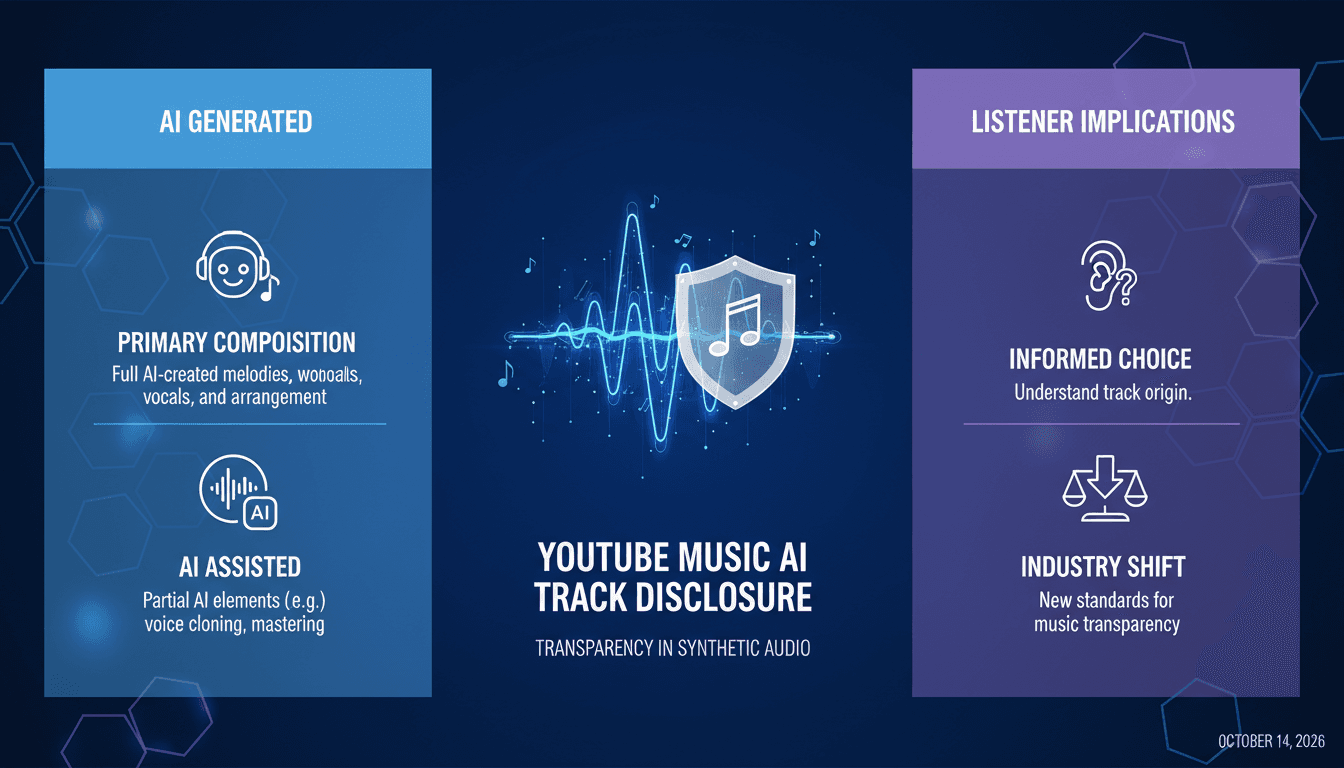
- Tracks are categorized as Fully Gen AI, Partly Gen AI, or No Gen AI based on partner submissions and internal detection.
- Disclosure labels do not affect recommendation algorithms or monetization eligibility.
The context you actually need
- Generative AI tools have led to a surge in synthetic music, with platforms like Deezer reporting 90,000 fully AI-generated tracks daily.
- Listener feedback indicates a preference for transparency regarding the origins of music, without restricting access to AI-generated content.
- Competing platforms have adopted varied approaches, with some excluding AI tracks from playlists while YouTube emphasizes disclosure without restrictions.
What's really happening
On October 14, 2026, YouTube Music initiated a significant update by introducing labels for tracks primarily generated by AI. This decision comes in response to the rapid increase in synthetic audio content, which has raised concerns among listeners about the authenticity of the music they consume. The platform's labeling system categorizes tracks into three distinct groups: Fully Gen AI, Partly Gen AI, and No Gen AI. These classifications are based on metadata submitted by music partners through DDEX or CSV feeds, supplemented by YouTube's internal detection tools.
The labels are prominently displayed on the player interface, allowing users to easily identify the level of AI involvement in a track. For instance, if a song is classified as Fully Gen AI, it indicates that the composition, vocals, or other significant elements were created using generative AI tools. Conversely, tracks labeled as No Gen AI are produced using traditional methods, including routine production tools like Auto-Tune, which do not qualify for AI labeling.
This initiative aligns with YouTube's existing video labeling practices, ensuring consistency across its platforms. Importantly, the introduction of these labels does not impose new filtering or monetization restrictions on AI-generated content, distinguishing YouTube's approach from competitors like Deezer and Tidal. Deezer has opted to exclude detected AI tracks from its playlists, while Tidal has restricted royalty eligibility for wholly AI-generated recordings. YouTube's strategy emphasizes transparency and user choice, allowing listeners to make informed decisions without limiting access to AI-generated music.
As the music industry grapples with the implications of generative AI, YouTube's labeling system represents a proactive step towards addressing listener concerns. By providing clear information about the origins of tracks, YouTube aims to foster trust and engagement among its user base. This move is particularly relevant in an era where the lines between human and machine-generated content are increasingly blurred, and listeners are seeking clarity in their music consumption.
Who feels it first (and how)
- Music listeners: Gain transparency about the origins of the tracks they enjoy.
- Artists and producers: May need to adapt their marketing strategies based on AI labeling.
- Streaming platforms: Compete for user trust and engagement through differing approaches to AI content.
What to watch next
- User engagement metrics: Monitor how listeners respond to AI labels and whether it affects their listening habits.
- Industry standards: Watch for potential shifts in labeling practices across other streaming platforms as they react to YouTube's move.
- Regulatory developments: Keep an eye on any governmental responses or regulations regarding AI-generated content in the music industry.
YouTube Music has implemented AI labels for tracks.
Other streaming platforms may adopt similar labeling practices in response to user demand.
The long-term impact of AI labeling on listener preferences and industry standards remains to be seen.
Frequently Asked Questions
- Why it matters?
- This move reflects a growing demand for transparency in the music industry as AI-generated content proliferates.
- What happened (in 30 seconds)?
- YouTube Music began rolling out labels for AI-generated songs on October 14, 2026. Tracks are categorized as Fully Gen AI, Partly Gen AI, or No Gen AI based on partner submissions and internal detection. Disclosure labels do not affect recommendation algorithms or monetization eligibility.
- What's really happening?
- On October 14, 2026, YouTube Music initiated a significant update by introducing labels for tracks primarily generated by AI. This decision comes in response to the rapid increase in synthetic audio content, which has raised concerns among listeners about the authenticity of the music they consume. The platform's labeling system categorizes tracks into three distinct groups: Fully Gen AI, Partly Gen AI, and No Gen AI. These classifications are based on metadata submitted by music partners throug
- Who feels it first (and how)?
- Music listeners: Gain transparency about the origins of the tracks they enjoy. Artists and producers: May need to adapt their marketing strategies based on AI labeling. Streaming platforms: Compete for user trust and engagement through differing approaches to AI content.
- What to watch next?
- User engagement metrics: Monitor how listeners respond to AI labels and whether it affects their listening habits. Industry standards: Watch for potential shifts in labeling practices across other streaming platforms as they react to YouTube's move. Regulatory developments: Keep an eye on any governmental responses or regulations regarding AI-generated content in the music industry.
News and guidance for IT pros on AI adoption.
"Enterprise-focused tips, explainers, and news for professionals."
— A47 Editor
YouTube Music Rolls Out Labels for AI-Generated Songs
YouTube Music has announced the rollout of labels for songs generated by artificial intelligence (AI), aimed at enhancing transparency for users regarding the origins of the music they consume. This initiative is part of a broader trend in the music ...
Consumer tech news, reviews, and buying guides for gadgets and electronics.
"TechRadar is known for comprehensive buying advice, hardware reviews, and consumer tech news targeted at mainstream audiences."
— A47 Editor
YouTube Music and Deezer reveal plans to stem tidal wave of AI music
YouTube Music and Deezer have announced initiatives to label and exclude AI-generated music from their platforms, responding to growing concerns over the authenticity and quality of music available to users. This move aims to enhance user experience ...
Curated tech headlines including AI stories.
"Influential aggregator surfacing the day’s top tech/AI links."
— A47 Editor
YouTube Music rolls out labels for songs created with the help of AI; Spotify has AI labels, and Apple Music plans to add "Made With AI" labels later this year (Lauren Forristal/TechCrunch)
YouTube Music has launched a new labeling system to identify songs created with the assistance of artificial intelligence (AI), enhancing transparency for users regarding the origins of the music they consume. This initiative comes as AI-generated mu...
Startup news with frequent AI coverage.
"Covers launches, funding, and product updates in AI."
— A47 Editor
YouTube Music launches new labels as AI-generated music floods streaming platforms
YouTube Music has launched new labels to identify songs that are either entirely or partially generated by artificial intelligence (AI), enhancing user awareness of the origins of the music they listen to. This initiative is part of a broader trend i...