
YouTube Music Introduces AI-Generated Track Disclosure Labels
Why it matters
The introduction of AI track labels on YouTube Music reflects a broader industry shift towards transparency in music production.
What happened (in 30 seconds)
- YouTube Music began rolling out labels for AI-generated songs on October 14, 2026.
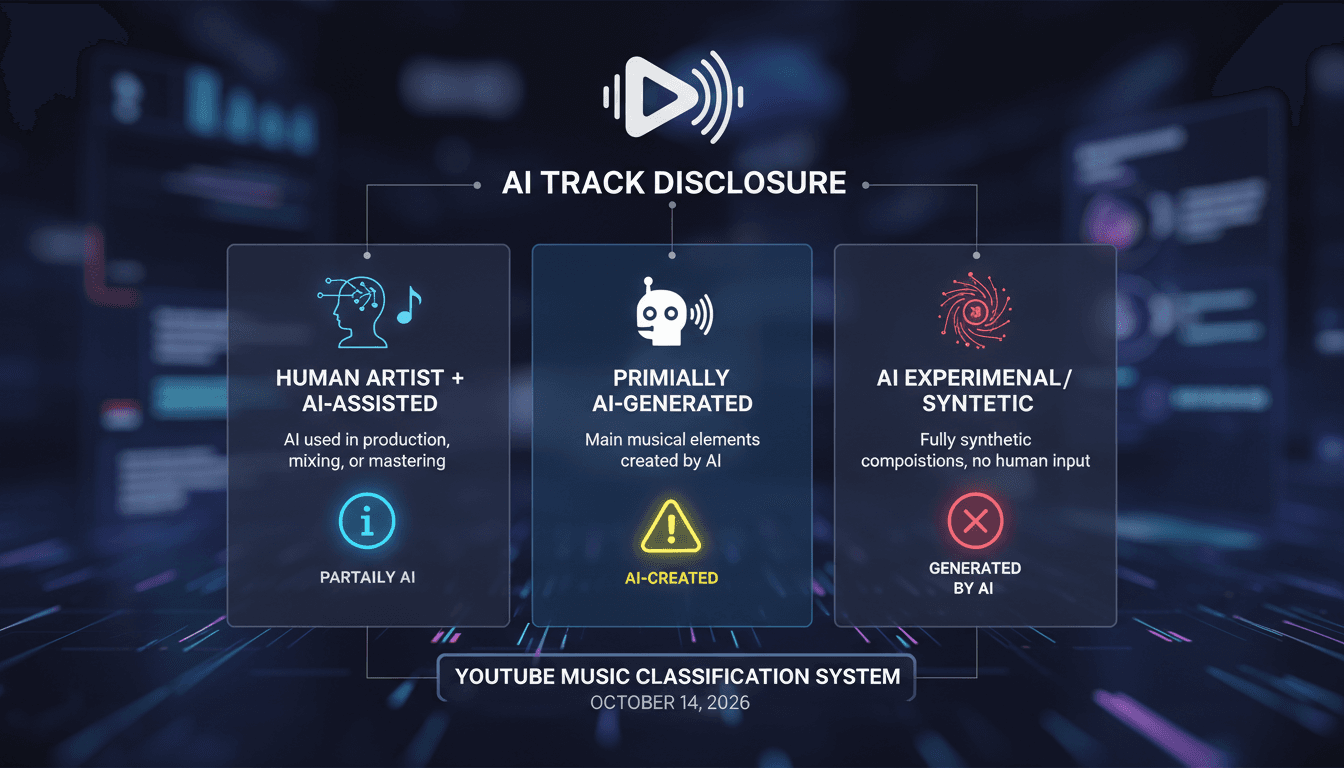
- Tracks are classified into three categories: Fully Gen AI, Partly Gen AI, or No Gen AI.
- This update aims to provide transparency without affecting recommendations or monetization.
The context you actually need
- Generative AI music tools have led to a significant increase in synthetic track uploads, with platforms like Deezer reporting approximately 90,000 fully AI-generated tracks daily as of July 2026.
- Industry responses vary, with some platforms like Deezer and Tidal implementing stricter policies that exclude AI content from recommendations or impose royalty restrictions.
- YouTube Music's approach emphasizes disclosure over content restrictions, allowing listeners to make informed choices while maintaining monetization opportunities for artists.
What's really happening
On October 14, 2026, YouTube Music initiated a significant update by introducing labels for songs primarily created using generative AI tools. This move is a direct response to the growing demand for transparency among listeners who are increasingly encountering synthetic audio content on streaming platforms. The labels are designed to inform users about the extent of AI involvement in the music they consume, with a classification system that includes Fully Gen AI, Partly Gen AI, and No Gen AI.
The classification relies on metadata submitted by music industry partners through DDEX or CSV feeds, supplemented by YouTube's internal detection systems. This dual approach ensures that the labels are accurate and reflect the true nature of the tracks. Notably, routine production aids like Auto-Tune are classified as No Gen AI, distinguishing between traditional production techniques and fully synthetic creations.
This rollout aligns with existing video labeling practices on YouTube, reinforcing the platform's commitment to transparency. By providing this information, YouTube Music aims to empower listeners to make informed decisions about the music they engage with, without imposing penalties on artists for the use of AI in their work. This contrasts sharply with the stricter policies adopted by competitors like Deezer and Tidal, which have opted for exclusionary measures that could limit exposure and revenue for AI-generated content.
The implications of this update extend beyond mere labeling; they signal a shift in how the music industry is adapting to technological advancements. As generative AI tools become more prevalent, the need for clear production disclosures is paramount. This initiative not only addresses listener concerns but also sets a precedent for how other platforms might approach the integration of AI in music production.
As the landscape evolves, YouTube Music's strategy may influence industry standards, prompting other platforms to reconsider their policies regarding AI-generated content. The focus on transparency could lead to a more nuanced understanding of music production, where listeners are better equipped to appreciate the artistry behind both human and AI-generated tracks.
Who feels it first (and how)
- Music listeners: Gain clarity on the origins of tracks, influencing their listening choices.
- Artists and producers: Experience a shift in how their work is categorized and perceived, impacting their marketing strategies.
- Record labels: Must adapt to new labeling standards, affecting how they promote and distribute music.
- Streaming platforms: Face pressure to implement similar transparency measures to remain competitive.
What to watch next
- Adoption rates: Monitor how quickly other platforms implement similar labeling systems, which could reshape industry standards.
- Listener feedback: Pay attention to audience reactions to the labels, as this could influence future updates and features on streaming services.
- Regulatory responses: Watch for any governmental or industry-wide regulations that may arise in response to the growing prevalence of AI in music.
YouTube Music has begun rolling out AI track labels globally.
Other streaming platforms will follow suit with similar transparency measures.
The long-term impact on artist revenue and listener engagement remains to be seen.
Frequently Asked Questions
- Why it matters?
- The introduction of AI track labels on YouTube Music reflects a broader industry shift towards transparency in music production.
- What happened (in 30 seconds)?
- YouTube Music began rolling out labels for AI-generated songs on October 14, 2026. Tracks are classified into three categories: Fully Gen AI, Partly Gen AI, or No Gen AI. This update aims to provide transparency without affecting recommendations or monetization.
- What's really happening?
- On October 14, 2026, YouTube Music initiated a significant update by introducing labels for songs primarily created using generative AI tools. This move is a direct response to the growing demand for transparency among listeners who are increasingly encountering synthetic audio content on streaming platforms. The labels are designed to inform users about the extent of AI involvement in the music they consume, with a classification system that includes Fully Gen AI, Partly Gen AI, and No Gen AI.
- Who feels it first (and how)?
- Music listeners: Gain clarity on the origins of tracks, influencing their listening choices. Artists and producers: Experience a shift in how their work is categorized and perceived, impacting their marketing strategies. Record labels: Must adapt to new labeling standards, affecting how they promote and distribute music. Streaming platforms: Face pressure to implement similar transparency measures to remain competitive.
- What to watch next?
- Adoption rates: Monitor how quickly other platforms implement similar labeling systems, which could reshape industry standards. Listener feedback: Pay attention to audience reactions to the labels, as this could influence future updates and features on streaming services. Regulatory responses: Watch for any governmental or industry-wide regulations that may arise in response to the growing prevalence of AI in music.
News and guidance for IT pros on AI adoption.
"Enterprise-focused tips, explainers, and news for professionals."
— A47 Editor
YouTube Music Rolls Out Labels for AI-Generated Songs
YouTube Music has announced the rollout of labels for songs generated by artificial intelligence (AI), aimed at enhancing transparency for users regarding the origins of the music they consume. This initiative is part of a broader trend in the music ...
Consumer tech news, reviews, and buying guides for gadgets and electronics.
"TechRadar is known for comprehensive buying advice, hardware reviews, and consumer tech news targeted at mainstream audiences."
— A47 Editor
YouTube Music and Deezer reveal plans to stem tidal wave of AI music
YouTube Music and Deezer have announced initiatives to label and exclude AI-generated music from their platforms, responding to growing concerns over the authenticity and quality of music available to users. This move aims to enhance user experience ...
Curated tech headlines including AI stories.
"Influential aggregator surfacing the day’s top tech/AI links."
— A47 Editor
YouTube Music rolls out labels for songs created with the help of AI; Spotify has AI labels, and Apple Music plans to add "Made With AI" labels later this year (Lauren Forristal/TechCrunch)
YouTube Music has launched a new labeling system to identify songs created with the assistance of artificial intelligence (AI), enhancing transparency for users regarding the origins of the music they consume. This initiative comes as AI-generated mu...
Startup news with frequent AI coverage.
"Covers launches, funding, and product updates in AI."
— A47 Editor
YouTube Music launches new labels as AI-generated music floods streaming platforms
YouTube Music has launched new labels to identify songs that are either entirely or partially generated by artificial intelligence (AI), enhancing user awareness of the origins of the music they listen to. This initiative is part of a broader trend i...