
Japan's MMX Mission Successfully Launched to Sample Martian Moon Phobos
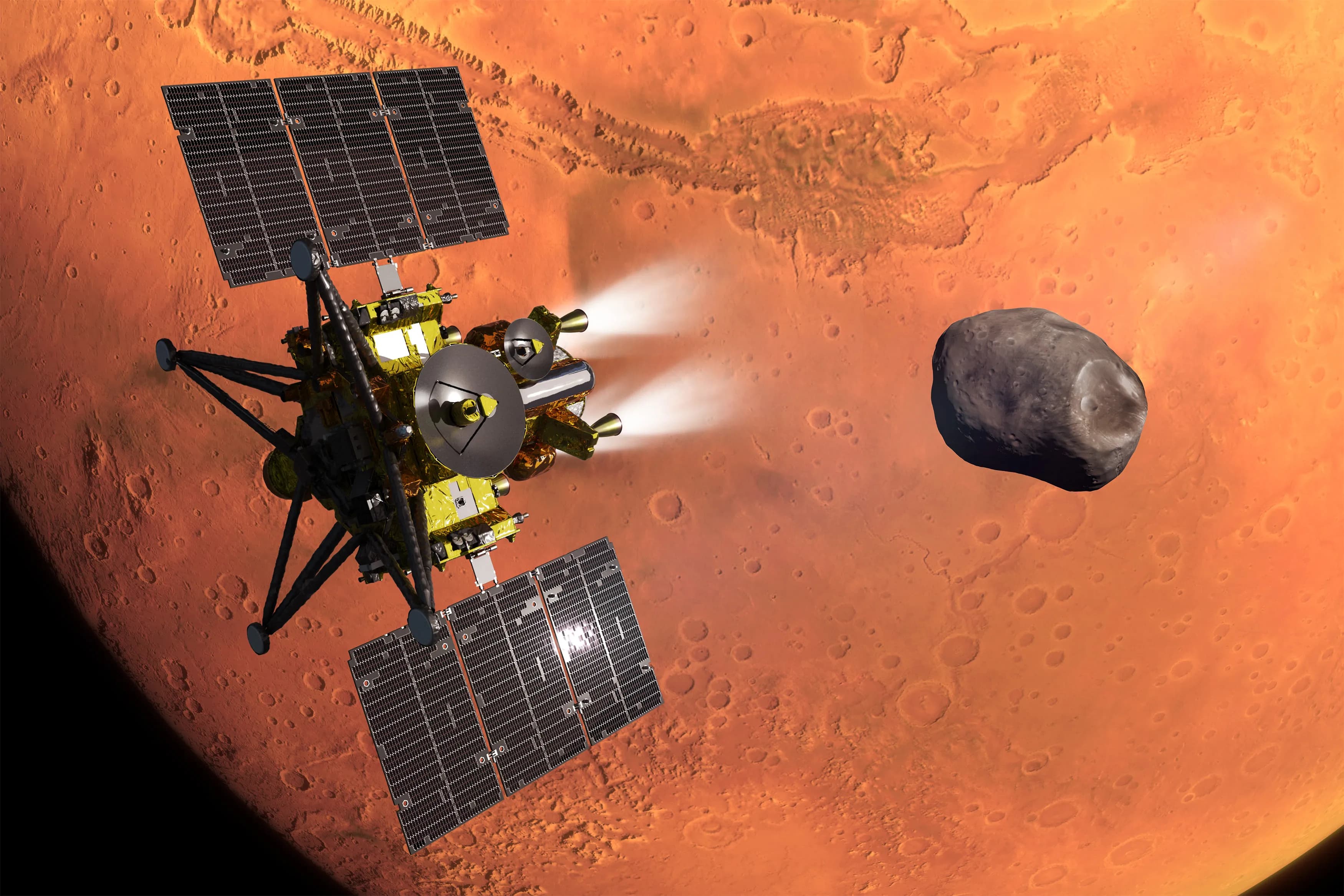
The success of Japan's MMX mission could unlock new insights into planetary formation and resource potential, impacting future space exploration investments.
Why it matters
This mission represents a significant leap in international collaboration for planetary science, potentially influencing future funding and research priorities.
What happened (in 30 seconds)
- Japan launched the MMX mission on October 19, 2026, aiming to collect samples from Mars' moon Phobos.
- The spacecraft will return at least 10 grams of regolith to Earth by 2031, marking the first sample return from any Martian moon.
- International partners include NASA, ESA, CNES, and DLR, showcasing a united effort in space exploration.
The context you actually need
- Previous attempts to explore Phobos have failed, with Russian probes in the 1980s not achieving their objectives, making this mission particularly significant.
- The scientific debate surrounding the origins of Phobos and Deimos—whether they are captured asteroids or debris from Mars—remains unresolved, and this mission aims to provide clarity.
- JAXA's past successes with the Hayabusa missions have laid the groundwork for this more complex endeavor, demonstrating Japan's growing capabilities in space exploration.
What's really happening
The Japan Aerospace Exploration Agency (JAXA) has embarked on a groundbreaking mission with the Martian Moons eXploration (MMX) project, which launched on October 19, 2026. This mission is not just about collecting samples; it is a strategic effort to address fundamental questions about the origins of Mars' moons, Phobos and Deimos. The spacecraft, launched from Tanegashima Space Center aboard an H3 rocket, is set to arrive in the Mars system around 2027.
The mission's primary goal is to collect at least 10 grams of surface material from Phobos, which will be the first samples returned from any Martian moon. This endeavor is significant because it aims to resolve ongoing debates in planetary science regarding whether these moons are captured asteroids or remnants from a colossal impact on early Mars. The implications of this research extend beyond academic curiosity; understanding the origins of these moons can provide insights into the formation of the solar system itself.
The MMX mission is a collaborative effort involving multiple international space agencies, including NASA, ESA, CNES, and DLR. This partnership not only enhances the mission's scientific capabilities but also reflects a growing trend in global cooperation in space exploration. The spacecraft will conduct detailed observations of both Phobos and Deimos, deploying the Idefix rover for surface analysis and performing one or two landings on Phobos to collect samples using advanced coring and pneumatic techniques.
The mission is designed to be a multi-phase operation, with the spacecraft expected to conduct flybys of Deimos and release a sample capsule for Earth arrival by 2031. This timeline is ambitious, but it builds on JAXA's previous successes with asteroid sample returns, showcasing their technological advancements and commitment to pushing the boundaries of space exploration.
As the mission progresses, it will provide valuable data not only about the Martian moons but also about potential resources that could be utilized for future exploration missions. The successful return of samples could pave the way for further missions to Mars and beyond, influencing the direction of space exploration for years to come.
Who feels it first (and how)
- Space scientists and researchers: They will gain access to new data that could reshape theories about planetary formation.
- Investors in space technology: Companies involved in space exploration may see increased funding and interest based on the mission's outcomes.
- Educational institutions: Universities and research organizations may leverage the findings for academic programs and public engagement.
What to watch next
- Sample analysis results: The scientific community will closely monitor the findings from the returned samples, which could redefine our understanding of Mars and its moons.
- International collaboration outcomes: The success of this mission may lead to more joint ventures in space exploration, influencing funding and policy decisions.
- Technological advancements: Innovations developed for the MMX mission could have applications in other areas of space exploration and technology.
The MMX mission has successfully launched and is currently en route to the Mars system.
The mission will provide new insights into the origins of Phobos and Deimos, influencing future planetary science.
The long-term impact of the mission on international space policy and funding remains to be seen.
Frequently Asked Questions
- Why it matters?
- This mission represents a significant leap in international collaboration for planetary science, potentially influencing future funding and research priorities.
- What happened (in 30 seconds)?
- Japan launched the MMX mission on October 19, 2026, aiming to collect samples from Mars' moon Phobos. The spacecraft will return at least 10 grams of regolith to Earth by 2031, marking the first sample return from any Martian moon. International partners include NASA, ESA, CNES, and DLR, showcasing a united effort in space exploration.
- What's really happening?
- The Japan Aerospace Exploration Agency (JAXA) has embarked on a groundbreaking mission with the Martian Moons eXploration (MMX) project, which launched on October 19, 2026. This mission is not just about collecting samples; it is a strategic effort to address fundamental questions about the origins of Mars' moons, Phobos and Deimos. The spacecraft, launched from Tanegashima Space Center aboard an H3 rocket, is set to arrive in the Mars system around 2027. The mission's primary goal is to colle
- Who feels it first (and how)?
- Space scientists and researchers: They will gain access to new data that could reshape theories about planetary formation. Investors in space technology: Companies involved in space exploration may see increased funding and interest based on the mission's outcomes. Educational institutions: Universities and research organizations may leverage the findings for academic programs and public engagement.
- What to watch next?
- Sample analysis results: The scientific community will closely monitor the findings from the returned samples, which could redefine our understanding of Mars and its moons. International collaboration outcomes: The success of this mission may lead to more joint ventures in space exploration, influencing funding and policy decisions. Technological advancements: Innovations developed for the MMX mission could have applications in other areas of space exploration and technology.
RT is a Russian state-funded network covering global events from a Russian perspective.
"RT is widely criticized for promoting pro-Kremlin narratives and is considered by many to be a state propaganda outlet."
— A47 Editor
Japan launches historic mission for Mars moon samples
Japan has successfully launched its Martian Moons eXploration (MMX) mission, aiming to retrieve samples from Phobos, one of Mars' moons. The H3 rocket took off from the Tanegashima Space Center, marking a significant milestone in Japan's space explor...
In-depth coverage of hardware, software, science, and policy.
"Ars Technica provides expert technology news, hardware reviews, and analysis for a technically savvy audience."
— A47 Editor
Japan launches mission to bring home a piece of the Martian moon Phobos
Japan has successfully launched its Martian Moons Exploration (MMX) mission, aiming to collect samples from Phobos, the largest moon of Mars. The spacecraft was launched from the Tanegashima Space Center, with the climax of the mission expected in 20...
In-depth reporting on tech, policy, and science including AI.
"Respected analysis for technically savvy readers, including AI topics."
— A47 Editor
Japan launches mission to bring home a piece of the Martian moon Phobos
Japan has successfully launched its Martian Moons Exploration (MMX) mission, aiming to collect samples from Phobos, the largest moon of Mars. The spacecraft was launched from the Tanegashima Space Center, with the climax of the mission expected in 20...
International news coverage curated for readers in the UAE and Gulf region.
"Emirates 24|7 world coverage presents global developments through a UAE-facing and Gulf-relevant editorial lens."
— A47 Editor
Japan launches mission to bring samples from Mars moon
Japan successfully launched an uncrewed spacecraft towards Phobos, one of Mars' moons, on Tuesday, marking a significant step in its mission to collect samples from this celestial body and return them to Earth by 2031. The Japan Aerospace Exploration...
Technology innovations, startups, and trends.
"ABC News delivers broad national coverage with a mainstream editorial stance, focusing on accessibility and balanced reporting."
— A47 Editor
Japan launches spacecraft to mysterious moons of Mars in a bold mission to bring home soil samples
Japan has successfully launched a spacecraft as part of its Martian Moons Exploration (MMX) mission, aiming to collect soil samples from Phobos, the largest moon of Mars. The H3 rocket was launched from the Tanegashima Space Center, marking Japan's f...
Global coverage of politics, crises, and international affairs.
"HuffPost provides progressive-oriented reporting on international developments, often focusing on humanitarian and social justice issues."
— A47 Editor
Japan Launches Spacecraft On Bold Mission To Mars’ Moons
Japan has successfully launched its Martian Moons Exploration (MMX) spacecraft on a five-year mission to Mars, aiming to land a robotic prospector and rover on Phobos, the larger of Mars' two moons. The H3 rocket was launched from the Tanegashima Spa...
Reports on science policy, discoveries, and public debate in the scientific realm.
"The Guardian’s science section is known for thoughtful and critical reporting on global research, ethics, and public understanding of science."
— A47 Editor
‘Once-in-a-lifetime chance’: Japan launches historic mission to collect rocks from Mars’s moon Phobos
Japan has successfully launched its Martian Moons Exploration (MMX) spacecraft on an unprecedented mission to collect samples from Phobos, one of Mars's moons, using its H3 rocket from Tanegashima island. This mission aims to enhance understanding of...
Top international stories selected by The Guardian editors.
"The Guardian is known for its progressive editorial stance and in-depth analysis."
— A47 Editor
‘Once-in-a-lifetime chance’: Japan launches historic mission to collect rocks from Mars’s moon Phobos
Japan has successfully launched its Martian Moons Exploration (MMX) spacecraft on an unprecedented mission to collect samples from Phobos, one of Mars's moons, using its H3 rocket from Tanegashima island. This mission aims to enhance understanding of...
Scientific research, space, environment, and health coverage.
"The New York Times is a globally recognized newspaper offering authoritative reporting with a center-left editorial stance."
— A47 Editor
A Japanese Spacecraft Aims to Bring Back a Bit of a Martian Moon
A Japanese spacecraft, part of the Martian Moons Exploration (MMX) mission, launched on October 19, 2026, with the goal of collecting samples from Phobos, the larger of Mars' two moons. This mission marks a significant milestone as it aims to return ...
Technology business news, market impacts, and innovation trends.
"Bloomberg is a premier financial and tech news provider, respected for its in-depth reporting and analytical rigor."
— A47 Editor
Japan Launches Probe in First Sampling Mission to a Moon of Mars
Japan has successfully launched a probe aimed at collecting samples from Phobos, one of Mars's moons, marking its first Mars mission in 28 years. This mission positions Japan ahead of China in the race to return samples from the Red Planet or its moo...
Technology business and AI-related headlines.
"Data-driven tech newsroom with global scope."
— A47 Editor
Japan Launches Probe in First Sampling Mission to a Moon of Mars
Japan has successfully launched a probe aimed at collecting samples from Phobos, one of Mars's moons, marking its first Mars mission in 28 years. This mission positions Japan ahead of China in the race to return samples from the Red Planet or its moo...
Tech industry news, innovation, gadgets, and startups from a UK broadcaster.
"Sky News is often seen as a center-right outlet in the UK, known for its rolling coverage and breaking stories."
— A47 Editor
Japan launches mission to Mars to bring back samples from its moon
Japan has successfully launched a spacecraft towards Mars as part of its Martian Moons Exploration (MMX) mission, aiming to collect samples from Phobos, the largest of Mars' two moons. The H3 rocket was launched from the Tanegashima Space Center, mar...
International news, politics, and culture.
"Sky News is a UK-based 24-hour channel known for fast-breaking news and political coverage."
— A47 Editor
Japan launches mission to Mars to bring back samples from its moon
Japan has successfully launched a spacecraft towards Mars as part of its Martian Moons Exploration (MMX) mission, aiming to collect samples from Phobos, the largest of Mars' two moons. The H3 rocket was launched from the Tanegashima Space Center, mar...
Scientific research, technology, environment, and society.
"Scientific American is one of the oldest and most authoritative science magazines, known for deep dives into science, technology, and society."
— A47 Editor
Japan launches a probe to collect rocks from Mars’s moon Phobos
Japan has launched the Martian Moons Exploration (MMX) mission, aiming to collect samples from Phobos, one of Mars's moons. This mission marks Japan's first Mars endeavor in 28 years and is expected to take about one year to reach Mars, followed by t...
Science and technology stories including AI.
"Longstanding science magazine with thoughtful AI coverage."
— A47 Editor
Japan launches a probe to collect rocks from Mars’s moon Phobos
Japan has launched the Martian Moons Exploration (MMX) mission, aiming to collect samples from Phobos, one of Mars's moons. This mission marks Japan's first Mars endeavor in 28 years and is expected to take about one year to reach Mars, followed by t...
Space science news, astronomy updates, and spaceflight developments.
"Space.com delivers space science news, astronomy updates, and spaceflight developments with engaging coverage."
— A47 Editor
Japan launches historic MMX sample-return mission to Mars' moon Phobos (video)
Japan has successfully launched its Martian Moons Exploration (MMX) mission, aiming to collect samples from Phobos, one of Mars's moons. This historic mission, which took off on October 19, 2026, is expected to take approximately one year to reach it...
Emerging technologies, digital transformation, IT, and cultural impact of tech.
"WIRED covers the intersection of technology, culture, and politics with a progressive, forward-looking editorial stance."
— A47 Editor
Japan’s MMX Mission Wants to Bring Martian Moon Samples Back to Earth
Japan's space agency, JAXA, is leading an international mission to collect soil samples from Phobos, one of Mars' moons, marking its first Mars mission in 28 years. This ambitious project aims to return these samples to Earth, potentially revealing s...
Latest tech news, product reviews, and analysis for consumers and professionals.
"CNET delivers accessible and detailed technology reporting, including trusted product reviews and how-to guides."
— A47 Editor
Japan Launches Mission to Mars’s Moons and Plans to Bring Samples Home
Japan has launched a mission to collect samples from Phobos, one of Mars's moons, marking its first Mars mission in 28 years. This initiative, supported by NASA, aims to enhance understanding of the solar system's formation and the geological history...
Space science news, astronomy updates, and spaceflight developments.
"Space.com delivers space science news, astronomy updates, and spaceflight developments with engaging coverage."
— A47 Editor
Watch Japan launch a bold sample-return mission to Mars moon Phobos today
Japan successfully launched its Martian Moons Exploration (MMX) mission on October 19, 2026, aiming to collect samples from Phobos, one of Mars's moons. This marks Japan's first Mars mission in 28 years and is expected to take about one year to reach...