
Sierra Club Projects 42 Percent Rise in US Power Sector Emissions by 2030 Driven by AI Data Center Expansion
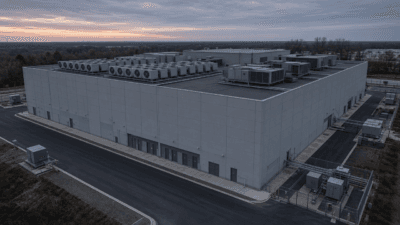
Rapid data center development powered by dedicated fossil fuel assets threatens corporate carbon balance sheets and introduces operational and supply chain friction for global operators reliant on US compute capacity.
Why it matters
The projection of a 42% surge in power sector emissions highlights an incentive conflict between rapid AI scale-out and corporate sustainability targets, threatening to alter grid access rules and increase compliance costs across tech value chains.
What happened (in 30 seconds)
- Emissions projection released: On October 28, 2026, Sierra Club analysis published via Bloomberg and CryptoBriefing projected that US power sector carbon dioxide emissions will climb 42% by 2030 due to data center expansion, reaching 2.1 billion metric tons.
- The volume increase: The model forecasts an addition of 618 million metric tons of CO2 relative to 2025 levels, an impact equivalent to the annual emissions of more than 128 million average US homes.
- Policy debate triggered: The findings prompted immediate regulatory scrutiny, surfacing state-level data center moratorium debates in jurisdictions such as Oklahoma and Louisiana.
The context you actually need
- Outdated prior forecasts: Previous estimates formulated 18 months earlier underestimated demand growth; according to Sierra Club advisor Jeremy Fisher, current emissions trajectories are two to four times higher than early expectations.
- Off-grid power bypass: Tech operators are turning to "bring-your-own-power" configurations—building dedicated, off-grid natural gas plants to circumvent long regulatory queues for utility grid interconnection.
- Emissions distribution: Of the projected 618 million metric tons added annually, over 460 million tons stem from self-generated, off-grid natural gas facilities, while grid-connected power accounts for 154 million tons.
What's really happening
The structural issue driving this emissions spike is the growing misalignment between the timeline required to deploy AI compute hardware and the timeline required to deploy clean generation assets. Leading technology firms face commercial incentives to secure compute capacity immediately to gain advantage in foundation models and automated services. However, the standard pathway for integrating utility-scale renewable generation and battery storage frequently runs into extensive regulatory permitting delays and lengthy grid interconnection queues.
To bypass these grid bottlenecks, infrastructure operators are increasingly choosing a "bring-your-own-power" model. Under this framework, data center builders construct dedicated, on-site natural gas power generation facilities that operate entirely independent of the regulated utility grid. This dynamic shifts the fuel mix: while tech firms have historically backed their operational energy needs through virtual power purchase agreements (PPAs) tied to wind and solar, the practical urgency to power gigawatt-scale computing loads has prioritized reliability and speed of deployment over zero-emission profiles.
The Sierra Club's internal modeling reveals the mechanical outcome of this trade-off. Total power sector emissions are estimated to climb from current levels to 2.1 billion metric tons by 2030, effectively reversing 15 years of steady emissions reductions achieved via coal-to-gas fuel switching and renewable deployment. Because over 74% of the projected new emissions—over 460 million metric tons—originates from off-grid, self-generated natural gas operations rather than central utility networks, baseline regulatory levers governing public utilities do not directly capture these facilities.
This infrastructure shift creates real friction across corporate supply chains. Technology enterprises that operate under strict net-zero commitments must now balance physical capacity expansion against verified carbon accounting risks. When compute providers rely on fossil-fired on-site generation, enterprise customers leasing those servers absorb indirect emissions through their Scope 3 reporting obligations. As a result, commercial pressure is building at the municipal and state level, where local grid strain and aggregate environmental impacts are prompting policymakers to evaluate growth limits, changing the legal landscape for data infrastructure planning across key industrial regions.
Who feels it first (and how)
- Hyperscale cloud and AI infrastructure operators: Face rising regulatory scrutiny over facility permitting, along with potential project delays in states considering development pauses.
- Enterprise technology buyers: Must manage upward revisions to Scope 3 supply chain carbon calculations as their underlying cloud computing infrastructure relies on on-site fossil assets.
- State utility regulators and local communities: Confront the structural tension of managing local grid reliability while commercial operators install private generation plants nearby.
- Independent power producers and gas infrastructure developers: Experience heightened demand for natural gas generation equipment alongside emerging legal opposition against captive fossil installations.
What to watch next
- Legislative moratorium outcomes in Oklahoma and Louisiana: State-level legislative moves will indicate whether local governments prioritize industrial capital expenditure or local environmental controls.
- Corporate SEC and supply chain risk disclosures: Filings from major tech firms will show whether supply-side power constraints and fossil reliance are officially classified as operational and financial risks.
- Renewable interconnection policy changes: Federal or regional grid operator adjustments that shorten utility-scale clean power connection timelines will determine whether off-grid gas generation remains the default choice.
Sierra Club projections model a 618 million metric ton rise in US power sector emissions by 2030, with over 460 million metric tons derived from off-grid natural gas plants servicing data facilities.
Tech firms relying on self-generated power will encounter escalating public pushback and more complex Scope 3 carbon compliance requirements from international enterprise clients.
Whether state-level legislative proposals for data center moratoriums in Oklahoma and Louisiana will secure enough legislative backing to become binding law.
Frequently Asked Questions
- Why it matters?
- The projection of a 42% surge in power sector emissions highlights an incentive conflict between rapid AI scale-out and corporate sustainability targets, threatening to alter grid access rules and increase compliance costs across tech value chains.
- What happened (in 30 seconds)?
- Emissions projection released: On October 28, 2026, Sierra Club analysis published via Bloomberg and CryptoBriefing projected that US power sector carbon dioxide emissions will climb 42% by 2030 due to data center expansion, reaching 2.1 billion metric tons. The volume increase: The model forecasts an addition of 618 million metric tons of CO2 relative to 2025 levels, an impact equivalent to the annual emissions of more than 128 million average US homes. Policy debate triggered: The findings pro
- What's really happening?
- The structural issue driving this emissions spike is the growing misalignment between the timeline required to deploy AI compute hardware and the timeline required to deploy clean generation assets. Leading technology firms face commercial incentives to secure compute capacity immediately to gain advantage in foundation models and automated services. However, the standard pathway for integrating utility-scale renewable generation and battery storage frequently runs into extensive regulatory perm
- Who feels it first (and how)?
- Hyperscale cloud and AI infrastructure operators: Face rising regulatory scrutiny over facility permitting, along with potential project delays in states considering development pauses. Enterprise technology buyers: Must manage upward revisions to Scope 3 supply chain carbon calculations as their underlying cloud computing infrastructure relies on on-site fossil assets. State utility regulators and local communities: Confront the structural tension of managing local grid reliability while commer
- What to watch next?
- Legislative moratorium outcomes in Oklahoma and Louisiana: State-level legislative moves will indicate whether local governments prioritize industrial capital expenditure or local environmental controls. Corporate SEC and supply chain risk disclosures: Filings from major tech firms will show whether supply-side power constraints and fossil reliance are officially classified as operational and financial risks. Renewable interconnection policy changes: Federal or regional grid operator adjustments
Tech news, hardware, and AI tools coverage.
"PC/tech site increasingly covering AI hardware and apps."
— A47 Editor
The AI buildout's carbon bill could undo 15 years of power sector emissions cuts
Sierra Club, in a report obtained by Bloomberg, estimates that planned US AI data centers would add 618 million metric tons to power sector carbon emissions between 2025 and 2030, a 42% increase that would effectively reverse 15 years of greenhouse g...
Consumer tech and culture with frequent AI coverage.
"Influential tech outlet covering AI products and policy."
— A47 Editor
Data centers could send US climate pollution skyrocketing
The US power sector could release 42 percent more planet-heating carbon dioxide pollution by 2030 than it did in 2025, according to a new analysis by the Sierra Club, as it builds out more fossil fuel infrastructure to meet rising data center electri...
Tech news, reviews, and analysis of consumer electronics, science, art, and culture.
"The Verge is a technology-focused media outlet known for in-depth reporting, product reviews, and coverage of the intersection between technology and culture."
— A47 Editor
Data centers could send US climate pollution skyrocketing
The US power sector could release 42 percent more planet-heating carbon dioxide pollution by 2030 than it did in 2025, according to a new analysis by the Sierra Club, as it builds out more fossil fuel infrastructure to meet rising data center electri...
News for senior developers on AI/ML and data engineering.
"Conference-linked outlet for practitioner news and Q&As."
— A47 Editor
How to Make Artificial Intelligence More Environmentally Sustainable
IT is responsible for about 2 to 4 percent of all global emissions, and electricity use at Microsoft and Google has climbed because of AI, according to their own reports. The article, written by Ben Linders and published by InfoQ, examines how artifi...
Curated tech headlines including AI stories.
"Influential aggregator surfacing the day’s top tech/AI links."
— A47 Editor
Sierra Club expects US power emissions to hit 2.1B metric tons by 2030, up 42% on 2025 and erasing 15 years of cuts, with off-grid data centers matching Mexico (Bloomberg)
The Sierra Club projects that US power sector emissions could reach 2.1 billion metric tons by 2030, a 42% increase over 2025 levels that would erase roughly 15 years of emissions reductions, according to a Bloomberg report distributed by Techmeme. T...
News and guidance for IT pros on AI adoption.
"Enterprise-focused tips, explainers, and news for professionals."
— A47 Editor
AI Data Centers Are Straining Power Grids. New Rules Aim to Reduce the Risk
AI data centers are placing growing strain on power grids, and new reliability standards and power technologies are being developed to reduce the risk of disruption, according to TechRepublic's report on the sector's operational challenges.
Research, news, and analysis on blockchain startups, DeFi, and regulations.
"Crypto Briefing provides research, news, and analysis on blockchain startups, DeFi, and crypto regulations with investor-focused coverage."
— A47 Editor
US data center expansion may boost emissions 42% by 2030: Sierra Club
The Sierra Club has warned that the expansion of US data centers could raise national emissions by about 42% by 2030, undermining efforts to reduce emissions and prompting possible regulatory action to curb environmental impacts, according to a Crypt...