
Vera C Rubin Observatory Detects Trans-Neptunian Object 2026 ED138 as Sixth Dwarf Planet Candidate
What happened
The Vera C. Rubin Observatory detected trans-Neptunian object 2026 ED138 roughly 46 AU from the Sun, marking a candidate for the solar system's sixth officially recognized dwarf planet.
The Context
* A strict registry: The International Astronomical Union currently recognizes only five dwarf planets—Ceres, Pluto, Haumea, Makemake, and Eris—under orbital and mass criteria established in 2006. * Archival tracking: Astronomers Matthew Holman and Kevin Napier used custom software to flag the object, linking it back to archival data from 2016 to map its 281-year orbit inclined at 25 degrees. * Pending verification: To secure formal designation, follow-up telescopic observations must definitively measure the body's albedo, exact dimensions, and hydrostatic equilibrium.
The Number
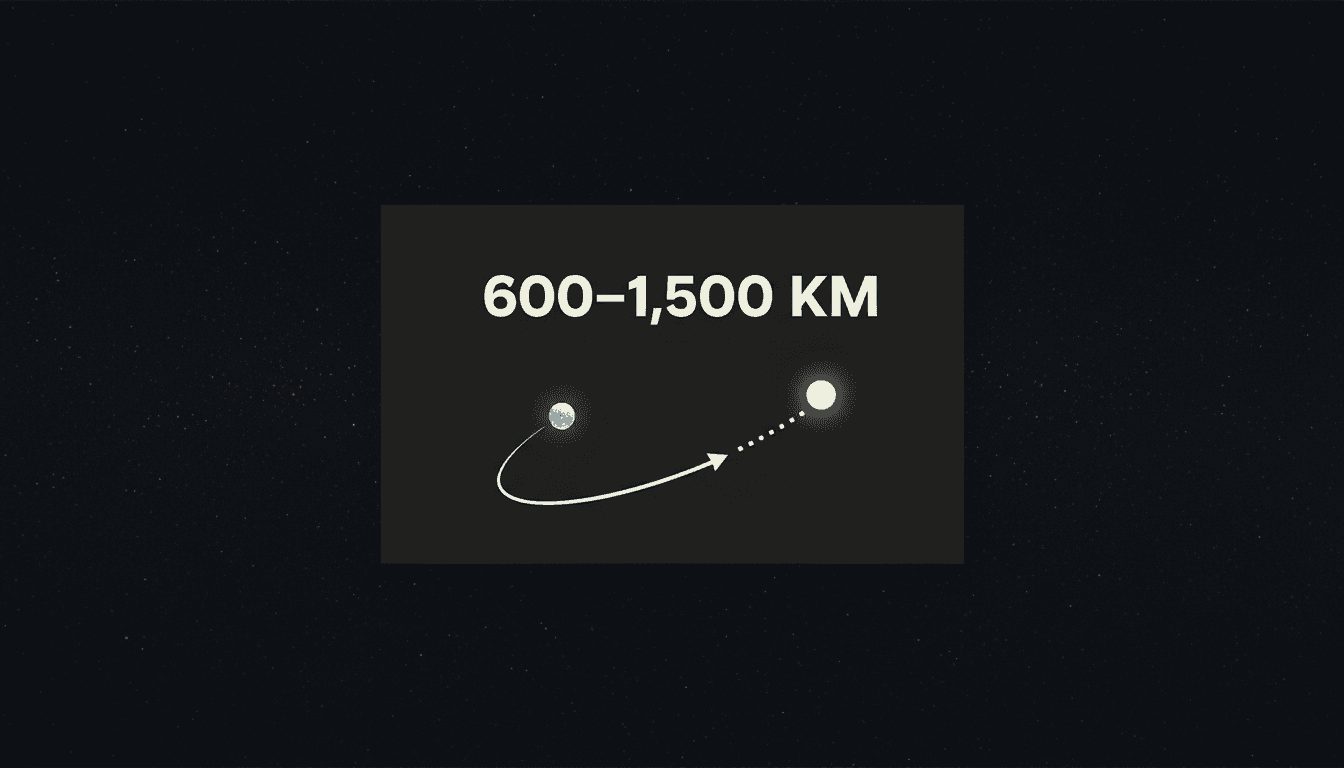
— The estimated diameter of 2026 ED138, a size range that places it among the largest known icy bodies in the Kuiper Belt and within threshold parameters for hydrostatic equilibrium.
Takeaway
Follow-up photometric and spectroscopic studies will determine whether 2026 ED138 joins the official dwarf planet roster, signaling the early return on investment from the Rubin Observatory's decade-long sky survey.
Scientific discoveries, health, technology, and natural phenomena.
"Live Science reports on scientific discoveries, health, technology, and natural phenomena with a popular science tone."
— A47 Editor
Bright object beyond Pluto may be the solar system's sixth dwarf planet
The Vera C. Rubin Observatory has identified an object beyond Pluto that may be the solar system's sixth dwarf planet, orbiting the sun on an inclined path past Pluto's orbit, according to Live Science.
RT is a Russian state-funded network covering global events from a Russian perspective.
"RT is widely criticized for promoting pro-Kremlin narratives and is considered by many to be a state propaganda outlet."
— A47 Editor
Possible dwarf planet discovered beyond Pluto
Astronomers have identified a large icy object beyond Pluto, designated 2026 ED138, which could become the solar system's sixth dwarf planet, according to a report by RT (Russia Today) published on October 29, 2026.
Space science news, astronomy updates, and spaceflight developments.
"Space.com delivers space science news, astronomy updates, and spaceflight developments with engaging coverage."
— A47 Editor
Astronomers found a mysterious object beyond Neptune, and it could be a new dwarf planet
The Vera Rubin Observatory has identified a suspected dwarf planet orbiting the sun beyond Neptune's path. If confirmed, it would become the sixth known dwarf planet in the solar system, according to the base report from Space.com.
Scientific research, space, environment, and health coverage.
"The New York Times is a globally recognized newspaper offering authoritative reporting with a center-left editorial stance."
— A47 Editor
A New Dwarf Planet (Probably) Spotted Beyond Pluto
A new dwarf planet, provisionally designated 2026 ED138, has probably been spotted beyond Pluto, according to The New York Times. The object is one of the first discoveries made by the new Vera C. Rubin Observatory in Chile.
Science and technology stories including AI.
"Longstanding science magazine with thoughtful AI coverage."
— A47 Editor
The Vera C. Rubin Observatory may have just discovered our solar system’s sixth dwarf planet
The Vera C. Rubin Observatory may have identified the solar system's sixth dwarf planet, an object located farther from Earth than Pluto that was concealed within the light of the Milky Way's stars, according to a report by Scientific American.
Scientific research, technology, environment, and society.
"Scientific American is one of the oldest and most authoritative science magazines, known for deep dives into science, technology, and society."
— A47 Editor
The Vera C. Rubin Observatory may have just discovered our solar system’s sixth dwarf planet
The Vera C. Rubin Observatory may have identified the solar system's sixth dwarf planet, an object located farther from Earth than Pluto that was concealed within the light of the Milky Way's stars, according to a report by Scientific American.