
Suspected Cyberattacks Overheat Supermarket Freezers Across Sweden Belgium and Luxembourg
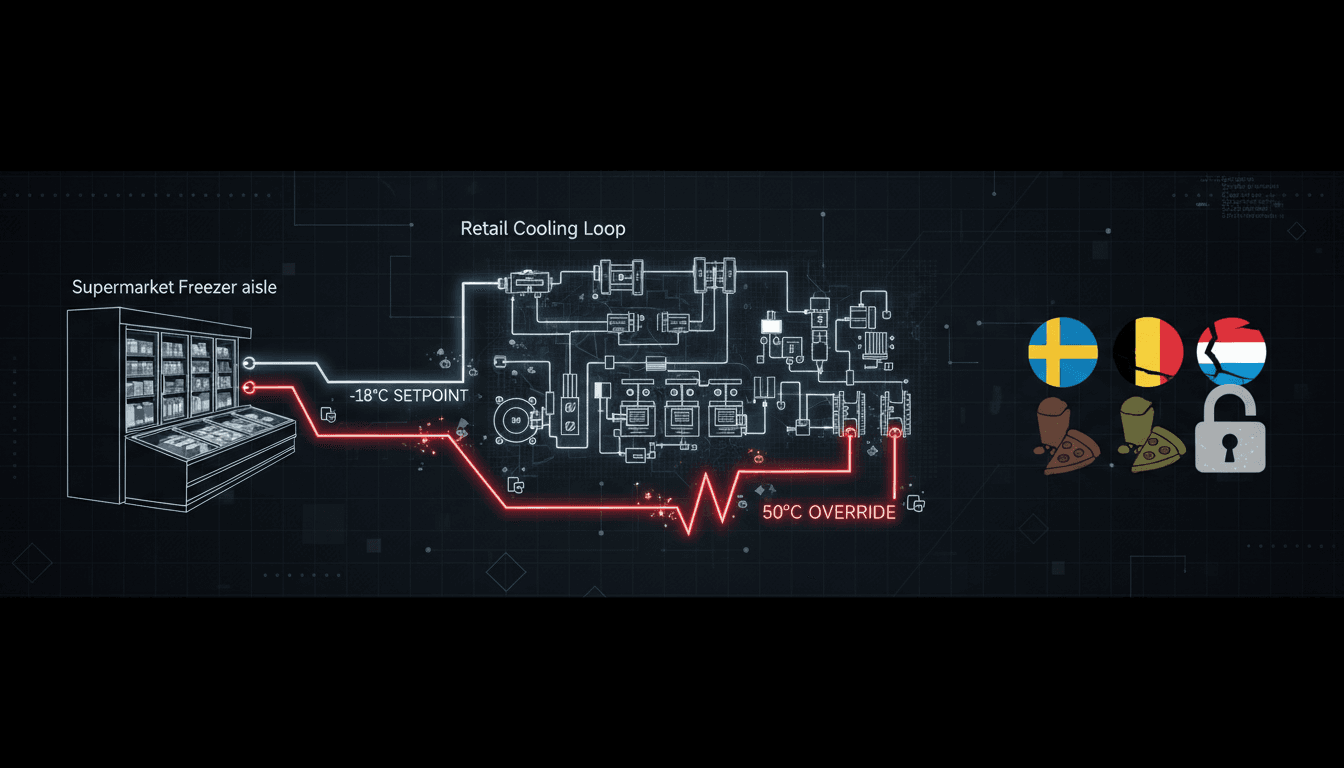
Why it matters
The weaponization of remote building automation systems proves that low-profile operational technology endpoints can be manipulated across borders to spoil inventory and disrupt critical distribution networks simultaneously.
What happened (in 30 seconds)
- Coordinated overnight temperature anomalies struck retailers across Northern Europe. During the night of November 1–2, 2026, suspected cyber intrusions targeted commercial refrigeration units across supermarket chains in Sweden, Belgium, and Luxembourg.
- Cooling systems were forced into extreme defrost cycles. Unauthorized commands overrode industrial control parameters, driving freezer compartments to temperatures as high as 50°C and resulting in direct stock spoilage.
- Major retail chains isolated infrastructure to contain losses. ICA and Coop in Sweden, alongside Ahold Delhaize, Carrefour, and Spar in Belgium and Luxembourg, engaged containment protocols, closed select stores temporarily, and initiated forensic reviews.
The context you actually need
- A larger precursor attack occurred just weeks prior. In October 2026, a wave of intrusions targeted refrigeration systems across hundreds of French grocery stores, in some instances triggering temperatures of 50°C or higher and isolated equipment fires.
- Cooling relies on specialized operational technology (OT). Supermarket infrastructure frequently depends on third-party remote monitoring platforms and industrial controllers—such as systems serviced by specialists like Sabcobel—to regulate defrost cycles and energy usage centrally.
- Physical safety and cold chain compliance require immediate inventory disposal. Because regulatory standards mandate absolute thermal continuity for frozen goods, even transient exposure to 50°C forces retailers to discard entire freezer aisles before reopening.
What's really happening
The incident shifts industrial cyber risk from hypothetical disruption into direct balance-sheet losses within fast-moving consumer goods. In conventional corporate cybersecurity, unauthorized access typically threatens data integrity, confidential records, or financial ledger availability. In these incidents across Sweden, Belgium, and Luxembourg, threat actors targeted the physical parameters of operational technology (OT) to induce hardware-level failures.
Commercial supermarket refrigeration does not function as a series of disconnected, manually dialed appliances. Modern retail chains utilize networked energy management systems and supervisory controllers to optimize power consumption, run automated defrost schedules, and monitor temperature compliance across hundreds of disparate sites. These interfaces often connect back to external maintenance providers or internal building management networks via remote telemetry protocols.
When an external actor secures unauthorized administrative access to these control layers, the attack vector becomes physical rather than digital. By overriding safety bounds and triggering sustained defrost mode, the controllers intentionally generate heat, elevating internal compartment readings to 50°C. For an operator, the consequences are immediate and severe: First, inventory is lost instantly. Frozen protein, dairy, and prepared foods exposed to sustained high temperatures spoil, requiring total write-downs under standard public health guidelines. Second, continuous heating cycles strain commercial compressors, risking mechanical burnout, refrigerant destabilization, and physical fire hazards, as observed in the French incidents in October. Third, recovery requires physical intervention. While software can be isolated remotely, certifying refrigeration loops, restocking inventory, and confirming sensor calibration demands on-site labor, depressing store throughput.
The operational architecture of supermarket chains reveals an asymmetric incentive structure. While core enterprise resource planning (ERP) databases receive substantial defensive budgets, secondary operational equipment—HVAC, refrigeration units, building monitoring sensors—frequently runs on legacy firmware or shares network pathways with centralized service contractors. By hitting the operational technology tier across brands like ICA, Coop, Delhaize, Carrefour, and Spar simultaneously, the attackers demonstrated that physical disruption in the retail sector does not require custom industrial sabotage tools; it requires only the manipulation of standard vendor maintenance features.
Who feels it first (and how)
- Retail store managers and floor personnel: Suffer instant operational interruptions, bearing the burden of manual temperature checks, inventory disposal, and emergency physical restocking before sales can resume.
- Third-party refrigeration and facilities contractors: Face urgent liability reviews, immediate demand for manual site visits, and audits regarding how remote access portals and maintenance credentials were secured.
- Chief Information Security Officers (CISOs) in commercial real estate and retail: Must urgently shift budgetary focus toward isolating operational technology networks from corporate intranets and closing exposed vendor access tunnels.
- Underwriters and commercial insurers: Confront direct claims covering spoiled perishable stock and business interruption losses tied to non-data cyber events, forcing revisions to OT risk premiums.
What to watch next
- Forensic attribution reports from national agencies: Statements from the Sweden National Cybersecurity Centre and Belgian authorities will indicate whether the incidents stemmed from compromised third-party vendor credentials, credential stuffing, or software vulnerabilities in cooling controllers.
- Mandatory network isolation standards for facilities OT: Watch for commercial retail operators implementing strict network segmentation, air-gapping, or zero-trust access controls on temperature and energy management systems.
- Supply chain assurance audits: Large grocery conglomerates will likely require equipment suppliers and maintenance firms to prove multifactor authentication and continuous endpoint monitoring on all remote-capable physical hardware.
Supermarkets in Sweden, Belgium, and Luxembourg experienced unauthorized temperature adjustments up to 50°C on November 1–2, 2026; ICA, Coop, Delhaize, Carrefour, and Spar confirmed disruptions; national cybersecurity agencies are investigating.
The intrusions targeted exposed remote management ports or compromised central maintenance contractor systems that hold remote access to multi-store building controllers.
The specific entity or group behind the campaign, their operational objective (such as extortion, testing disruptive capability, or general disruption), and whether identical vulnerabilities remain active in other regional retail networks.
Frequently Asked Questions
- Why it matters?
- The weaponization of remote building automation systems proves that low-profile operational technology endpoints can be manipulated across borders to spoil inventory and disrupt critical distribution networks simultaneously.
- What happened (in 30 seconds)?
- Coordinated overnight temperature anomalies struck retailers across Northern Europe. During the night of November 1–2, 2026, suspected cyber intrusions targeted commercial refrigeration units across supermarket chains in Sweden, Belgium, and Luxembourg. Cooling systems were forced into extreme defrost cycles. Unauthorized commands overrode industrial control parameters, driving freezer compartments to temperatures as high as 50°C and resulting in direct stock spoilage. Major retail chains isolat
- What's really happening?
- The incident shifts industrial cyber risk from hypothetical disruption into direct balance-sheet losses within fast-moving consumer goods. In conventional corporate cybersecurity, unauthorized access typically threatens data integrity, confidential records, or financial ledger availability. In these incidents across Sweden, Belgium, and Luxembourg, threat actors targeted the physical parameters of operational technology (OT) to induce hardware-level failures. Commercial supermarket refrigeratio
- Who feels it first (and how)?
- Retail store managers and floor personnel: Suffer instant operational interruptions, bearing the burden of manual temperature checks, inventory disposal, and emergency physical restocking before sales can resume. Third-party refrigeration and facilities contractors: Face urgent liability reviews, immediate demand for manual site visits, and audits regarding how remote access portals and maintenance credentials were secured. Chief Information Security Officers (CISOs) in commercial real estate an
- What to watch next?
- Forensic attribution reports from national agencies: Statements from the Sweden National Cybersecurity Centre and Belgian authorities will indicate whether the incidents stemmed from compromised third-party vendor credentials, credential stuffing, or software vulnerabilities in cooling controllers. Mandatory network isolation standards for facilities OT: Watch for commercial retail operators implementing strict network segmentation, air-gapping, or zero-trust access controls on temperature and e
Global news coverage with extensive reporting on Middle Eastern conflicts and geopolitics.
"Al Jazeera is a Qatar-based broadcaster known for wide regional coverage and alternative perspectives."
— A47 Editor
Freezers in Sweden, Belgium overheat following possible cyberattacks
Temperature increases have been reported in dozens of store cooling systems in Sweden and Belgium, with the incidents occurring weeks after a similar suspected cyberattack in France, according to Al Jazeera. The reports indicate that the freezers ove...
International coverage of politics, culture, and current affairs.
"BBC News is widely regarded as a reputable international news organization, known for its impartial tone and public service mandate."
— A47 Editor
Supermarket freezers in Belgium, Sweden and Luxembourg hit by suspected cyber-attack
Supermarket freezers in Belgium, Sweden and Luxembourg were hit by a suspected cyber-attack, according to BBC News. Stores in Sweden reported that temperatures for their freezers were raised to 50 C (122F).
Curated tech headlines including AI stories.
"Influential aggregator surfacing the day’s top tech/AI links."
— A47 Editor
Supermarkets across Belgium and Sweden report sudden overnight temperature spikes in fridges and freezers due to suspected hacks, mirroring French cyberattacks (Bloomberg)
Supermarkets across Belgium and Sweden reported sudden overnight temperature spikes in their fridges and freezers, which are suspected to be the result of hacking, mirroring similar cyberattacks previously reported in France. The reporting by Bloombe...
Business and tech news excluding paywalled content.
"High-volume business/tech outlet with frequent AI coverage."
— A47 Editor
Europe hit by another wave of suspected grocery store freezer hacks
Business Insider reports that Europe has been hit by another wave of suspected cyberattacks targeting grocery store freezers, weeks after a similar hacking incident in France forced supermarkets to discard food stock.
International coverage from The Guardian's global desks.
"The Guardian is known for its progressive editorial stance and in-depth analysis."
— A47 Editor
Supermarket freezers across Europe hit by second suspected cyber-attack
Supermarket chains in Sweden, Belgium and Luxembourg reported that refrigerator and freezer temperatures in dozens of stores rose overnight, with Sweden's Coop saying six of its stores were affected and ICA acknowledging a limited number of affected ...
UK and international business news, economics, and corporate coverage.
"The Guardian’s business section covers finance and markets with a progressive editorial tone."
— A47 Editor
Supermarket freezers across Europe hit by second suspected cyber-attack
Supermarket chains in Sweden, Belgium and Luxembourg reported that refrigerator and freezer temperatures in dozens of stores rose overnight, with Sweden's Coop saying six of its stores were affected and ICA acknowledging a limited number of affected ...
Technology business news, market impacts, and innovation trends.
"Bloomberg is a premier financial and tech news provider, respected for its in-depth reporting and analytical rigor."
— A47 Editor
Supermarkets in Belgium, Ireland, Sweden, Finland Hit by Suspected Freezer Hack
Supermarkets across Belgium, Ireland, Sweden and Finland were hit by suspected cyberattacks on Monday that caused sudden changes in the temperatures of their fridges and freezers, weeks after a similar but more widespread incident in France.
Technology business and AI-related headlines.
"Data-driven tech newsroom with global scope."
— A47 Editor
Supermarkets in Belgium, Ireland, Sweden, Finland Hit by Suspected Freezer Hack
Supermarkets across Belgium, Ireland, Sweden and Finland were hit by suspected cyberattacks on Monday that caused sudden changes in the temperatures of their fridges and freezers, weeks after a similar but more widespread incident in France.
Editor-curated FT homepage stories spanning markets, business, world, and opinion.
"The Financial Times is a globally respected business publication with a centrist/center-left tone and strong markets focus."
— A47 Editor
European supermarket freezers hit just weeks after French cyber attack
European supermarket freezers hit just weeks after French cyber attack: Retailers in Sweden and Belgium reported refrigeration units overheating, with temperatures reaching as high as 55C in dozens of stores, the Financial Times reported.