
OpenAI Launches National Community Compact for Data Centers After Midterm Ballot Backlash
Why it matters
The physical expansion of artificial intelligence infrastructure has hit a local political ceiling, forcing developers to internalize grid upgrades and community payouts to secure development rights.
What happened (in 30 seconds)
- OpenAI introduced a national engagement framework on November 5, 2026, known as the National Community Compact, governing future company-owned and operated "compute campuses."
- The policy commits the developer to cover all grid upgrade expenses, fully fund electricity usage, offer cancellation guarantees to protect ratepayers, and publish annual water and energy consumption data.
- The announcement arrived 48 hours after the U.S. midterm elections, where voters approved ballot measures restricting digital infrastructure across 33 communities following sustained opposition in states like Georgia, Texas, and Ohio.
The context you actually need
- Voter pushback crystallized on November 3, 2026, when 33 local jurisdictions approved explicit statutory limits on new data center developments amid concerns over resource strain and utility bills.
- Opacity triggered localized resistance in regions such as Effingham County, Georgia, where July 2026 demonstrations against non-disclosure agreements ultimately led OpenAI to void those legacy confidentiality pacts with civic officials.
- Targeted municipal outlays accompany the policy rollout, including $80 million in direct investments earmarked for Effingham County, Georgia, and $40 million assigned to Pike County, Ohio.
What's really happening
The rapid buildout of high-density AI infrastructure is undergoing an enforced transition from unregulated land acquisition to a regulated public utility model. When enterprise demand accelerated development pipelines across secondary power markets in Texas, Georgia, and Ohio, the initial strategy relied on standard commercial real estate tactics: nondisclosure agreements with municipal authorities, industrial utility rates, and rapid site control. That playbook collapsed on November 3, 2026, when 33 separate communities passed binding ballot initiatives capping or prohibiting compute facility construction.
The National Community Compact functions as a risk-mitigation framework designed to salvage physical deployment schedules. In places like Effingham County, Georgia—where public protests erupted in July 2026 over clandestine negotiations—the risk of outright project cancellations outpaced the cost of capital concessions. By voiding prior non-disclosure agreements, establishing designated local contacts, and submitting to annual public disclosures covering water and electricity metrics, the developer is trading operational opacity for territorial access.
Underneath the community guarantees lies an economic restructuring of hyperscale development. For decades, enterprise facilities negotiated tiered energy pricing and public infrastructure subsidies from host municipalities. Under the new model, OpenAI commits to paying 100% of its power consumption, underwriting grid modernization assets, and posting upfront financial guarantees that shield local utility ratepayers if capital expenditure projects stall or abort. Host communities are factoring this directly into municipal accounts: in Effingham County, local administrators project annual tax-equivalent receipts of approximately $66 million once operations commence.
The companion Compute Campus Policy Blueprint reveals an incentive to turn voluntary concessions into national compliance mandates. By urging state and federal regulators to legally enforce cost allocation, mandatory grid reporting, and peak-demand power throttling across the entire sector, first movers ensure that their self-imposed operational costs become baseline legal burdens for every competing hyperscaler. If competing facilities must also internalize local grid adjustments and provide ratepayer indemnities, the strategic disadvantage of funding community infrastructure evaporates into a standard market barrier to entry.
Who feels it first (and how)
- Host County Residents and Ratepayers (e.g., Effingham County, GA; Pike County, OH): Experience reduced exposure to electricity rate hikes through ring-fenced utility financing, while receiving site-specific capital commitments ($80 million and $40 million, respectively).
- Hyperscale Cloud Competitors and Infrastructure Developers: Face mounting regulatory expectations to match open reporting standards, eliminate broad public NDAs, and absorb power system reinforcement costs.
- Municipal and Utility Regulators: Gain direct visibility into compute facilities' water and power consumption, with formal leverage to throttle facility loads during peak grid strain.
What to watch next
- Legislative absorption of the Compute Campus Blueprint: Watch whether state legislatures in key compute corridors codify mandatory ratepayer protections, because state-level statutes will dictate baseline site development costs across the industry.
- Contractual pass-throughs in enterprise compute pricing: Monitor whether hyperscalers shift their localized capital outlays ($120 million committed across Ohio and Georgia) into enterprise compute tier pricing over the next fiscal cycle.
- Municipal implementation in Abilene, Texas: Track how local officials in secondary pipeline markets integrate the compact’s water and energy transparency standards into existing commercial permitting workflows.
Voters in 33 communities approved local data center restrictions in November 2026; OpenAI pledged $80 million in Effingham County and $40 million in Pike County while eliminating previous NDAs.
Competing compute developers will face immediate municipal demands to offer matching infrastructure guarantees and ratepayer liability shields during local zoning reviews.
Whether peak-demand power throttling protocols will degrade throughput latency or uptime metrics during extreme weather events on regional grids.
Frequently Asked Questions
- Why it matters?
- The physical expansion of artificial intelligence infrastructure has hit a local political ceiling, forcing developers to internalize grid upgrades and community payouts to secure development rights.
- What happened (in 30 seconds)?
- OpenAI introduced a national engagement framework on November 5, 2026, known as the National Community Compact, governing future company-owned and operated "compute campuses." The policy commits the developer to cover all grid upgrade expenses, fully fund electricity usage, offer cancellation guarantees to protect ratepayers, and publish annual water and energy consumption data. The announcement arrived 48 hours after the U.S. midterm elections, where voters approved ballot measures restricting
- What's really happening?
- The rapid buildout of high-density AI infrastructure is undergoing an enforced transition from unregulated land acquisition to a regulated public utility model. When enterprise demand accelerated development pipelines across secondary power markets in Texas, Georgia, and Ohio, the initial strategy relied on standard commercial real estate tactics: nondisclosure agreements with municipal authorities, industrial utility rates, and rapid site control. That playbook collapsed on November 3, 2026, wh
- Who feels it first (and how)?
- Host County Residents and Ratepayers (e.g., Effingham County, GA; Pike County, OH): Experience reduced exposure to electricity rate hikes through ring-fenced utility financing, while receiving site-specific capital commitments ($80 million and $40 million, respectively). Hyperscale Cloud Competitors and Infrastructure Developers: Face mounting regulatory expectations to match open reporting standards, eliminate broad public NDAs, and absorb power system reinforcement costs. Municipal and Utility
- What to watch next?
- Legislative absorption of the Compute Campus Blueprint: Watch whether state legislatures in key compute corridors codify mandatory ratepayer protections, because state-level statutes will dictate baseline site development costs across the industry. Contractual pass-throughs in enterprise compute pricing: Monitor whether hyperscalers shift their localized capital outlays ($120 million committed across Ohio and Georgia) into enterprise compute tier pricing over the next fiscal cycle. Municipal imp
Consumer tech and culture with frequent AI coverage.
"Influential tech outlet covering AI products and policy."
— A47 Editor
OpenAI is stepping back from NDAs for data center projects
OpenAI announced new commitments to communities where it is pursuing data center projects, including a pledge not to use non-disclosure agreements (NDAs) with public officials, following a week in which voters in the midterm elections broadly opposed...
Tech news, reviews, and analysis of consumer electronics, science, art, and culture.
"The Verge is a technology-focused media outlet known for in-depth reporting, product reviews, and coverage of the intersection between technology and culture."
— A47 Editor
OpenAI is stepping back from NDAs for data center projects
OpenAI announced new commitments to communities where it is pursuing data center projects, including a pledge not to use non-disclosure agreements (NDAs) with public officials, following a week in which voters in the midterm elections broadly opposed...
UAE-based English-language newspaper covering regional politics, economics, and global affairs.
"The National reflects Emirati policy perspectives while maintaining international editorial standards."
— A47 Editor
OpenAI promises to listen to communities on data centres after election result
OpenAI has promised to listen to communities on data centres following the US midterm election result, according to a report by The National. The base coverage is neutral in tone and centres on the company's public commitment to engage local voices o...
UAE-based English-language newspaper covering regional politics, economics, and global affairs.
"The National reflects Emirati policy perspectives while maintaining international editorial standards."
— A47 Editor
OpenAI announces data centre community compact after political earthquake
OpenAI has announced a data centre community compact following a political earthquake, according to a report in The National, with the base coverage presenting the commitment in neutral terms and focusing on the company's public pledge to engage loca...
Tech industry coverage with AI angles.
"Mainstream tech news intersecting with AI policy and culture."
— A47 Editor
OpenAI Pledges to Give Locals More Say in Data Center Projects
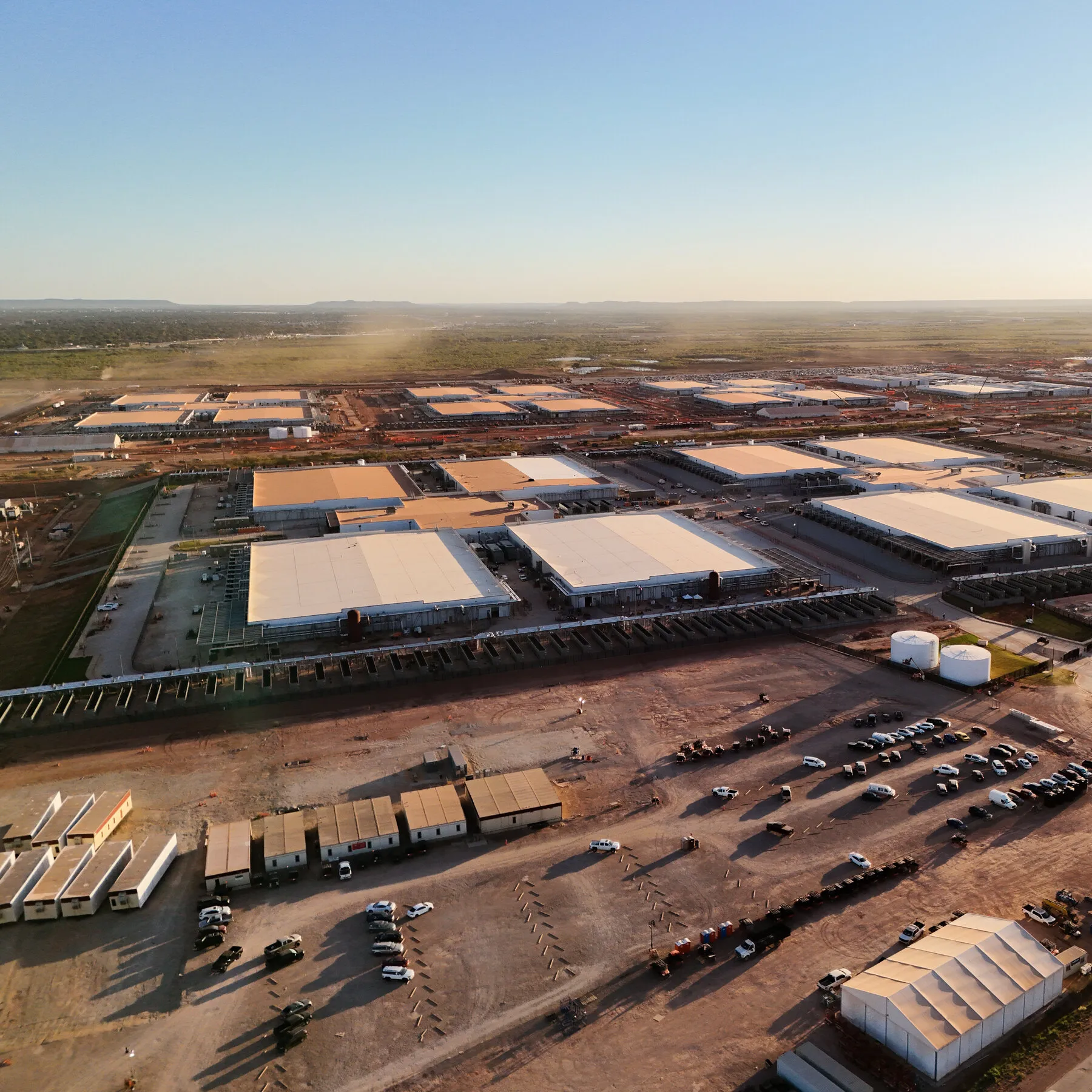
OpenAI has pledged to be more collaborative with communities where it builds data centers, including residents near its Stargate project in Abilene, Texas, one of the largest such facilities under construction in the country.
Tech policy, trends, and innovation news.
"The New York Times is a globally recognized newspaper offering authoritative reporting with a center-left editorial stance."
— A47 Editor
OpenAI Pledges to Give Locals More Say in Data Center Projects
OpenAI has pledged to be more collaborative with communities where it builds data centers, including residents near its Stargate project in Abilene, Texas, one of the largest such facilities under construction in the country.
Daily AI news: models, tools, and policy.
"Independent outlet tracking the fast pace of AI."
— A47 Editor
After midterm rout, OpenAI tries to win over communities it needs for AI expansion
OpenAI is responding to voters' rejection of new data centers, with voluntary commitments for future sites after voters rejected new data centers in 40 of 41 local ballot measures. The pledges apply only to facilities OpenAI operates itself, while a ...
Business and tech news excluding paywalled content.
"High-volume business/tech outlet with frequent AI coverage."
— A47 Editor
OpenAI lays out new policy framework for data centers
OpenAI has laid out a policy framework for data centers that would require developers to cover the grid costs of their projects and to disclose water, energy, noise and job data, according to a Business Insider report. The proposal comes as data cent...
Covers consumer technology, electronics, gadgets, and product reviews.
"Engadget is a trusted source for gadget reviews and consumer tech news, known for its hands-on analysis and industry coverage."
— A47 Editor
OpenAI says it will protect local resources and report on the impact of its data centers
OpenAI said it will protect local resources near its data centers and publicly report on their impact, in a pledge Engadget reported on November 5, 2026. The company says the commitments were in the works before Americans voted strongly against the d...
Consumer technology news with AI coverage.
"Gadget and tech site reporting on AI in products."
— A47 Editor
OpenAI says it will protect local resources and report on the impact of its data centers
OpenAI said it will protect local resources near its data centers and publicly report on their impact, in a pledge Engadget reported on November 5, 2026. The company says the commitments were in the works before Americans voted strongly against the d...
Curated tech headlines including AI stories.
"Influential aggregator surfacing the day’s top tech/AI links."
— A47 Editor
OpenAI pledges to change how it handles data center deals, including avoiding nondisclosure agreements and cutting power usage, after Democrats' midterm wins (Dina Bass/Bloomberg)
OpenAI said it will avoid nondisclosure agreements when negotiating data center deals and will ensure residents do not pay for the electricity powering those projects, and it will also cut power usage, following an outcry over its data center efforts...
Research, news, and analysis on blockchain startups, DeFi, and regulations.
"Crypto Briefing provides research, news, and analysis on blockchain startups, DeFi, and crypto regulations with investor-focused coverage."
— A47 Editor
OpenAI pledges to cover data center power costs after election backlash
OpenAI has pledged to cover the power costs of its data centers following backlash in the US election cycle over the rising electricity costs tied to AI infrastructure, according to a Crypto Briefing report on the base story. The commitment addresses...
Latest tech news, product reviews, and analysis for consumers and professionals.
"CNET delivers accessible and detailed technology reporting, including trusted product reviews and how-to guides."
— A47 Editor
AI Data Centers Have a PR Problem. OpenAI Is Proposing a Rebrand
CNET reports that OpenAI is proposing a rebrand of AI data centers as "AI compute campuses" as part of a post-midterms marketing campaign, reflecting the industry's effort to address public perception of facilities that have drawn criticism.