
Democratic Midterm Sweep Pressures Trump-Aligned Tech Billionaires Amid Market Decline and Anti-Tech Backlash
Why it matters
The political realignment in the United States disrupts two years of deregulation assumptions, challenging the speed and capital expenditure models of global artificial intelligence expansion.
What happened (in 30 seconds)
- Democratic majorities secured Congress: Following the November 4–5, 2026 midterm elections, Democrats captured both the House of Representatives and the Senate, alongside critical state governorships.
- Tech equities retreated across indices: The tech-heavy Nasdaq dropped by more than 5 percent as investors priced in heightened oversight, tax risks, and potential roadblocks to AI expansion.
- Corporate alliances faced sudden friction: Tech leaders who built relationships with the executive branch encountered sharp criticism and imminent oversight from incoming congressional committee leadership.
The context you actually need
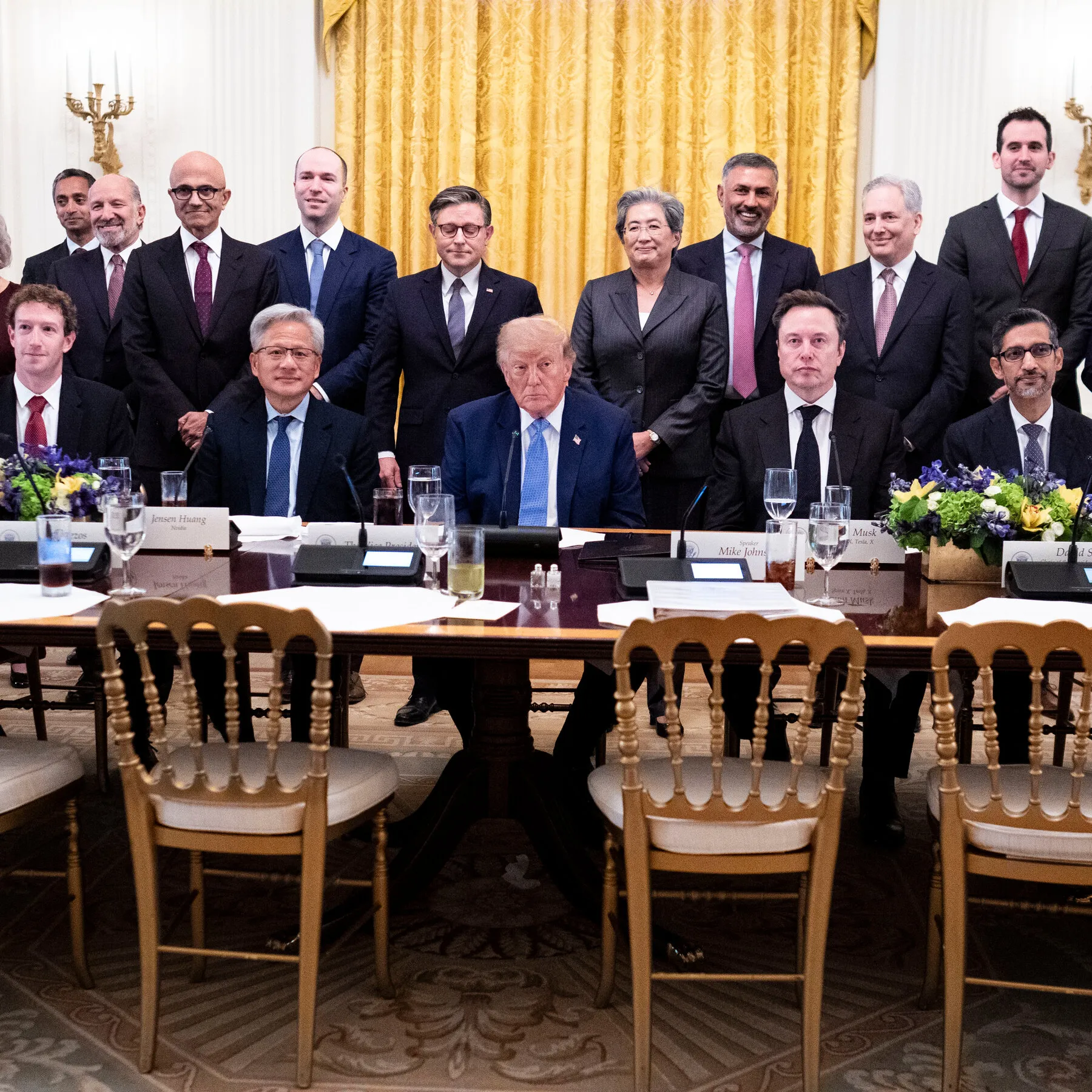
- A multi-year deregulatory push: Over the preceding 24 months, tech leaders cultivated relationships with the Trump administration through public endorsements, events like the September 2026 White House AI summit, and substantial political capital to protect emerging software from oversight.
- The $474 million spending baseline: Individual political spending hit unprecedented marks during the cycle, highlighted by Elon Musk directing $474 million toward super PACs and conservative political causes.
- A localized public pushback: Midterm campaigns successfully tapped into consumer and community resistance centered on power grid burdens from physical data centers, rising income disparities, and job security risks tied to automated systems.
What's really happening
The November 2026 midterm results alter the economic calculus for the global tech sector by separating executive branch goodwill from legislative power. For two years, technology firms operated on the expectation that administrative deregulation would clear the runway for massive capital expenditures in chip procurement, data center construction, and unchecked model training. That political balance has dissolved into divided government.
The core mechanism at play is the control of congressional machinery. With Democrats taking majorities in the House and Senate, committee gavels transfer to lawmakers who campaigned heavily on tech-driven inequality, algorithmic displacement, and the community impact of hyperscale infrastructure. This shift replaces an era of access with an environment defined by subpoena authority, record preservation orders, and protracted oversight hearings. Companies like Nvidia, Meta, Amazon, and Tesla now face scrutiny over corporate governance, campaign engagements, and domestic infrastructure subsidies.
Simultaneously, the capital landscape for artificial intelligence is encountering structural friction. The Nasdaq's single-day decline of more than 5 percent reflects a recalibration of infrastructure timelines. Hyperscalers have poured hundreds of billions of dollars into facilities that require vast acreage, water allocations, and electrical capacity. At the state and municipal levels, Democratic gubernatorial and legislative victories empower local jurisdictions to challenge permits, tax abatements, and grid allocations—most visibly in high-density development regions such as Texas. When local approvals stall, the return on investment for high-end silicon and power contracts stretches, forcing institutional investors to mark down valuations.
Finally, Silicon Valley itself is fragmenting internally. The public split between figures such as Reid Hoffman and executives like Musk, Mark Zuckerberg, and Jensen Huang demonstrates that political alignment in technology is no longer viewed as an administrative formality. Hoffman’s categorization of aligned peers as "mis-leaders" illustrates that boardroom pressure will compound external legislative risk. As public skepticism regarding AI-driven labor shifts grows, technology firms must justify both their capital expenditures and their political activities before skepticism-driven legislative panels.
Who feels it first (and how)
- Semiconductor and Hardware Manufacturers: Chip designers and equipment providers face delivery pauses or order renegotiations as enterprise hyperscalers adjust capacity targets to match slower infrastructure permitting.
- AI Infrastructure Developers and Land Speculators: Teams advancing physical data center builds across energy-rich hubs will encounter regulatory reviews, environmental challenges, and zoning disputes driven by newly elected state executives.
- Global Portfolio Managers and Allocators: Investors holding concentrated positions in sovereign or private tech equities will absorb pricing adjustments as multi-billion-dollar buildout models discount slower domestic execution.
- Corporate Policy and Legal Officers: In-house teams across major technology firms must redirect operational capital toward compliance, committee discovery requests, and document preservation mandates.
What to watch next
- Congressional Committee Appointments: Watch who assumes leadership of the House Energy and Commerce and Senate Commerce committees, as their initial hearing agendas will define the legal boundaries for AI safety inquiries.
- State-Level Permitting Challenges: Track municipal and state regulatory rulings on high-voltage power tie-ins and water access permits for hyperscale facilities in states like Texas.
- Q4 Capital Expenditure Guidance: Observe whether major cloud providers and enterprise tech platforms reduce or maintain their 2027 infrastructure spending targets during upcoming earnings calls.
Democrats hold confirmed majorities in both the U.S. House of Representatives and the Senate; the Nasdaq fell over 5 percent following the results; Elon Musk contributed $474 million to Republican political causes during the 2026 cycle.
Incoming congressional leaders will issue formal inquiries and document preservation notices to firms including Nvidia, Amazon, and Meta regarding political ties, power usage, and competition.
The degree to which state-level pushback will permanently halt data center construction versus simply driving projects to alternative jurisdictions with lower regulatory resistance.
Frequently Asked Questions
- Why it matters?
- The political realignment in the United States disrupts two years of deregulation assumptions, challenging the speed and capital expenditure models of global artificial intelligence expansion.
- What happened (in 30 seconds)?
- Democratic majorities secured Congress: Following the November 4–5, 2026 midterm elections, Democrats captured both the House of Representatives and the Senate, alongside critical state governorships. Tech equities retreated across indices: The tech-heavy Nasdaq dropped by more than 5 percent as investors priced in heightened oversight, tax risks, and potential roadblocks to AI expansion. Corporate alliances faced sudden friction: Tech leaders who built relationships with the executive branch en
- What's really happening?
- The November 2026 midterm results alter the economic calculus for the global tech sector by separating executive branch goodwill from legislative power. For two years, technology firms operated on the expectation that administrative deregulation would clear the runway for massive capital expenditures in chip procurement, data center construction, and unchecked model training. That political balance has dissolved into divided government. The core mechanism at play is the control of congressional
- Who feels it first (and how)?
- Semiconductor and Hardware Manufacturers: Chip designers and equipment providers face delivery pauses or order renegotiations as enterprise hyperscalers adjust capacity targets to match slower infrastructure permitting. AI Infrastructure Developers and Land Speculators: Teams advancing physical data center builds across energy-rich hubs will encounter regulatory reviews, environmental challenges, and zoning disputes driven by newly elected state executives. Global Portfolio Managers and Allocato
- What to watch next?
- Congressional Committee Appointments: Watch who assumes leadership of the House Energy and Commerce and Senate Commerce committees, as their initial hearing agendas will define the legal boundaries for AI safety inquiries. State-Level Permitting Challenges: Track municipal and state regulatory rulings on high-voltage power tie-ins and water access permits for hyperscale facilities in states like Texas. Q4 Capital Expenditure Guidance: Observe whether major cloud providers and enterprise tech pla
Tech industry coverage with AI angles.
"Mainstream tech news intersecting with AI policy and culture."
— A47 Editor
Tech Billionaires Face Tricky Political Waters After Democratic Midterm Sweep
Tech billionaires who donated heavily to causes favored by President Trump and aligned themselves with his political agenda now face a shifting political landscape after a Democratic midterm sweep, with that alignment potentially becoming a liability...
Tech policy, trends, and innovation news.
"The New York Times is a globally recognized newspaper offering authoritative reporting with a center-left editorial stance."
— A47 Editor
Tech Billionaires Face Tricky Political Waters After Democratic Midterm Sweep
Tech billionaires who donated heavily to causes favored by President Trump and aligned themselves with his political agenda now face a shifting political landscape after a Democratic midterm sweep, with that alignment potentially becoming a liability...
Top international stories selected by The Guardian editors.
"The Guardian is known for its progressive editorial stance and in-depth analysis."
— A47 Editor
Tech barons cozied up to Trump. What will they do in newly blue America?
Tech billionaires Elon Musk, Jeff Bezos and Mark Zuckerberg, who sat side by side at Donald Trump's inauguration, are now confronting a Democratic-controlled Congress after Democrats won both the Senate and House in the November 3, 2026 midterm elect...
UK and international business news, economics, and corporate coverage.
"The Guardian’s business section covers finance and markets with a progressive editorial tone."
— A47 Editor
Tech barons cozied up to Trump. What will they do in newly blue America?
Tech billionaires Elon Musk, Jeff Bezos and Mark Zuckerberg, who sat side by side at Donald Trump's inauguration, are now confronting a Democratic-controlled Congress after Democrats won both the Senate and House in the November 3, 2026 midterm elect...
Tech culture, product news, and critical takes on the tech industry's social impact.
"The Guardian's tech coverage blends mainstream news, critical analysis, and cultural commentary on emerging technologies and digital trends."
— A47 Editor
Tech barons cozied up to Trump. What will they do in newly blue America?
Tech billionaires Elon Musk, Jeff Bezos and Mark Zuckerberg, who sat side by side at Donald Trump's inauguration, are now confronting a Democratic-controlled Congress after Democrats won both the Senate and House in the November 3, 2026 midterm elect...
Future-focused tech headlines including AI breakthroughs.
"Consumer-friendly future-tech site with frequent AI coverage."
— A47 Editor
The Tech Industry Went All in on Trump, and Now They’re in Serious Danger Now That Americans Have Turned on Him
The Futurism report argues that the technology industry went all in on Donald Trump's agenda and now faces serious danger as Americans have turned against him, framing the sector's political bet as having failed.
Consumer tech and culture with frequent AI coverage.
"Influential tech outlet covering AI products and policy."
— A47 Editor
The fight for tech accountability starts now
The Verge reports that after Donald Trump began his second term, major technology companies including Google, Amazon, and Microsoft donated millions to his inauguration fund, while Meta overhauled its content policy to permit demeaning statements abo...
Tech news, reviews, and analysis of consumer electronics, science, art, and culture.
"The Verge is a technology-focused media outlet known for in-depth reporting, product reviews, and coverage of the intersection between technology and culture."
— A47 Editor
The fight for tech accountability starts now
The Verge reports that after Donald Trump began his second term, major technology companies including Google, Amazon, and Microsoft donated millions to his inauguration fund, while Meta overhauled its content policy to permit demeaning statements abo...