
Shipping traffic in the Strait of Hormuz drops to six vessels amid U.S.-Iran tensions
What happened
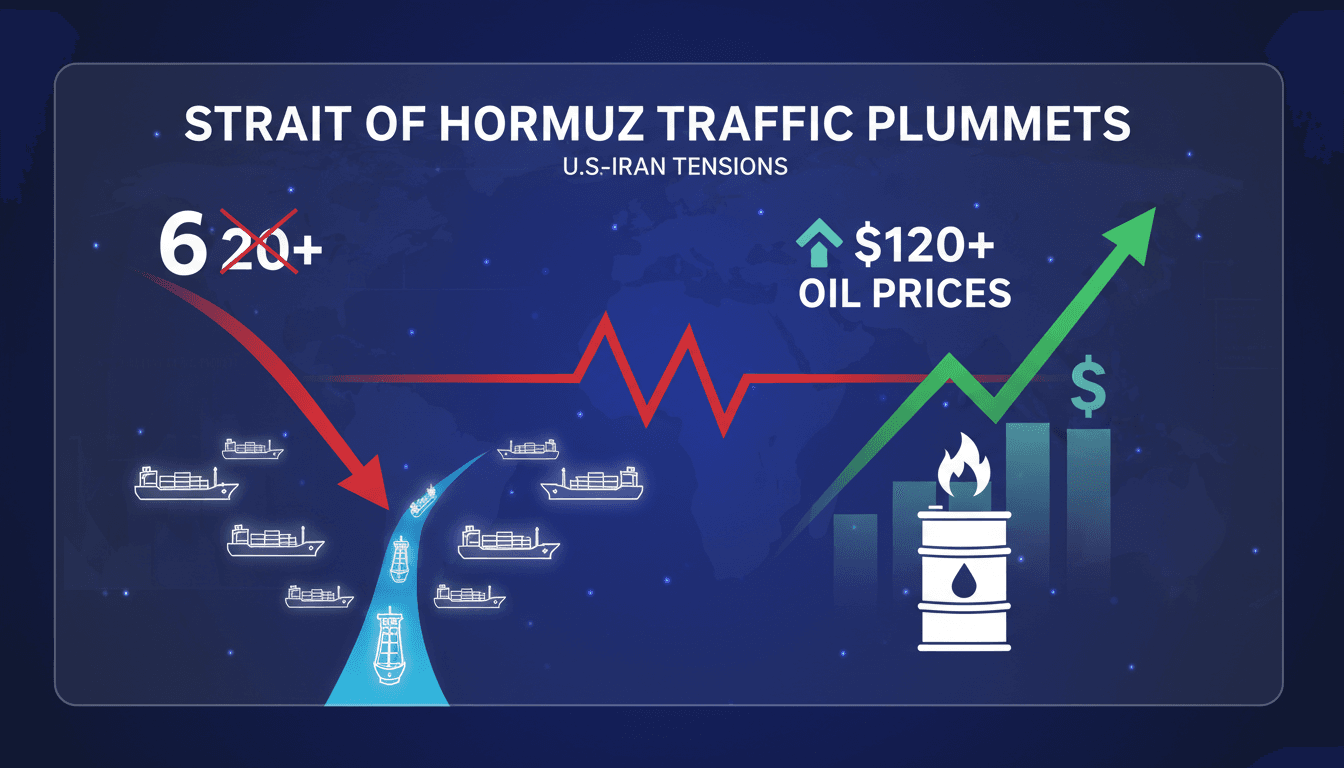
Shipping traffic in the Strait of Hormuz has plummeted to just six vessels, reflecting a significant decline in maritime activity. This drop comes amid diminishing hopes for a peace deal between the U.S. and Iran, which has raised concerns about the stability of this vital shipping route. Recent data indicates that the average number of vessels in the strait was around 11, highlighting the stark contrast in current traffic levels.
The decline in shipping activity is occurring at a time when oil prices are rising, driven by market reactions to the geopolitical tensions in the region. As the situation develops, the implications for oil prices and regional trade dynamics are becoming increasingly pronounced.
The Context
The Strait of Hormuz is a critical chokepoint for global oil shipments, making any disruption in traffic a matter of international concern. The recent decrease in shipping traffic is indicative of broader geopolitical tensions that have been escalating between the U.S. and Iran. Stakeholders in the oil and shipping industries are particularly vulnerable to these developments, as they directly impact trade routes and pricing.
Historically, the strait has been a focal point for maritime trade, and fluctuations in traffic can lead to significant economic repercussions. The current situation underscores the importance of monitoring U.S.-Iran relations, as any shifts could have far-reaching effects on global oil markets and regional stability.
Takeaway
Looking ahead, it is crucial to monitor developments in U.S.-Iran negotiations, as these could influence shipping traffic and oil prices in the region. The ongoing geopolitical tensions are likely to persist, creating an environment of uncertainty for maritime trade. Stakeholders should remain vigilant and prepared for potential market fluctuations as the situation unfolds.
As the dynamics in the Strait of Hormuz continue to evolve, the implications for global oil prices and trade stability will be significant. Keeping a close eye on these developments will be essential for understanding future impacts on the market.
Macro commentary, policy analysis, growth/inflation themes, and global outlooks.
"Contextual macro coverage that complements day-to-day market headlines."
— A47 Editor
Pakistan says U.S.-Iran close to some arrangement on peace deal - Bloomberg News
Pakistan has indicated that the U.S. and Iran are nearing some form of arrangement regarding a peace deal, reflecting ongoing diplomatic efforts to stabilize relations between the two nations. This development follows a series of negotiations and com...
UAE-based English-language newspaper covering regional politics, economics, and global affairs.
"The National reflects Emirati policy perspectives while maintaining international editorial standards."
— A47 Editor
Strait of Hormuz traffic drops to seven ships as US-Iran deal hopes fade
Traffic through the Strait of Hormuz has significantly declined, with only seven vessels reported transiting the critical waterway, reflecting a stark decrease from the usual volume amid ongoing tensions between the US and Iran. This drop is attribut...
Regional and international reporting focused on Middle Eastern politics, diplomacy, and economics.
"Asharq Al-Awsat is a Saudi-owned international newspaper reflecting mainstream Gulf political perspectives."
— A47 Editor
Oil Prices Rise Further as Hopes for Hormuz Deal Fade
Oil prices have risen further as hopes for a diplomatic deal regarding the reopening of the Strait of Hormuz fade. This increase comes amid ongoing geopolitical tensions, particularly between the U.S. and Iran, which have stalled negotiations and hei...
Regional coverage and analysis focused on politics, diplomacy, and business across the Middle East.
"Al-Monitor is known for analytical reporting on Middle East politics and policy developments."
— A47 Editor
Gulf shipping traffic via Strait of Hormuz falls to six vessels
Shipping traffic through the Strait of Hormuz has significantly decreased, with only six vessels recorded on Monday, compared to a 10-day average of approximately 11 vessels. This decline comes amid diminishing prospects for a peace agreement between...