
Drone Attacks Disrupt Libya's Oil Sector and Fuel Supply
What happened
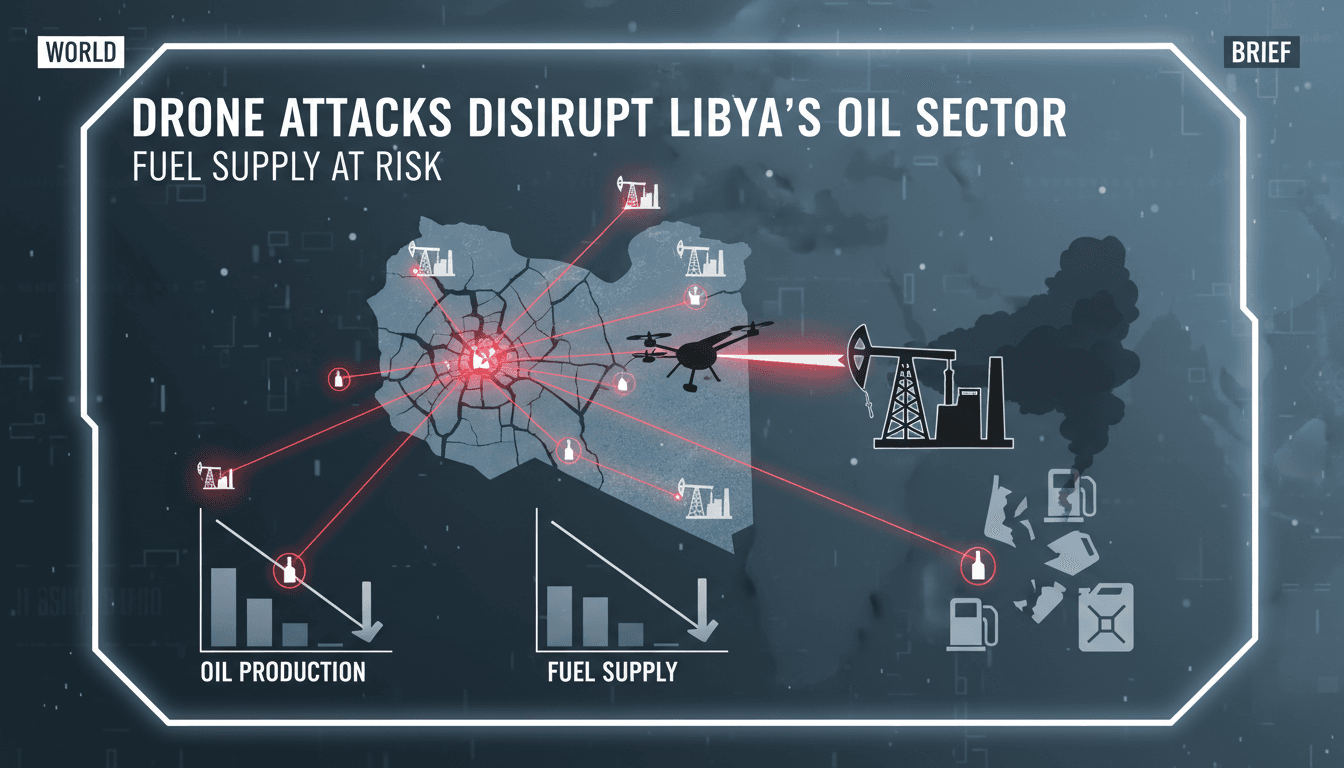
Libya's oil sector is currently facing severe disruptions due to drone strikes targeting key facilities, especially in Zawiya. These attacks have resulted in fires at the Zawiya refinery, which is crucial for the country's oil production. As a direct consequence, residents in Tripoli have begun to panic, leading to long queues at gas stations as fears of fuel shortages escalate.
The Libyan National Oil Corporation has raised alarms about the sustainability of oil production amid these ongoing assaults. If the situation continues to deteriorate, the implications for Libya's economy could be dire.
The Context
The Zawiya refinery, located just 40 kilometers west of Tripoli, plays a vital role in supplying fuel to the capital. The recent drone strikes are part of a broader conflict dynamic in the region, which has heightened tensions and instability. The attacks have not only targeted the refinery but have also raised concerns about the overall security of Libya's oil infrastructure.
Increased traffic at gas stations indicates a growing public anxiety over fuel availability, reflecting the immediate impact of these assaults on daily life. The Libyan National Oil Corporation's warnings about potential force majeure declarations underscore the seriousness of the situation and the need for urgent action.
Takeaway
The ongoing drone attacks pose a significant threat to Libya's oil production and fuel supply stability. Stakeholders should closely monitor the Libyan government's response to these incidents, as well as any potential international reactions. The situation could lead to broader implications for the country's economy if the attacks continue unabated.
As the conflict evolves, the focus will be on how the Libyan authorities and military address these challenges. The potential for international intervention in Libya's oil sector may also emerge as a critical factor in the coming weeks.
Arabic-language coverage of international news and geopolitics.
"RT Arabic is a Russian state-funded outlet often criticized for promoting Kremlin-aligned narratives."
— A47 Editor
ليبيا.. ازدحام بمحطات وقود طرابلس وسط مخاوف من تداعيات استهداف مصفاة الزاوية
Long queues of vehicles have formed at fuel stations in Tripoli and cities in the western region of Libya, coinciding with the recent targeting of storage tanks at the Zawiya refinery over the past two days, raising concerns about potential fuel supp...
Pan-Arab news coverage spanning politics, business, sports, and regional affairs.
"Asharq Al-Awsat reflects a broad Arab editorial perspective with strong attention to regional geopolitics."
— A47 Editor
«فوضى المسيّرات» تهدد بتعطيل إنتاج النفط الليبي
Libya is experiencing heightened anxiety and mobilization in its oil sector as oil facilities in the city of Zawiya, located 40 km west of the capital Tripoli, have erupted into flames. This incident raises concerns over the stability and safety of o...
Jordanian news and regional updates.
"Roya News is a Jordanian outlet focused on breaking news and local affairs."
— A47 Editor
المؤسسة الليبية للنفط: استهداف مصنع الزيوت في الزاوية بمسيرة.. والتهديد بإعلان القوات القاهرة
The Libyan Oil Corporation reported an attack on an oil factory in Zawiya by a drone, warning that continued aggression could lead to the declaration of a state of emergency.