
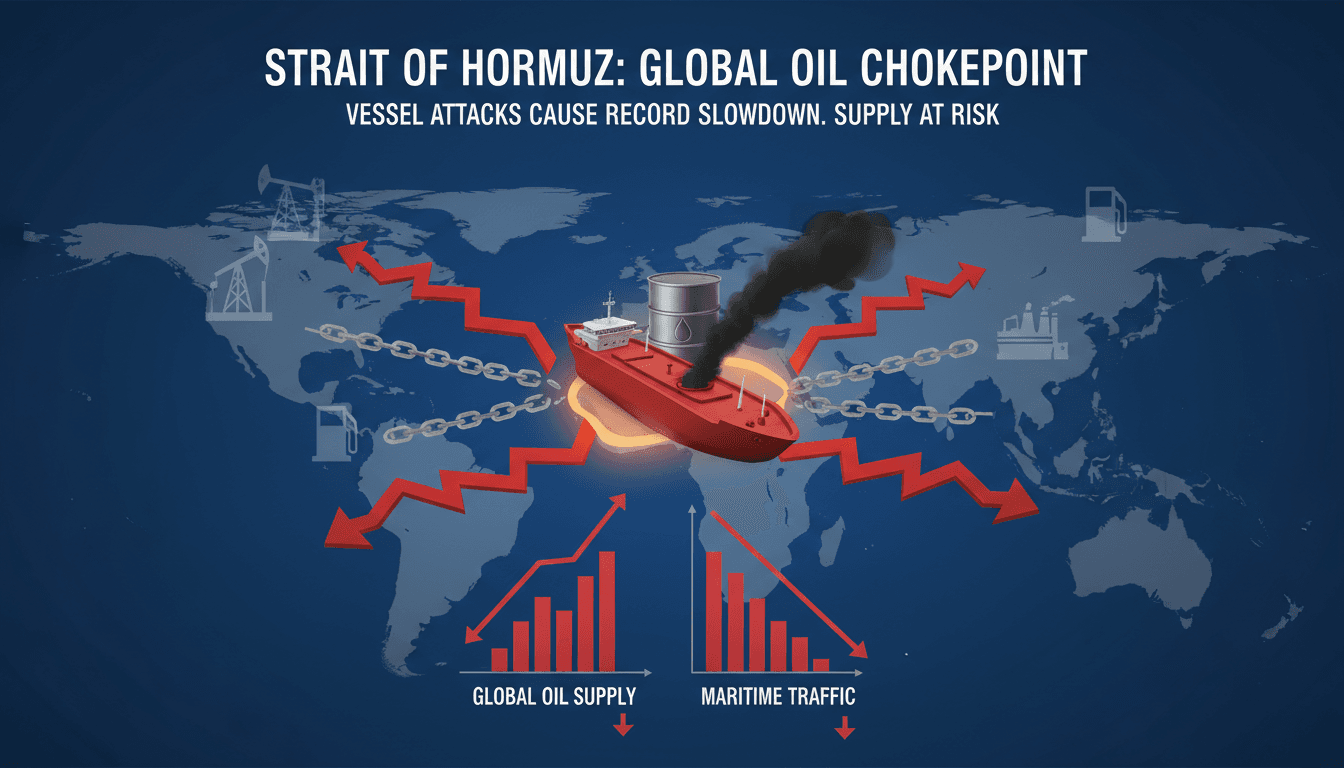
Tensions escalate in the Strait of Hormuz as maritime traffic slows due to vessel attacks
Here's what it means for you.
The recent escalation of tensions in the Strait of Hormuz signals potential disruptions in global oil supply chains. As maritime traffic slows to record levels, stakeholders in the oil market should prepare for possible price fluctuations. The U.S. threats to intensify sanctions against Iran could further complicate the geopolitical landscape, impacting trade routes and energy security. The ongoing situation may also prompt increased military presence in the region, raising the stakes for international shipping. Businesses reliant on oil imports must stay vigilant as developments unfold.
What happened
Maritime traffic in the Strait of Hormuz has significantly slowed following attacks on two vessels. These incidents have raised alarms about the safety of this critical shipping lane, which is vital for global oil transport. The slowdown in traffic coincides with stalled negotiations aimed at resolving the ongoing conflict in the region.
U.S. officials have indicated their capability to maintain a maritime blockade on Iran indefinitely, further complicating the situation. As tensions rise, the implications for global oil supply are becoming increasingly concerning.
The Context
The Strait of Hormuz is a crucial chokepoint for oil shipments, making the current tensions particularly significant for global markets. Negotiations to resolve the conflict have shown no signs of progress, leaving stakeholders uncertain about the future. The U.S. has threatened to escalate sanctions against Iran, which could exacerbate the situation.
Despite rising oil prices, they have not yet reached catastrophic levels, indicating that while the market is reacting, it is not in a state of crisis. The potential for further disruptions remains high, making this a critical moment for energy policy and international relations.
Takeaway
As the situation develops, the potential for increased military presence in the Strait of Hormuz could lead to further disruptions in global oil supply. Stakeholders should monitor the possibility of intensified U.S. sanctions on Iran, which could have far-reaching implications for maritime security.
The ongoing tensions highlight the fragility of the region and the importance of diplomatic efforts to resolve the conflict. Businesses and policymakers alike must remain alert to the evolving dynamics in this vital shipping corridor.
Pan-Arab news coverage spanning politics, business, sports, and regional affairs.
"Asharq Al-Awsat reflects a broad Arab editorial perspective with strong attention to regional geopolitics."
— A47 Editor
«هرمز» بين التهديدات والمفاوضات المتعثرة
The negotiations aimed at ending the war and ensuring the safe passage of oil tankers through the Strait of Hormuz remain stagnant, with no signs of progress from the warring parties. This deadlock continues to pose significant challenges for regiona...
Arabic-language reporting on global and regional news.
"BBC Arabic is part of the BBC, generally regarded for editorial standards and broad international coverage."
— A47 Editor
لا توجد صفقة جيدة يمكن إبرامها مع إيران – واشنطن بوست
Iran's seizure of the Strait of Hormuz is being interpreted as a hostage situation, although the hostage is already dead. The markets have absorbed the implications of this event, and while oil prices have risen, they are not catastrophic.
Arabic-language coverage of international news and geopolitics.
"RT Arabic is a Russian state-funded outlet often criticized for promoting Kremlin-aligned narratives."
— A47 Editor
تباطؤ الملاحة في مضيق هرمز وسط تهديدات أمريكية بتشديد العقوبات على إيران
Maritime traffic in the Strait of Hormuz has slowed to record levels following attacks on two vessels, coinciding with Washington's announcement of its ability to maintain a maritime blockade on Iran indefinitely. This situation raises concerns about...