
Commodity Vessel Transits in Strait of Hormuz Drop to Seven Amid Ongoing Diplomatic Efforts
Here's what it means for you.
If you're in Dubai, expect potential increases in energy costs and supply chain delays.
Why it matters
The Strait of Hormuz is a critical chokepoint for global oil and LNG, and disruptions here can ripple through energy markets worldwide.
What happened (in 30 seconds)
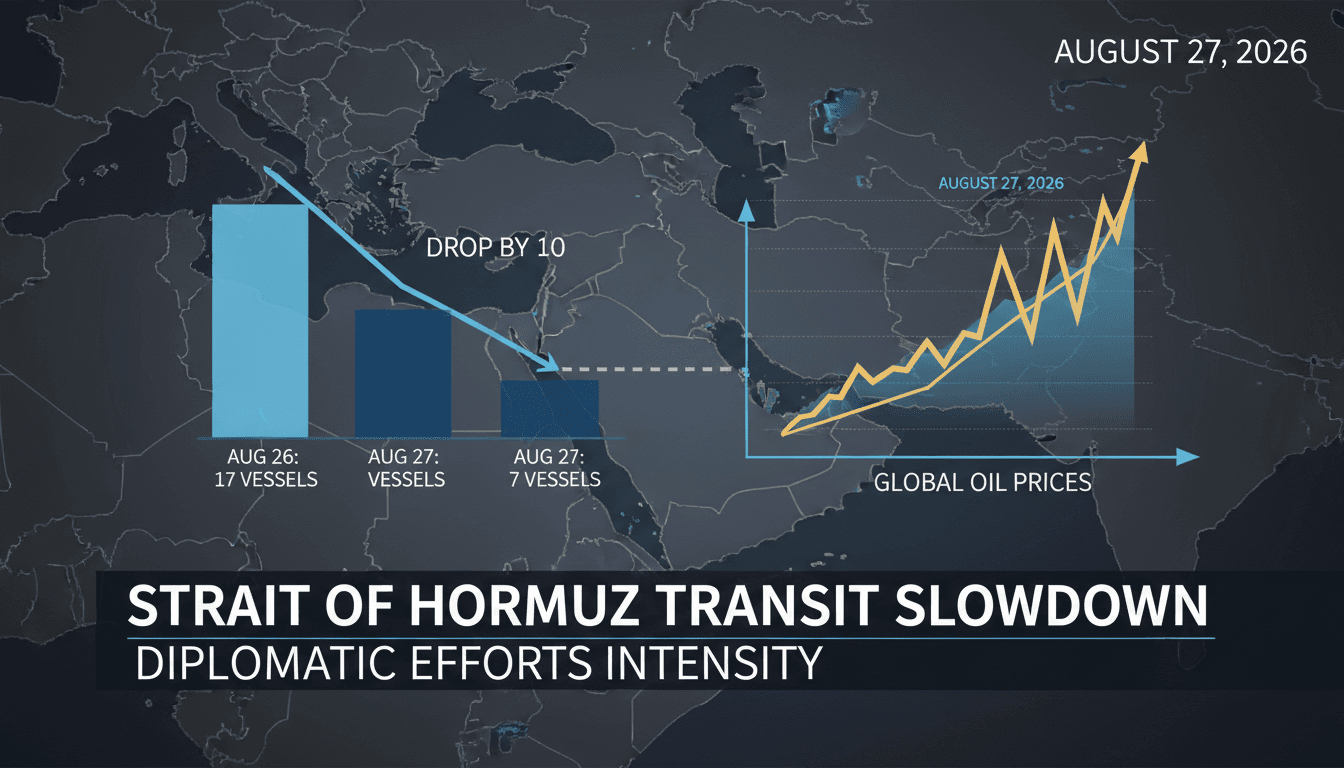
- Seven commodity vessels transited the Strait of Hormuz on August 27, 2026, down from 17 the previous day.
- Traffic remains below the 10-day average of 15 vessels, indicating ongoing disruptions.
- Diplomatic efforts are underway to restore normal shipping traffic amid regional conflicts.
The context you actually need
- The Strait of Hormuz previously facilitated approximately 20% of global oil and LNG shipments, making it vital for energy security.
- Post-conflict traffic levels have plummeted from pre-war averages of over 130 vessels to single digits or low teens due to blockades and insurance risks.
- Iran and Oman are negotiating shared control and revenue sharing, with Qatari mediation focusing on restoring freedom of navigation.
What's really happening
On August 27, 2026, only seven commodity vessels successfully transited the Strait of Hormuz, according to preliminary data from Kpler. This figure represents a significant drop from the 17 vessels that transited the day before and is below the recent 10-day average of 15. The vessels included a mix of chemical tankers, medium-range tankers, and an Ultramax, indicating varied shipping needs but overall low traffic.
The decline in vessel transits is symptomatic of broader geopolitical tensions in the region, particularly following the US-Iran-Israel conflict that erupted in late February 2026. This conflict has severely disrupted maritime traffic, leading to heightened risks for shipping companies and insurers. As a result, many vessels are either avoiding the Strait altogether or facing delays due to increased scrutiny and potential blockades.
Diplomatic efforts are ongoing, with Iran and Oman engaged in discussions about shared control of the Strait and the establishment of a temporary navigational corridor. Qatari mediators are also involved, emphasizing the need for freedom of navigation. However, these negotiations have yet to yield concrete results, and the situation remains fluid.
The implications of these disruptions extend beyond immediate shipping concerns. With the Strait of Hormuz being a key artery for global energy supplies, any sustained decline in vessel traffic can lead to increased oil prices worldwide. This, in turn, affects consumers and businesses reliant on stable energy costs. For Dubai residents, the indirect effects could manifest as higher energy prices and potential delays in the supply chain for imported goods.
As the situation develops, the maritime industry is closely monitoring traffic patterns and geopolitical developments. The potential for further disruptions remains high, particularly if diplomatic negotiations stall or if tensions escalate again in the region.
Who feels it first (and how)
- Shipping companies: Increased operational risks and insurance costs.
- Energy traders: Volatility in oil prices due to supply uncertainties.
- Consumers in Dubai: Potential increases in energy bills and imported goods prices.
- Local businesses: Supply chain disruptions affecting inventory and costs.
What to watch next
- Diplomatic negotiations: Progress between Iran, Oman, and Qatari mediators could signal a return to normal traffic levels.
- Oil price fluctuations: Monitor global oil prices for signs of instability linked to Strait of Hormuz traffic.
- Shipping data updates: Continued tracking of vessel transits will provide insights into the effectiveness of diplomatic efforts.
Vessel transits through the Strait of Hormuz are currently below pre-conflict levels.
Continued diplomatic efforts will influence future shipping traffic and oil prices.
The timeline for restoring normal traffic levels remains uncertain.
Frequently Asked Questions
- Why it matters?
- The Strait of Hormuz is a critical chokepoint for global oil and LNG, and disruptions here can ripple through energy markets worldwide.
- What happened (in 30 seconds)?
- Seven commodity vessels transited the Strait of Hormuz on August 27, 2026, down from 17 the previous day. Traffic remains below the 10-day average of 15 vessels, indicating ongoing disruptions. Diplomatic efforts are underway to restore normal shipping traffic amid regional conflicts.
- What's really happening?
- On August 27, 2026, only seven commodity vessels successfully transited the Strait of Hormuz, according to preliminary data from Kpler. This figure represents a significant drop from the 17 vessels that transited the day before and is below the recent 10-day average of 15. The vessels included a mix of chemical tankers, medium-range tankers, and an Ultramax, indicating varied shipping needs but overall low traffic. The decline in vessel transits is symptomatic of broader geopolitical tensions i
- Who feels it first (and how)?
- Shipping companies: Increased operational risks and insurance costs. Energy traders: Volatility in oil prices due to supply uncertainties. Consumers in Dubai: Potential increases in energy bills and imported goods prices. Local businesses: Supply chain disruptions affecting inventory and costs.
- What to watch next?
- Diplomatic negotiations: Progress between Iran, Oman, and Qatari mediators could signal a return to normal traffic levels. Oil price fluctuations: Monitor global oil prices for signs of instability linked to Strait of Hormuz traffic. Shipping data updates: Continued tracking of vessel transits will provide insights into the effectiveness of diplomatic efforts.
Regional and international reporting focused on Middle Eastern politics, diplomacy, and economics.
"Asharq Al-Awsat is a Saudi-owned international newspaper reflecting mainstream Gulf political perspectives."
— A47 Editor
Shipping Traffic Via Strait of Hormuz Slips Below 10-day Average
Recent data indicates that shipping traffic through the Strait of Hormuz has slipped below the 10-day average, with only seven commodity vessels transiting the waterway on August 27, down from 17 the previous day. This decline reflects ongoing geopol...
Regional and international reporting focused on Middle Eastern politics, diplomacy, and economics.
"Asharq Al-Awsat is a Saudi-owned international newspaper reflecting mainstream Gulf political perspectives."
— A47 Editor
Shipping Traffic Through Strait of Hormuz Rises Slightly, Data Shows
Recent data indicates a slight increase in shipping traffic through the Strait of Hormuz, with the number of commodity vessels transiting rising to 10 on Wednesday, August 27, from eight the previous day. This uptick comes amid ongoing geopolitical t...
Macro commentary, policy analysis, growth/inflation themes, and global outlooks.
"Contextual macro coverage that complements day-to-day market headlines."
— A47 Editor
Hormuz shipping traffic sits below 10-day average amid fresh diplomacy hopes
Shipping traffic through the Strait of Hormuz has fallen below the 10-day average, coinciding with renewed hopes for diplomatic resolutions in the region. This decline in traffic reflects ongoing geopolitical tensions that have historically impacted ...