
Non-Iranian Oil Exports Persist via Ship-to-Ship Transfers Amid Low Strait of Hormuz Traffic
Here's what it means for you.
If you're in the energy sector, the ongoing adaptations in oil logistics could impact pricing and supply stability.
Why it matters
The shift in oil transport methods underscores vulnerabilities in global energy supply chains amid geopolitical tensions.
What happened (in 30 seconds)
- Ship-to-ship transfers in the Gulf of Oman are sustaining non-Iranian oil exports as direct traffic through the Strait of Hormuz hits a three-month low.
- Gulf producers are employing shuttle operations and dark transits to bypass high-risk areas, adapting techniques previously used by Iran.
- US military escorts are limiting Iranian control over energy routes, but direct throughput remains significantly below pre-conflict levels.
The context you actually need
- The US-Iran conflict escalated in February 2026, leading to Iranian restrictions on the Strait of Hormuz, a critical chokepoint for global oil supplies.
- Direct vessel traffic through the Strait has dropped sharply, with only two commodity vessels reported on August 22, 2026, the lowest since early May.
- Non-Iranian producers are now using methods like shuttle voyages and AIS-dark transits to maintain exports while Iranian barrels face blockades.
What's really happening
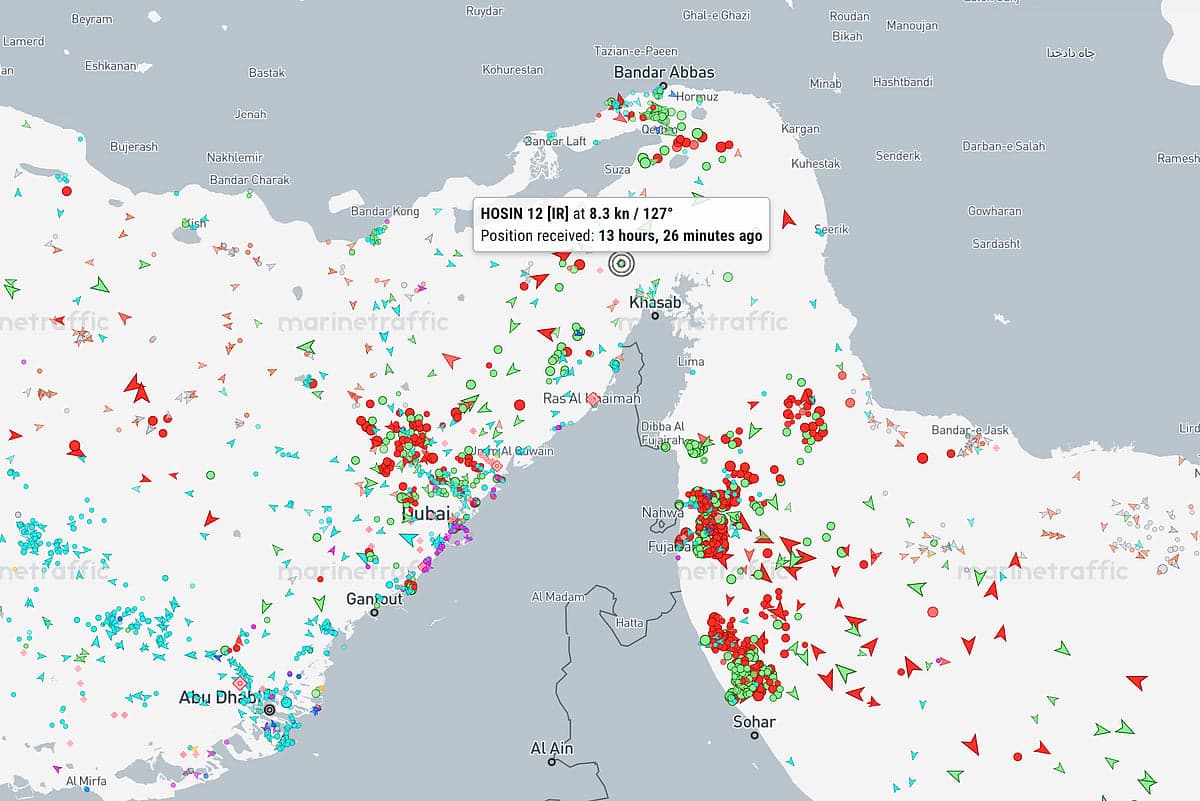
As of August 26, 2026, maritime data indicates that at least 15 simultaneous ship-to-ship operations are occurring in the Gulf of Oman, involving approximately 25 million barrels of oil. This adaptation is a direct response to the ongoing US-Iran conflict, which has severely constrained Iranian oil exports due to US pressure and naval measures. The Strait of Hormuz, which previously facilitated the transit of 95-130 ships daily, is now seeing a significant reduction in traffic, with only two vessels reported on a recent Monday.
Gulf producers, including the UAE, Saudi Arabia, Iraq, Kuwait, and Qatar, have turned to shuttle operations to move crude and refined products. These operations involve transferring oil from smaller vessels at Gulf terminals to larger tankers waiting outside the Strait, effectively bypassing high-risk segments of the chokepoint. This method mirrors tactics previously employed by Iran to evade sanctions, but it is now being utilized for non-Iranian cargoes.
The adaptation has been tracked by firms like TankerTrackers and Kpler, which report that the volume of oil involved in these transfers is substantial. The use of dark transits—where vessels turn off their Automatic Identification System (AIS) to avoid detection—complicates the tracking of these operations. This has led to a situation where a significant portion of oil exports is occurring under the radar, making it difficult for analysts to gauge the full extent of the market dynamics at play.
Despite these adaptations, the situation remains precarious. Analysts note that the erosion of Iran's leverage over energy routes is evident, but the ongoing military presence of the US in the region is a double-edged sword. While it limits Iranian control, it also keeps supply chains vulnerable to escalation. The direct throughput through the Strait remains a fraction of pre-war levels, leaving the market exposed to potential disruptions.
Who feels it first (and how)
- Energy companies: Adjustments in logistics may affect operational costs and pricing strategies.
- Consumers: Fluctuations in oil supply could lead to changes in fuel prices at the pump.
- Investors: Market volatility may impact investment strategies in energy sectors.
- Regional governments: Economic stability may be threatened by fluctuating oil revenues.
What to watch next
- Traffic patterns in the Strait of Hormuz: Monitoring changes in vessel traffic will provide insights into the effectiveness of current adaptations.
- US-Iran relations: Any shifts in diplomatic negotiations could alter the current operational landscape for oil producers.
- Global oil prices: Watch for fluctuations that may arise from ongoing tensions and adaptations in shipping logistics.
Ship-to-ship transfers are currently sustaining non-Iranian oil exports.
Continued adaptations in logistics will be necessary as geopolitical tensions persist.
The long-term impact on global oil prices and supply stability remains uncertain.
Frequently Asked Questions
- Why it matters?
- The shift in oil transport methods underscores vulnerabilities in global energy supply chains amid geopolitical tensions.
- What happened (in 30 seconds)?
- Ship-to-ship transfers in the Gulf of Oman are sustaining non-Iranian oil exports as direct traffic through the Strait of Hormuz hits a three-month low. Gulf producers are employing shuttle operations and dark transits to bypass high-risk areas, adapting techniques previously used by Iran. US military escorts are limiting Iranian control over energy routes, but direct throughput remains significantly below pre-conflict levels.
- What's really happening?
- As of August 26, 2026, maritime data indicates that at least 15 simultaneous ship-to-ship operations are occurring in the Gulf of Oman, involving approximately 25 million barrels of oil. This adaptation is a direct response to the ongoing US-Iran conflict, which has severely constrained Iranian oil exports due to US pressure and naval measures. The Strait of Hormuz, which previously facilitated the transit of 95-130 ships daily, is now seeing a significant reduction in traffic, with only two ves
- Who feels it first (and how)?
- Energy companies: Adjustments in logistics may affect operational costs and pricing strategies. Consumers: Fluctuations in oil supply could lead to changes in fuel prices at the pump. Investors: Market volatility may impact investment strategies in energy sectors. Regional governments: Economic stability may be threatened by fluctuating oil revenues.
- What to watch next?
- Traffic patterns in the Strait of Hormuz: Monitoring changes in vessel traffic will provide insights into the effectiveness of current adaptations. US-Iran relations: Any shifts in diplomatic negotiations could alter the current operational landscape for oil producers. Global oil prices: Watch for fluctuations that may arise from ongoing tensions and adaptations in shipping logistics.
Regional coverage and analysis focused on politics, diplomacy, and business across the Middle East.
"Al-Monitor is known for analytical reporting on Middle East politics and policy developments."
— A47 Editor
Shipping traffic via Strait of Hormuz slips below 10-day average, data shows
Recent data indicates that shipping traffic through the Strait of Hormuz has decreased significantly, with only seven commodity vessels transiting the waterway on August 27, down from 17 the previous day and below the 10-day average of 15 vessels. Th...
Pan-Arab news coverage spanning politics, business, sports, and regional affairs.
"Asharq Al-Awsat reflects a broad Arab editorial perspective with strong attention to regional geopolitics."
— A47 Editor
«بيانات»: حركة الشحن عبر مضيق هرمز دون متوسطها لعشرة أيام
Preliminary shipping data released today indicates that only five vessels transited the Strait of Hormuz yesterday, a significant decrease from 17 ships the previous day. This decline suggests a notable drop in maritime traffic through this critical ...
Pan-Arab news coverage spanning politics, business, sports, and regional affairs.
"Asharq Al-Awsat reflects a broad Arab editorial perspective with strong attention to regional geopolitics."
— A47 Editor
حركة الملاحة عبر مضيق هرمز دون متوسط 10 أيام
Preliminary data indicated that five ships carrying raw materials transited the Strait of Hormuz on Tuesday, a figure that has not changed significantly from the previous day but is considerably lower than the ten-day average of 15 vessels.
UAE-based newspaper covering Gulf politics, society, and international developments.
"Gulf News is one of the UAE’s most prominent English-language publications."
— A47 Editor
Ship-to-ship transfers keep Gulf oil moving outside Hormuz as direct traffic hits multi-month low
Ship-to-ship transfers are increasingly being utilized to maintain oil flow in the Gulf region as direct maritime traffic through the Strait of Hormuz has reached a multi-month low. This shift is attributed to heightened geopolitical tensions and str...
A curated Gulf News feed featuring major stories across news, business, opinion, and lifestyle.
"Gulf News is a major UAE newspaper whose featured stories feed reflects a broad editorial mix shaped for a Gulf audience."
— A47 Editor
Ship-to-ship transfers keep Gulf oil moving outside Hormuz as direct traffic hits multi-month low
Ship-to-ship transfers are increasingly being utilized to maintain oil flow in the Gulf region as direct maritime traffic through the Strait of Hormuz has reached a multi-month low. This shift is attributed to heightened geopolitical tensions and str...