
Iran Systematically Targets U.S. Air Defenses and Bases Across the Middle East in Eight-Month Conflict
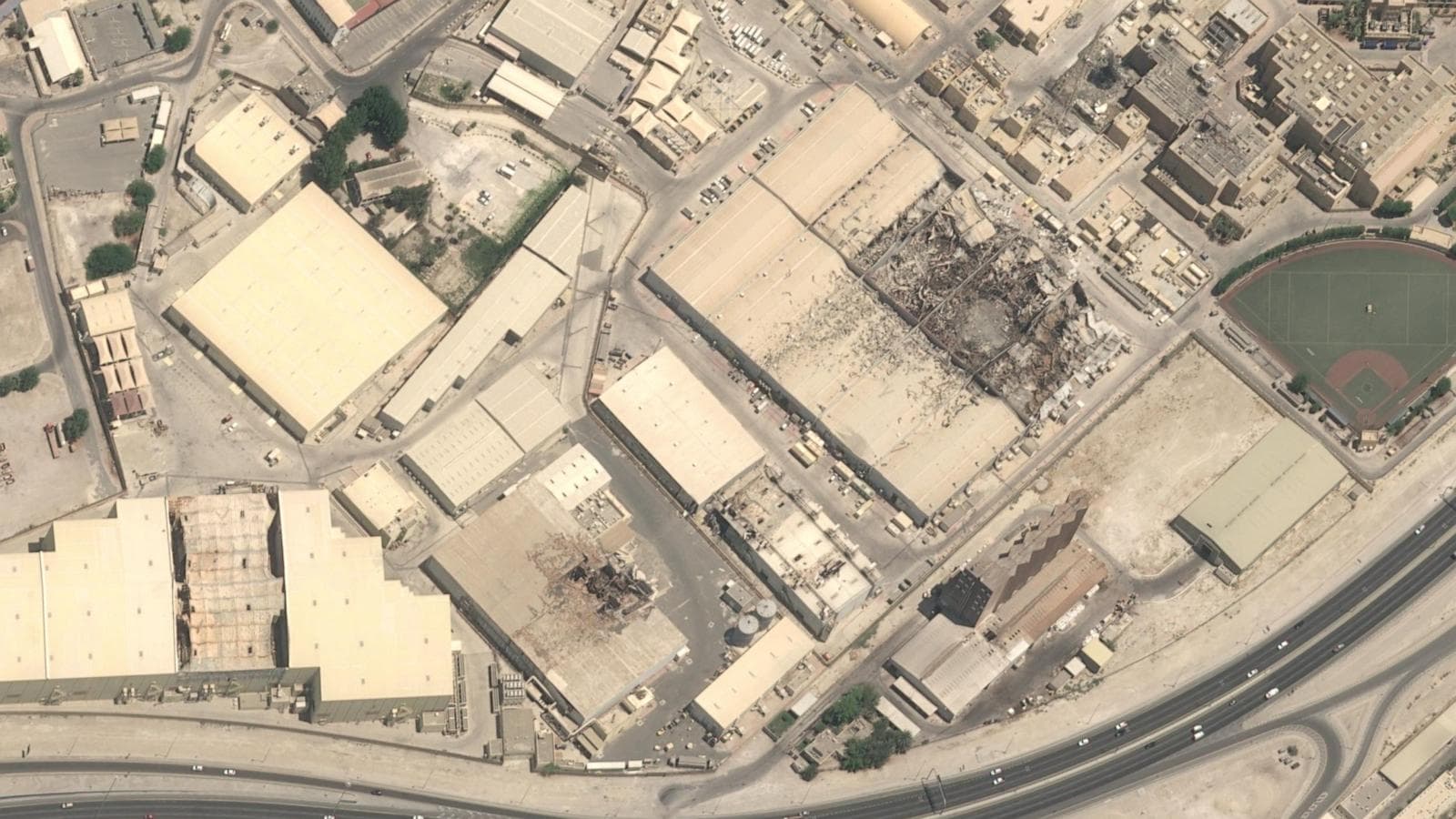
Why it matters
A verified operational campaign degrading fixed air-defense architecture fundamentally shifts Gulf risk calculations, compelling logistical re-routing and impacting commercial infrastructure across key trade arteries.
What happened (in 30 seconds)
- Early-warning networks were neutralized first: Starting in late February 2026, targeted strikes took out radar enclosures at Camp Arifjan in Kuwait and Naval Support Activity Bahrain within 48 hours, expanding subsequently to sites in Saudi Arabia and Jordan.
- Sustained pressure hit 26 operational installations: Over an eight-month span, more than 115 claimed drone and missile attacks struck aviation facilities, hangars, and support hubs, generating billions of dollars in hardware losses.
- Operating architecture was pushed backward: In response to confirmed structural damage across 18 initial sites and recurring strikes on hubs like Ali Al Salem Air Base, critical aircraft and air-defense units were relocated out of the Persian Gulf.
The context you actually need
- The campaign relied on phased suppression: Instead of targeting broad population centers, operations focused on degrading detection assets, specifically radar domes and mobile arrays, before engaging high-value aircraft such as refueling units and a Boeing E-3 Sentry.
- Geographic distribution crossed eight host nations: Installations sustaining confirmed structural impacts span Kuwait, Bahrain, Iraq, Jordan, Oman, Qatar, Saudi Arabia, and the United Arab Emirates.
- Longstanding reliance on fixed infrastructure is changing: The concentration of assets at static, well-mapped sites has proved vulnerable to low-cost precision systems, prompting defense planners to rethink Persian Gulf stationing.
What's really happening
The eight-month conflict reveals a calculated operational doctrine designed to nullify fixed technological advantages through phased attrition. By prioritizing early-warning radar arrays and communication points in the opening 48 hours, the campaign systematically degraded situational awareness across the northern and central Gulf.
The immediate result was an impaired defense umbrella. Once early-warning radar domes at Camp Arifjan and Naval Support Activity Bahrain were compromised, subsequent waves encountered lowered interception rates. This sequencing permitted follow-on strikes against higher-value, harder-to-replace assets: fuel storage bunkers, troop housing, maintenance hangars, and specialized aviation frames, including command-and-control aircraft stationed at Prince Sultan Air Base. At Ali Al Salem Air Base alone, targeted impacts occurred at least 30 times.
This dynamic alters the economic balance of regional defense. Operating fixed Patriot and related air-defense batteries requires substantial capital expenditure. When adversary tactics utilize distributed drones and ballistic payloads to target the sensor nodes themselves, the cost-to-kill ratio flips against static defenders. By August 2026, damage across 115 structures demonstrated that defensive saturation can be systematically achieved if surveillance nodes are continually degraded.
Consequently, the operational posture has pivoted from forward defense to spatial dispersal. Moving high-value platforms, refueling tankers, and primary air-defense batteries out of the Persian Gulf perimeter reduces direct exposure to short-flight-time systems. However, this withdrawal increases the transit distance required for air patrols and maritime escorts. For commercial enterprises operating within the Gulf Cooperation Council, this redeployment thins the security umbrella over civil corridors. The transition from heavily concentrated forward bases to dispersed, rear-echelon installations fundamentally alters regional logistics: transport times expand, insurance underwriters adjust risk assessments upward, and host nations must recalibrate their domestic infrastructure protections.
Who feels it first (and how)
- Aviation and maritime logistics operators: Flight paths and shipping lanes near key installations like Al Dhafra face increased detours, elevated operational protocols, and heightened airspace coordination requirements.
- Regional corporate treasuries and insurers: Underwriting rates for commercial assets, physical infrastructure, and warehousing in the northern Gulf adjust to account for asset relocations.
- Defense procurement and infrastructure contractors: Capital allocations must pivot from standard base maintenance to hardening, subterranean storage, and rapid mobile-sensor replacements.
- Dubai and Abu Dhabi trade professionals: Proximity to affected sites like Al Dhafra increases sensitivity around supply continuity, transshipment schedules, and regional asset allocation.
What to watch next
- Post-electoral policy reviews: Potential authorization of expanded operations following the U.S. midterm elections will dictate whether the theater broadens or settles into localized standoff deterrence.
- Secondary air-defense repositioning: Track whether allied forces permanently redeploy specialized air-defense batteries back to forward Gulf positions or maintain dispersal strategies outside the central Gulf basin.
- Regional retaliatory cycles: Declarations of reciprocal operations following base damage assessments signal whether strike frequency will escalate above the 115-strike baseline.
More than 115 strikes systematically hit 26 U.S. operating sites across eight regional countries between February and August 2026, prompting equipment relocations outside the Persian Gulf.
Reliance on large, static regional bases will decrease permanently in favor of distributed, mobile footprints to limit future precision-strike vulnerabilities.
The exact financial cost of hardware restoration and whether host nations will assume greater direct defense burdens for regional infrastructure rebuilding.
Frequently Asked Questions
- Why it matters?
- A verified operational campaign degrading fixed air-defense architecture fundamentally shifts Gulf risk calculations, compelling logistical re-routing and impacting commercial infrastructure across key trade arteries.
- What happened (in 30 seconds)?
- Early-warning networks were neutralized first: Starting in late February 2026, targeted strikes took out radar enclosures at Camp Arifjan in Kuwait and Naval Support Activity Bahrain within 48 hours, expanding subsequently to sites in Saudi Arabia and Jordan. Sustained pressure hit 26 operational installations: Over an eight-month span, more than 115 claimed drone and missile attacks struck aviation facilities, hangars, and support hubs, generating billions of dollars in hardware losses. Operati
- What's really happening?
- The eight-month conflict reveals a calculated operational doctrine designed to nullify fixed technological advantages through phased attrition. By prioritizing early-warning radar arrays and communication points in the opening 48 hours, the campaign systematically degraded situational awareness across the northern and central Gulf. The immediate result was an impaired defense umbrella. Once early-warning radar domes at Camp Arifjan and Naval Support Activity Bahrain were compromised, subsequen
- Who feels it first (and how)?
- Aviation and maritime logistics operators: Flight paths and shipping lanes near key installations like Al Dhafra face increased detours, elevated operational protocols, and heightened airspace coordination requirements. Regional corporate treasuries and insurers: Underwriting rates for commercial assets, physical infrastructure, and warehousing in the northern Gulf adjust to account for asset relocations. Defense procurement and infrastructure contractors: Capital allocations must pivot from sta
- What to watch next?
- Post-electoral policy reviews: Potential authorization of expanded operations following the U.S. midterm elections will dictate whether the theater broadens or settles into localized standoff deterrence. Secondary air-defense repositioning: Track whether allied forces permanently redeploy specialized air-defense batteries back to forward Gulf positions or maintain dispersal strategies outside the central Gulf basin. Regional retaliatory cycles: Declarations of reciprocal operations following bas
English-language digital publication covering business, politics, technology, and current affairs.
"The Arabian Post mixes original and syndicated-style coverage with a broad regional and global business-news orientation."
— A47 Editor
Iranian strikes disabled US radar before wider attacks
Satellite imagery and battlefield damage assessments reported by The Arabian Post indicate that Iranian missile and drone strikes against US military installations across the Middle East first targeted early-warning radars and air-defence systems, th...
UAE-based newspaper covering Gulf politics, society, and international developments.
"Gulf News is one of the UAE’s most prominent English-language publications."
— A47 Editor
Iran targeted US air defences before hitting aircraft and buildings on Middle East bases, AP analysis finds
An AP analysis finds that Iran targeted US air defences before striking aircraft and buildings at Middle East bases, according to a Gulf News report on the findings. The reporting frames the attacks as part of an escalating confrontation between Wash...
A curated Gulf News feed featuring major stories across news, business, opinion, and lifestyle.
"Gulf News is a major UAE newspaper whose featured stories feed reflects a broad editorial mix shaped for a Gulf audience."
— A47 Editor
Iran targeted US air defences before hitting aircraft and buildings on Middle East bases, AP analysis finds
An AP analysis finds that Iran targeted US air defences before striking aircraft and buildings at Middle East bases, according to a Gulf News report on the findings. The reporting frames the attacks as part of an escalating confrontation between Wash...
Major U.S. developments and regional news.
"ABC News delivers broad national coverage with a mainstream editorial stance, focusing on accessibility and balanced reporting."
— A47 Editor
Iran targeted US air defenses then hit aircraft and buildings on Mideast bases, AP analysis finds
An AP analysis reported by ABC News finds that Iran's strikes on more than two dozen U.S. bases in the Middle East first targeted early warning and air defense systems, before hitting aircraft and buildings on those installations.