
Proposed Trump-Putin-Xi Trilateral Summit in Shenzhen Revives Yalta-Style Power Division Concerns
Why it matters
Direct engagement between the United States, Russia, and China bypasses traditional multilateral architecture, establishing a transactional baseline for nuclear posture, regional security flashpoints, and critical supply corridors.
What happened (in 30 seconds)
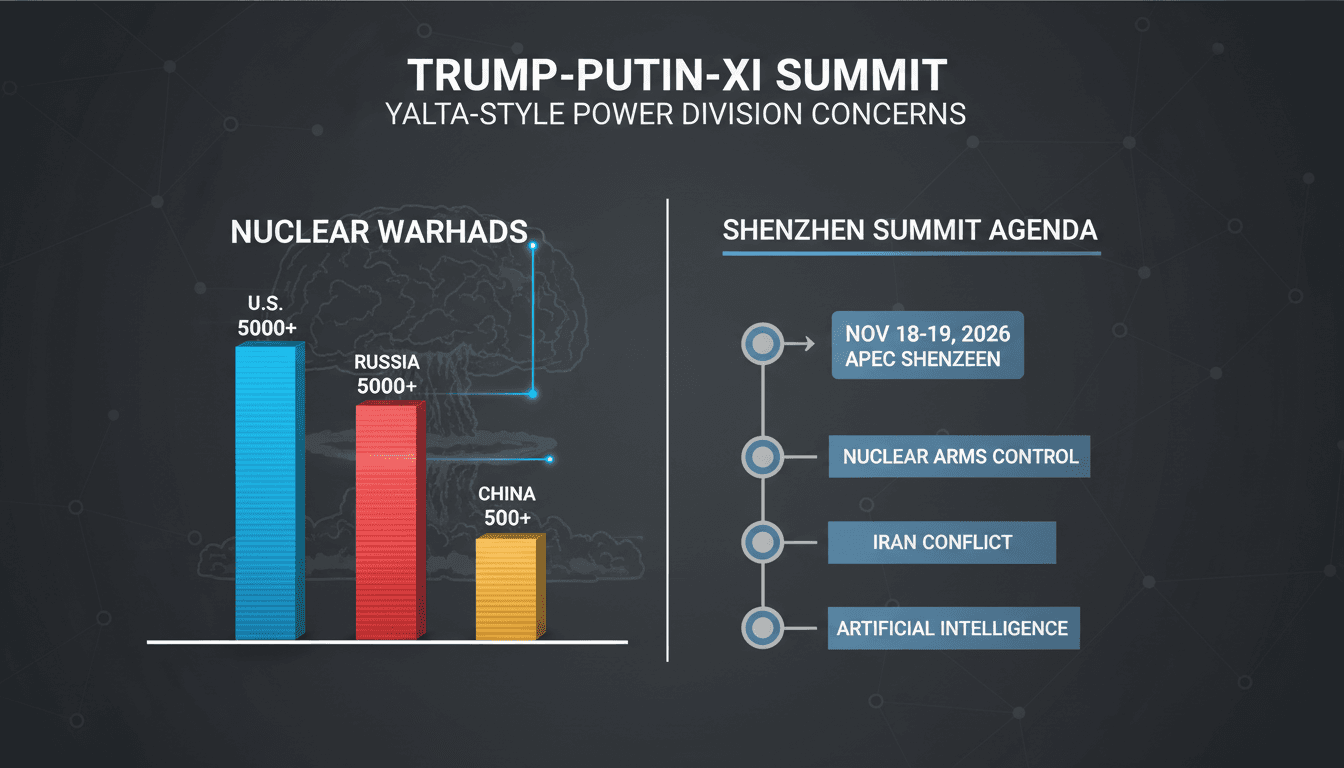
- A planned trilateral meeting in Shenzhen: U.S. President Donald Trump, Russian President Vladimir Putin, and Chinese President Xi Jinping are scheduled to meet on November 18–19, 2026, on the sidelines of the APEC forum in Shenzhen, China.
- The proposed agenda targets specific flashpoints: Discussions are structured around nuclear arms control, regional tensions involving Iran, and governance frameworks for artificial intelligence, while explicitly excluding the conflict in Ukraine.
- Excluded states voice structural objections: Smaller nations, led by Ukraine, have warned against an exclusive division of global influence conducted without the presence or consent of affected sovereign parties.
The context you actually need
- A protracted European ground conflict: The proposal develops as the Russia-Ukraine war surpasses four years, creating sustained economic friction and persistent defense expenditure pressures across global alliances.
- A 10-to-1 nuclear arsenal asymmetry: Strategic discussions face an arithmetic imbalance: the United States and Russia each deploy approximately 5,000+ nuclear warheads, compared to roughly 500 warheads maintained by China.
- Divergent domestic and institutional pressures: The meeting follows midterm electoral setbacks for the U.S. executive administration, driving a search for foreign policy outcomes, while Russian leadership seeks formal validation of a multipolar operational framework.
What's really happening
The proposed Shenzhen meeting represents a test of structural incentives rather than a move toward binding multilateral treaties. The core friction sits between transactional diplomacy and asymmetric balance sheets. While the leadership of the United States and Russia pushed for the format following direct telephone consultations in October 2026, Beijing's posture remains cautious.
The primary structural hurdle is arms control arithmetic. A trilateral arms control framework requires a shared baseline of parity or verification. China's inventory of roughly 500 nuclear warheads sits at roughly one-tenth the scale of the 5,000+ deployed warheads held respectively by Washington and Moscow. Agreeing to tripartite caps under present conditions would lock in an enduring numerical deficit for China or demand that the two largest nuclear powers cut 90 percent of their active stockpiles to achieve structural parity. Because neither historical superpower intends to draw down to Chinese levels, Beijing views trilateral nuclear negotiations as an instrument designed to cap its modernization before it achieves parity.
Concurrently, the deliberate exclusion of Ukraine from the formal agenda demonstrates the functional limits of great-power bargaining. Moscow incentives favor using the format to demonstrate diplomatic normalcy and secure implicit recognition of its global leverage. For Washington, executive foreign policy seeks rapid geopolitical outcomes following domestic political shifts, using direct leader engagement to bypass stalled bureaucratic channels. However, attempting to segregate high-order discussions—such as strategic weapons and Middle Eastern regional security—from ongoing continental conflicts creates diplomatic friction with European and Asian allies who depend on institutional predictability.
For global commercial hubs, the mechanism to track is secondary exposure. Global commodity flows, sovereign investment decisions, and logistics corridors price in stability based on institutional transparency. When major powers signal that global security, nuclear deterrence, and regional containment policies will be negotiated bilaterally or trilaterally on the sidelines of regional economic summits, systemic risk premiums fluctuate. If discussions regarding Iran alter compliance expectations or maritime security guarantees, physical energy logistics and insurance pricing adjust immediately. The Shenzhen gathering represents a baseline effort to construct bilateral risk-reduction guardrails, but the underlying imbalances leave little operational room for binding multilateral codification.
Who feels it first (and how)
- Commodity and Energy Desks: Portfolios managing crude contracts absorb price adjustments if bilateral talks produce shifting risk expectations regarding Iranian supply and Gulf export corridors.
- Global Freight and Logistics Operators: Cross-border shipping networks adjust risk premiums based on whether high-level dialogues stabilize or further fragment maritime trading lanes.
- Sovereign Wealth Allocators in Transit Hubs: Investment offices in nodes like Dubai observe capital sentiment shifts and trade realignments driven by high-level geopolitical positioning between Washington, Beijing, and Moscow.
- Defense and Foreign Ministry Planners in Non-Participating States: Strategic teams across Eastern Europe and East Asia must plan around diplomatic precedents set in rooms where their national interests are negotiated without their representation.
What to watch next
- The formal communique language on nuclear parity: Watch whether any joint text mentions trilateral limits or leaves arms control to existing bilateral mechanisms, signaling whether Beijing conceded any ground on weapons talks.
- Energy market volatility indicators: Monitor Brent crude spreads and Middle Eastern shipping insurance rates during November 18–19 for pricing changes linked to sideline Iran discussions.
- Allied diplomatic coordination statements: Track joint responses from European and Indo-Pacific capitals post-summit to measure institutional pushback against exclusive tripartite decision-making.
The leaders of the United States, Russia, and China are scheduled to meet November 18–19, 2026, on the sidelines of the APEC summit in Shenzhen to discuss nuclear issues, Iran, and AI.
The meeting will produce symbolic communiques rather than binding treaties, given China's resistance to disproportionate nuclear caps and conflicting tactical objectives.
Whether bilateral sideline commitments regarding regional stability in the Middle East will alter the enforcement of existing sanctions or reduce maritime security premiums.
Frequently Asked Questions
- Why it matters?
- Direct engagement between the United States, Russia, and China bypasses traditional multilateral architecture, establishing a transactional baseline for nuclear posture, regional security flashpoints, and critical supply corridors.
- What happened (in 30 seconds)?
- A planned trilateral meeting in Shenzhen: U.S. President Donald Trump, Russian President Vladimir Putin, and Chinese President Xi Jinping are scheduled to meet on November 18–19, 2026, on the sidelines of the APEC forum in Shenzhen, China. The proposed agenda targets specific flashpoints: Discussions are structured around nuclear arms control, regional tensions involving Iran, and governance frameworks for artificial intelligence, while explicitly excluding the conflict in Ukraine. Excluded stat
- What's really happening?
- The proposed Shenzhen meeting represents a test of structural incentives rather than a move toward binding multilateral treaties. The core friction sits between transactional diplomacy and asymmetric balance sheets. While the leadership of the United States and Russia pushed for the format following direct telephone consultations in October 2026, Beijing's posture remains cautious. The primary structural hurdle is arms control arithmetic. A trilateral arms control framework requires a shared b
- Who feels it first (and how)?
- Commodity and Energy Desks: Portfolios managing crude contracts absorb price adjustments if bilateral talks produce shifting risk expectations regarding Iranian supply and Gulf export corridors. Global Freight and Logistics Operators: Cross-border shipping networks adjust risk premiums based on whether high-level dialogues stabilize or further fragment maritime trading lanes. Sovereign Wealth Allocators in Transit Hubs: Investment offices in nodes like Dubai observe capital sentiment shifts and
- What to watch next?
- The formal communique language on nuclear parity: Watch whether any joint text mentions trilateral limits or leaves arms control to existing bilateral mechanisms, signaling whether Beijing conceded any ground on weapons talks. Energy market volatility indicators: Monitor Brent crude spreads and Middle Eastern shipping insurance rates during November 18–19 for pricing changes linked to sideline Iran discussions. Allied diplomatic coordination statements: Track joint responses from European and In
Pan-Arab political news and analysis.
"Al-Quds Al-Arabi is a London-based Arabic newspaper known for political coverage."
— A47 Editor
مؤتمر “يالطا” جديد… ترامب وبوتين يريدان اجتماعا يتردد شي في استضافته
Three major world powers may convene this week to discuss global flashpoints, including the conflicts in Ukraine and Iran, as well as nuclear weapons and artificial intelligence, according to reporting from Washington, Beijing and Moscow. Sources ind...
Jordanian news and regional updates.
"Roya News is a Jordanian outlet focused on breaking news and local affairs."
— A47 Editor
قمة ثلاثية تجمع ترمب وبوتين وشي جين بينغ في الصين الخميس المقبل
Trump plans to raise several files during the meeting, led by reducing nuclear weapons, in a trilateral summit bringing together Donald Trump, Vladimir Putin and Xi Jinping in China next Thursday, according to a report published by Royanews.
Jordanian news and regional updates.
"Roya News is a Jordanian outlet focused on breaking news and local affairs."
— A47 Editor
نيويورك بوست: ترمب يستعد لعقد قمة ثلاثية مع شي جين بينغ وبوتين في الصين
New York Post reported on Friday that US President Donald Trump is preparing to hold a trilateral summit with Chinese President Xi Jinping and Russian President Vladimir Putin in China, according to the outlet's report as cited by Royanews.