
Iran War Triggers Largest Energy Supply Disruption in History as IEA Declares No Return to Pre-War Energy Order
Why it matters
The permanent rerouting of 20 million daily barrels away from maritime chokepoints is systematically dismantling the post-1970s global energy architecture and front-loading a 4.4 million barrel per day structural demand contraction by 2035.
What happened (in 30 seconds)
- Military strikes triggered physical market closure: Following late February 2026 military strikes by the United States and Israel on Iran and subsequent strikes on shipping, transit through the Strait of Hormuz broke down, stripping 20 million barrels per day of crude and heavy LNG volumes from active maritime circulation.
- Historic cumulative resource losses mounted: The conflict resulted in total losses of 2.8 billion barrels of crude oil and 60 billion cubic meters of natural gas, prompting member states of the International Energy Agency (IEA) to deploy 400 million barrels of strategic emergency reserves by March.
- The baseline order fundamentally ended: Presenting the World Energy Outlook 2026 at the COP31 climate conference in Turkey on November 19, 2026, the IEA documented that partial alternative routes recovered global flows to 80% of pre-war volumes by October, while declaring that trade patterns will never return to their pre-conflict baseline.
The context you actually need
- A historic bottleneck is permanently fragmenting: Before February 2026, the Strait of Hormuz handled approximately 20% of global petroleum consumption; under aggressive post-war response pathways, policy incentives are projected to compress maritime volumes through the channel to under 2 million barrels per day by 2035.
- Gulf state capital is actively pivoting around waterborne corridors: Regional exporters, led by Saudi Arabia and the United Arab Emirates, have initiated 7 million barrels per day of alternate overland pipeline capacity to evacuate crude directly to bypass terminals.
- Supply recovery has outpaced structural demand: Middle East extraction capacity recovered faster through alternate logistics than downstream consumption patterns could rebound, tipping mid-term paper markets toward unexpected surplus expectations even as operational transit frictions linger.
What's really happening
The mechanics behind the current energy reordering are driven by state-level incentive shifts rather than temporary pricing spikes. When military operations halted transit across the Strait of Hormuz, the immediate removal of one-fifth of global hydrocarbon throughput proved that geographical concentration represents an uninsurable liability for sovereign treasuries and commercial operators alike.
Initial emergency stabilization relied on blunt administrative tools: the coordinated distribution of 400 million barrels from IEA sovereign reserves throughout March 2026. Simultaneously, national oil companies activated logistical contingencies, utilizing overland pipelines across the Arabian Peninsula alongside ship-to-ship transfers outside the Gulf. These interventions brought overall crude export availability back to 80% of pre-war levels by October 2026. However, returning volume is not the same as returning stability.
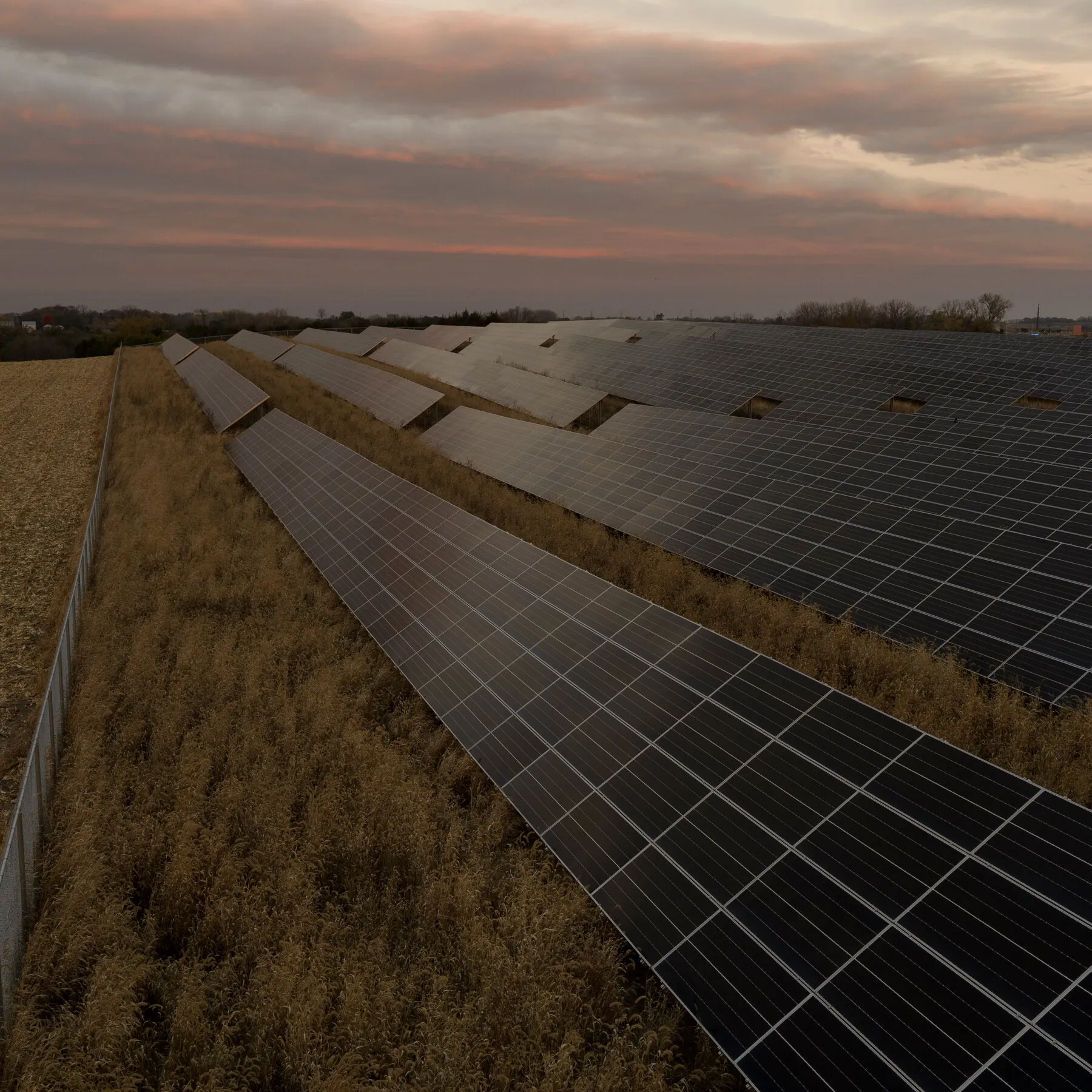
The permanent structural change lies in capital expenditure reallocation. Gulf producers are constructing 7 million barrels per day of bypass pipeline capacity, transforming domestic logistics to neutralize the economic vulnerability of regional waterways. In Dubai and across the United Arab Emirates, domestic policy has accelerated capital deployment directly into utility-scale solar installations, expanded nuclear base load, and regional distribution pipes to insulate domestic power generation and free up non-maritime hydrocarbon routes for international delivery.
At the consumption end, importing nations are treating energy resilience as a non-negotiable security priority. Rather than returning to historical maritime supply chains, consuming economies are substituting direct fuel exposure with electrification, capital-intensive efficiency programs, and localized generation. The IEA's World Energy Outlook 2026 projections quantify this shift: under targeted response scenarios, sustained efficiency measures and accelerated industrial electrification will permanently remove 4.4 million barrels per day from global petroleum demand by 2035 compared to prior stated-policy trajectories.
Because regional extraction output has resumed faster than industrial demand can adjust to elevated logistical costs, forward markets are pricing in structural oversupply alongside persistent operational transit premiums. This split reality creates a distinct operating environment: underlying raw barrel prices face deflationary pressures from long-term demand erosion, while the direct localized cost of energy transport, utility generation, and commercial fuel remains historically high. The global energy ecosystem has crossed a point of no return.
Who feels it first (and how)
- Corporate operators in Dubai and the Gulf: Commercial entities face elevated localized fuel, utility, and freight surcharges, directly incentivizing immediate investments in fleet electrification, microgrid installations, and efficiency measures.
- Maritime logistics and marine insurance underwriting teams: Shipping lines and cargo underwriters must renegotiate long-term risk profiles, factoring in diminished maritime transport demand through legacy straits alongside expanded operations across overland terminal hubs.
- Heavy industrial manufacturers and fleet managers globally: Industrial consumers reliant on uninterrupted natural gas and crude inputs face persistent input price dispersion, accelerating capital conversions toward electrified production lines.
- Sovereign trade authorities and national finance ministries: Import-reliant governments, particularly in Asia and Europe, are forced to reallocate balance-sheet reserves away from open-market spot fuel purchasing toward localized grid infrastructure.
What to watch next
- Construction milestones on bypass infrastructure: Track development deadlines on the 7 million barrels per day of bypass export pipelines crossing Saudi Arabia and the UAE, which determine how rapidly physical volumes structurally avoid maritime chokepoints.
- Downstream demand destruction metrics: Monitor international quarterly trade figures to verify whether accelerated electrification initiatives sustain the projected 4.4 million barrel per day structural decline in global oil consumption through 2035.
- Utility-scale nuclear and solar grid connections in the UAE: Watch domestic capital allocation milestones in Dubai and Abu Dhabi for operational additions to the civil clean-energy mix, which directly hedge domestic commerce against ongoing regional price volatility.
The conflict beginning in late February 2026 caused physical cumulative losses of 2.8 billion barrels of oil and 60 billion cubic meters of natural gas, met by an emergency release of 400 million barrels of strategic reserves and an 80% volume recovery via alternate routes by October.
Long-term oil demand will structurally contract by 4.4 million barrels per day by 2035 under targeted energy security measures, while bypass pipeline development permanently caps Hormuz crude transit at under 2 million barrels per day.
Whether emerging global oversupply conditions will lower ultimate retail energy and consumer transport costs fast enough to offset the friction costs of building redundant continental energy infrastructure.
Frequently Asked Questions
- Why it matters?
- The permanent rerouting of 20 million daily barrels away from maritime chokepoints is systematically dismantling the post-1970s global energy architecture and front-loading a 4.4 million barrel per day structural demand contraction by 2035.
- What happened (in 30 seconds)?
- Military strikes triggered physical market closure: Following late February 2026 military strikes by the United States and Israel on Iran and subsequent strikes on shipping, transit through the Strait of Hormuz broke down, stripping 20 million barrels per day of crude and heavy LNG volumes from active maritime circulation. Historic cumulative resource losses mounted: The conflict resulted in total losses of 2.8 billion barrels of crude oil and 60 billion cubic meters of natural gas, prompting me
- What's really happening?
- The mechanics behind the current energy reordering are driven by state-level incentive shifts rather than temporary pricing spikes. When military operations halted transit across the Strait of Hormuz, the immediate removal of one-fifth of global hydrocarbon throughput proved that geographical concentration represents an uninsurable liability for sovereign treasuries and commercial operators alike. Initial emergency stabilization relied on blunt administrative tools: the coordinated distributio
- Who feels it first (and how)?
- Corporate operators in Dubai and the Gulf: Commercial entities face elevated localized fuel, utility, and freight surcharges, directly incentivizing immediate investments in fleet electrification, microgrid installations, and efficiency measures. Maritime logistics and marine insurance underwriting teams: Shipping lines and cargo underwriters must renegotiate long-term risk profiles, factoring in diminished maritime transport demand through legacy straits alongside expanded operations across ove
- What to watch next?
- Construction milestones on bypass infrastructure: Track development deadlines on the 7 million barrels per day of bypass export pipelines crossing Saudi Arabia and the UAE, which determine how rapidly physical volumes structurally avoid maritime chokepoints. Downstream demand destruction metrics: Monitor international quarterly trade figures to verify whether accelerated electrification initiatives sustain the projected 4.4 million barrel per day structural decline in global oil consumption thro
Global business headlines with AI angles.
"General business outlet that frequently covers AI."
— A47 Editor
Iran War Wipes Out 2.8 Billion Barrels Of Oil Supply. Why Are Crude Prices Falling?
The International Energy Agency reports that the Iran war has disrupted about 2.8 billion barrels of oil supply, yet crude prices have been falling as global production recovers. The IEA warns the crisis could permanently reshape energy markets.
Conservative-leaning political and national coverage.
"The Washington Times is a conservative-leaning newspaper known for its political coverage and advocacy of right-of-center viewpoints."
— A47 Editor
There is no going back 'to the way it was before' the Iran war's energy shock, IEA says
The International Energy Agency said in a report released Thursday that the greatest energy shock in history, linked to the Iran war, together with growing climate change concerns, is reshaping how the world will power homes, drive cars and fuel indu...
European coverage of Middle East politics and security issues.
"France 24 offers international reporting with a European editorial perspective."
— A47 Editor
Middle East crisis poses 'largest threat' to energy security in history, warns IEA
The International Energy Agency said on Thursday that the Middle East crisis, triggered by US and Israeli strikes on Iran in February, poses the "largest threat" to energy security in history. The agency warned that consumers are bearing a growing sh...
24/7 international news from a French perspective in multiple languages.
"France 24 is viewed as a globally focused outlet with balanced coverage and a European perspective."
— A47 Editor
Middle East crisis poses 'largest threat' to energy security in history, warns IEA
The International Energy Agency said on Thursday that the Middle East crisis, triggered by US and Israeli strikes on Iran in February, poses the "largest threat" to energy security in history. The agency warned that consumers are bearing a growing sh...
Markets, economy, and company analysis from NYT’s business desk.
"The New York Times is a globally recognized newspaper offering authoritative reporting with a center-left editorial stance."
— A47 Editor
How the War in Iran Will Remake the Global Energy Order
The International Energy Agency, in its most comprehensive analysis of the fallout from the Iran war, found that the oil shock could accelerate adoption of alternative power sources, with falling costs of solar panels and battery storage expected to ...