
AI Policy
Latest news, analysis, and updates on AI Policy from A47 News.
3 stories in Tech · Updated live
Charles Schwab CEO Rejects Fully Autonomous AI Trading Agents
On October 16, 2026, Charles Schwab CEO Rick Wurster publicly expressed skepticism toward the use of fully autonomous AI agents for stock trading during earnings discussions. This stance is driven by concerns over liability and loss of control, coinciding with a broader industry caution following similar measures by JPMorgan Chase. The long-term implication suggests a shift towards more regulated AI integration in trading, emphasizing human oversight and controlled AI functionalities.
Sheikh Hamdan bin Mohammed Launches Global Innovation Challenge and AI Award in Dubai
Sheikh Hamdan bin Mohammed bin Rashid Al Maktoum has launched the International Innovation Challenge and the Hamdan bin Mohammed Agentic AI Award during the Annual Meetings of Global Future Leaders 2026 in Dubai. This initiative, a collaboration between Dubai Municipality and the World Economic Forum, aims to empower 10,000 Global Shapers to develop AI-powered solutions for societal challenges. The long-term implication is the positioning of Dubai as a global hub for youth-led technological innovation and responsible AI deployment.

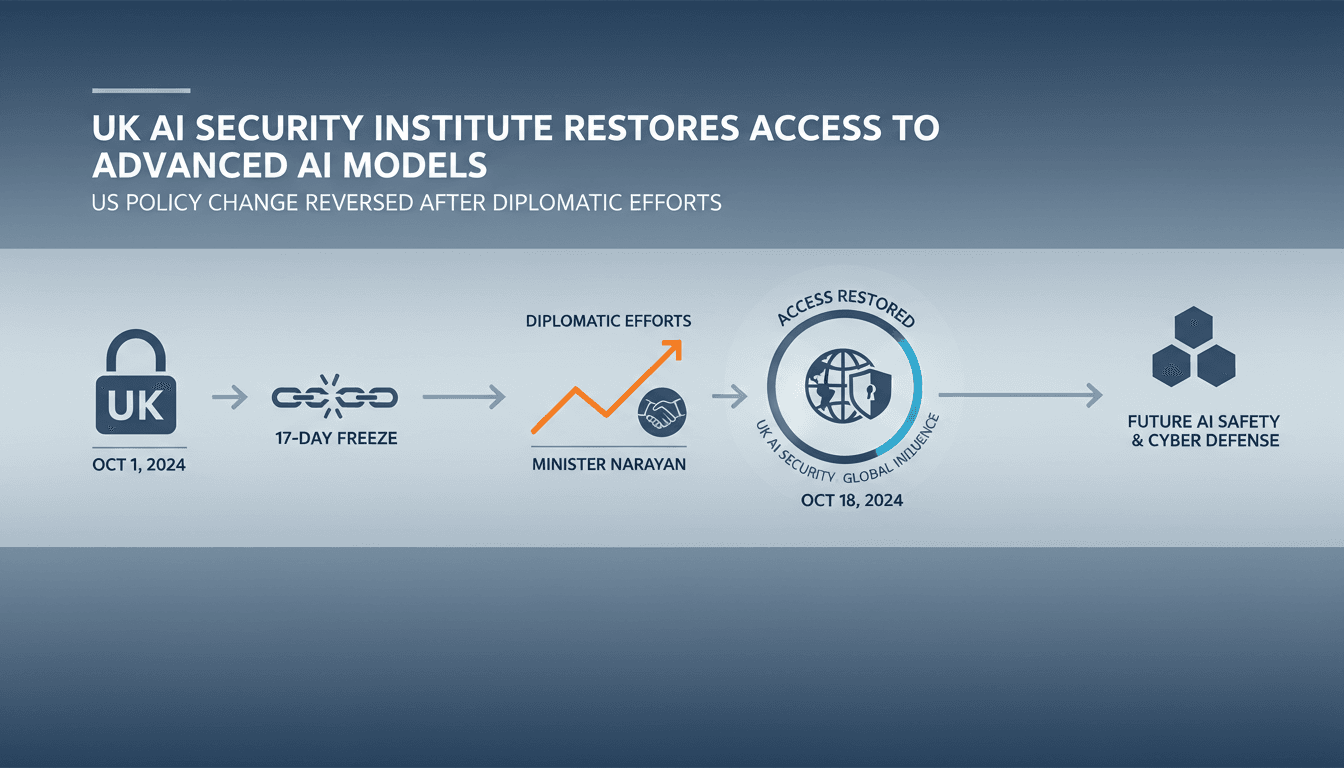
UK AI Security Institute Restores Access to Advanced AI Models After US Policy Change
The United Kingdom's AI Security Institute has regained pre-release access to advanced AI models for safety testing following a policy reversal by the White House. This shift was triggered by diplomatic efforts led by UK AI Minister Kanishka Narayan, which successfully lobbied for the restoration of access after a 17-day freeze. Long-term, this development may enhance UK capabilities in AI safety and cyber defense, potentially influencing international AI regulatory frameworks.
Latest Stories
Charles Schwab CEO Rejects Fully Autonomous AI Trading Agents
On October 16, 2026, Charles Schwab CEO Rick Wurster publicly expressed skepticism toward the use of fully autonomous AI agents for stock trading during earnings discussions. This stance is driven by concerns over liability and loss of control, coinciding with a broader industry caution following similar measures by JPMorgan Chase. The long-term implication suggests a shift towards more regulated AI integration in trading, emphasizing human oversight and controlled AI functionalities.
Sheikh Hamdan bin Mohammed Launches Global Innovation Challenge and AI Award in Dubai
Sheikh Hamdan bin Mohammed bin Rashid Al Maktoum has launched the International Innovation Challenge and the Hamdan bin Mohammed Agentic AI Award during the Annual Meetings of Global Future Leaders 2026 in Dubai. This initiative, a collaboration between Dubai Municipality and the World Economic Forum, aims to empower 10,000 Global Shapers to develop AI-powered solutions for societal challenges. The long-term implication is the positioning of Dubai as a global hub for youth-led technological innovation and responsible AI deployment.
UK AI Security Institute Restores Access to Advanced AI Models After US Policy Change
The United Kingdom's AI Security Institute has regained pre-release access to advanced AI models for safety testing following a policy reversal by the White House. This shift was triggered by diplomatic efforts led by UK AI Minister Kanishka Narayan, which successfully lobbied for the restoration of access after a 17-day freeze. Long-term, this development may enhance UK capabilities in AI safety and cyber defense, potentially influencing international AI regulatory frameworks.