
Meta Launches Muse Spark AI Model Enhancing Multimodal Capabilities
Here's what it means for you.
As AI capabilities expand, your interactions across Meta's platforms will become more intuitive and personalized, impacting how you communicate and make decisions.
Why it matters
The launch of Muse Spark signifies a pivotal shift in AI development, pushing Meta to compete aggressively in a rapidly evolving market.
What happened (in 30 seconds)
- Meta Platforms launched the Muse Spark AI model on April 17, 2026, enhancing its AI assistant across major apps.
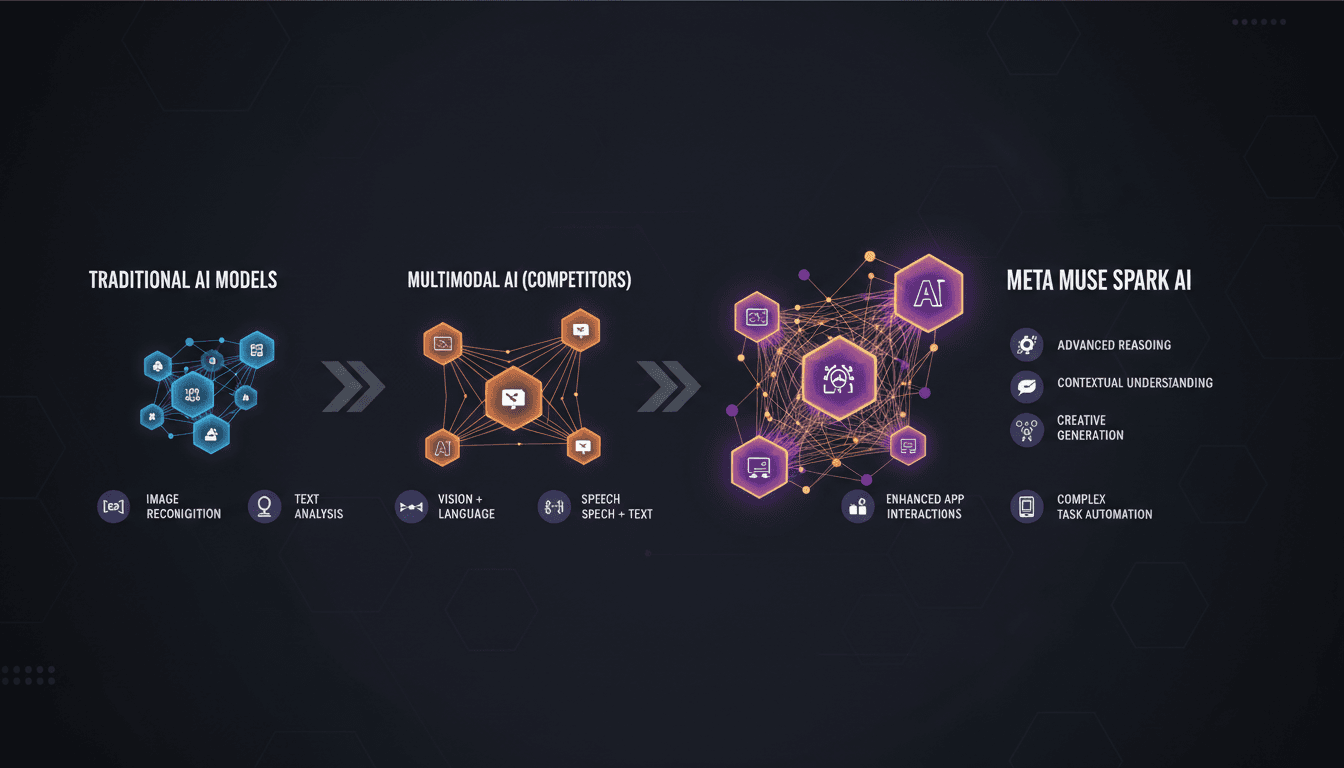
- The model introduces parallel subagents and multimodal processing, allowing for complex task execution and real-time environmental understanding.
- Meta Superintelligence Labs, founded by Mark Zuckerberg, developed Muse Spark to deliver 'personal superintelligence' amid fierce competition in AI.
The context you actually need
- Meta Superintelligence Labs was established in July 2025 to focus on personal superintelligence, following the release of open-source Llama models.
- The AI infrastructure overhaul took nine months, transitioning from single-threaded assistants to agentic systems capable of multitasking.
- Muse Spark's features include itinerary planning, image analysis for health and shopping, and future integration with AI glasses for real-time perception.
What's really happening
Meta's Muse Spark AI model represents a significant leap in artificial intelligence, particularly in how it processes information and interacts with users. By introducing parallel subagents, Muse Spark can handle multiple tasks simultaneously, a departure from traditional AI models that typically operate in a linear fashion. This shift allows users to engage with the AI in a more dynamic way, whether they're planning a trip or seeking health advice based on image analysis.
The development of Muse Spark is part of a broader strategy by Meta to establish itself as a leader in the AI space, especially as competition intensifies with companies like OpenAI and Google. The establishment of Meta Superintelligence Labs in July 2025 was a strategic move to focus resources on creating a more sophisticated AI infrastructure. This lab has been pivotal in rethinking how AI can serve users, moving beyond simple query-response models to more complex, agentic systems that can autonomously execute tasks.
The implications of Muse Spark extend beyond mere functionality; they touch on the very nature of user interaction with technology. As AI becomes more capable of understanding context and executing tasks, users may find themselves relying more heavily on these systems for everyday decisions. This could lead to a shift in how individuals perceive their own agency in decision-making processes, as they delegate more responsibilities to AI.
Moreover, the integration of Muse Spark with platforms like WhatsApp, Instagram, and Facebook means that millions of users will experience these advancements firsthand. The U.S.-only Shopping mode, which leverages platform content for personalized recommendations, is a clear indication of how Meta is positioning itself to capitalize on e-commerce trends. As AI continues to evolve, the potential for real-time environmental understanding through future AI glasses could further enhance user experiences, making interactions more seamless and integrated into daily life.
However, this rapid advancement raises questions about the boundaries of reliance on AI. As Muse Spark transitions from a query-answering tool to a task-executing agent, users and society at large must consider the implications of such dependence. The balance between leveraging AI for efficiency and maintaining personal agency will be a critical conversation as these technologies become more embedded in our lives.
Who feels it first (and how)
- Tech-savvy consumers: Early adopters of AI technology will experience enhanced functionalities across Meta's platforms.
- Small business owners: Those utilizing Meta for marketing and sales will benefit from improved shopping features and personalized customer interactions.
- Healthcare professionals: Users seeking health-related advice through AI will gain access to more nuanced and informed responses.
- Developers and tech companies: They will need to adapt to the new capabilities of Muse Spark, potentially reshaping app development and integration strategies.
What to watch next
- Expansion of Muse Spark features: Keep an eye on how Meta rolls out additional functionalities, particularly in international markets. This matters because it will determine the global reach and impact of the AI model.
- User adoption rates: Monitoring how quickly users embrace Muse Spark will provide insights into its effectiveness and relevance in daily life. High adoption could signal a shift in user behavior towards AI reliance.
- Competitor responses: Watch for how other tech giants react to Muse Spark's launch, as this could lead to new innovations or shifts in the competitive landscape.
Muse Spark has been launched and is currently deployed across Meta's platforms.
The model will expand its features and reach, particularly in international markets.
The long-term societal implications of increased reliance on AI for decision-making remain to be fully understood.
Frequently Asked Questions
- Why it matters?
- The launch of Muse Spark signifies a pivotal shift in AI development, pushing Meta to compete aggressively in a rapidly evolving market.
- What happened (in 30 seconds)?
- Meta Platforms launched the Muse Spark AI model on April 17, 2026, enhancing its AI assistant across major apps. The model introduces parallel subagents and multimodal processing, allowing for complex task execution and real-time environmental understanding. Meta Superintelligence Labs, founded by Mark Zuckerberg, developed Muse Spark to deliver 'personal superintelligence' amid fierce competition in AI.
- What's really happening?
- Meta's Muse Spark AI model represents a significant leap in artificial intelligence, particularly in how it processes information and interacts with users. By introducing parallel subagents, Muse Spark can handle multiple tasks simultaneously, a departure from traditional AI models that typically operate in a linear fashion. This shift allows users to engage with the AI in a more dynamic way, whether they're planning a trip or seeking health advice based on image analysis. The development of Mu
- Who feels it first (and how)?
- Tech-savvy consumers: Early adopters of AI technology will experience enhanced functionalities across Meta's platforms. Small business owners: Those utilizing Meta for marketing and sales will benefit from improved shopping features and personalized customer interactions. Healthcare professionals: Users seeking health-related advice through AI will gain access to more nuanced and informed responses. Developers and tech companies: They will need to adapt to the new capabilities of Muse Spar
- What to watch next?
- Expansion of Muse Spark features: Keep an eye on how Meta rolls out additional functionalities, particularly in international markets. This matters because it will determine the global reach and impact of the AI model. User adoption rates: Monitoring how quickly users embrace Muse Spark will provide insights into its effectiveness and relevance in daily life. High adoption could signal a shift in user behavior towards AI reliance. Competitor responses: Watch for how other tech giants react t
General features and special-interest coverage from Okaz.
"This feed appears to be a section-specific Okaz stream, so the label is kept intentionally broad until confirmed."
— A47 Editor
زوكربيرغ يطور نسخة ذكاء اصطناعي من نفسه لإدارة العمل داخل «ميتا»
Mark Zuckerberg, the CEO of Meta, is developing a digital version of himself using artificial intelligence to enhance communication and workflow management within the company. This AI version is designed to interact with employees, answer their quest...
Technology business and AI-related headlines.
"Data-driven tech newsroom with global scope."
— A47 Editor
Mark Zuckerberg Dives Into AI to Build a Zuckbot
Mark Zuckerberg, CEO of Meta, is developing an artificial intelligence assistant, referred to as a Zuckbot, to help manage his responsibilities more efficiently. This initiative is part of Meta's broader strategy to integrate AI into its operations, ...
Technology business news, market impacts, and innovation trends.
"Bloomberg is a premier financial and tech news provider, respected for its in-depth reporting and analytical rigor."
— A47 Editor
Mark Zuckerberg Dives Into AI to Build a Zuckbot
Mark Zuckerberg, CEO of Meta, is developing an artificial intelligence assistant, referred to as a Zuckbot, to help manage his responsibilities more efficiently. This initiative is part of Meta's broader strategy to integrate AI into its operations, ...