
ByteDance Deploys NVIDIA AI Chips in Malaysia to Circumvent US Export Restrictions
Here's what it means for you.
Your access to advanced AI applications may expand as companies navigate geopolitical restrictions.
Why it matters
This move highlights how global tech firms are adapting to regulatory landscapes while maintaining competitive advantages.
What happened (in 30 seconds)
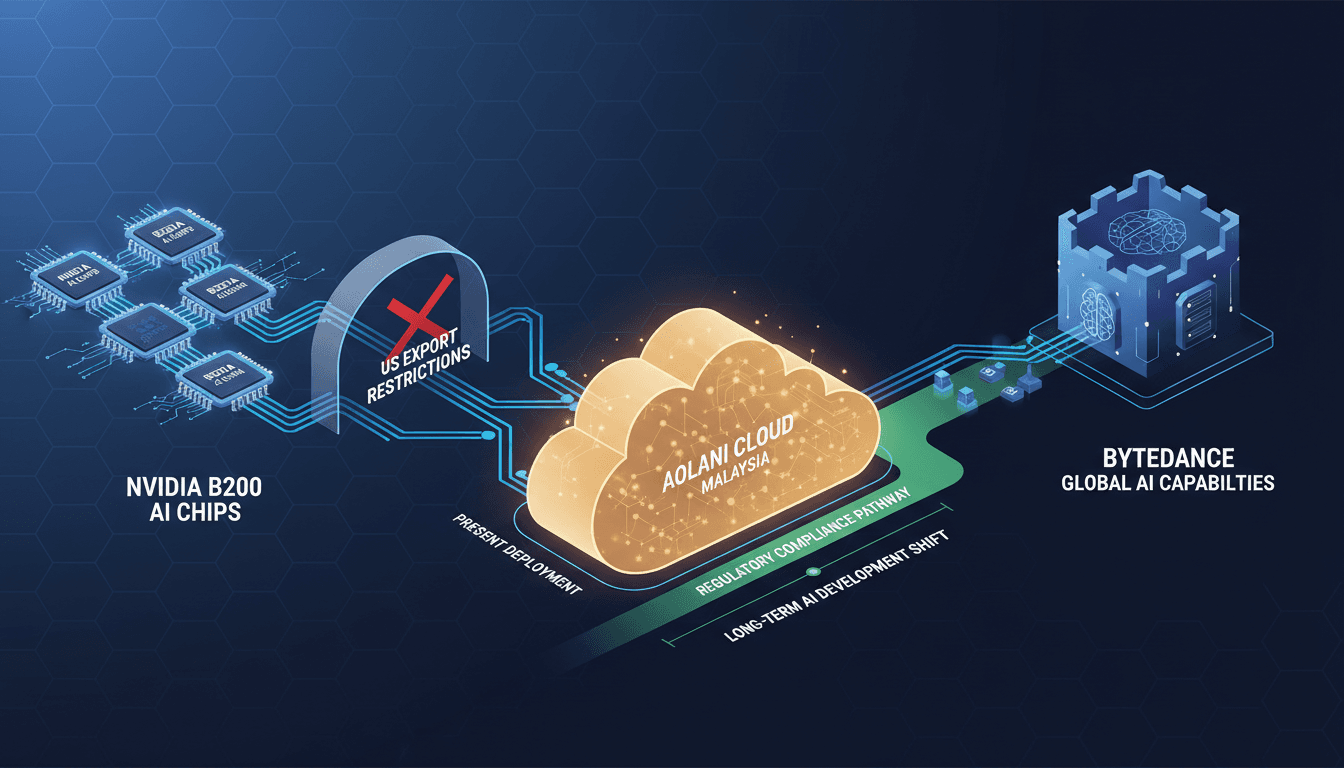
- ByteDance is deploying 36,000 NVIDIA B200 Blackwell AI chips in Malaysia, circumventing US export restrictions on China.
- The project involves a $2.5 billion investment for 500 Blackwell computing systems, facilitated by Aolani Cloud.
- NVIDIA confirmed compliance with US regulations, allowing the use of their technology in third-party cloud environments.
The context you actually need
- US export controls on advanced semiconductors to China began in October 2022, targeting AI capabilities.
- Aolani Cloud, a new player in the cloud market, was established to provide compliant infrastructure for companies like ByteDance.
- ByteDance's strategy reflects a broader trend of Chinese firms establishing operations in countries with looser regulations to access advanced technology.
What's really happening
ByteDance's deployment of NVIDIA's Blackwell AI chips in Malaysia is a strategic response to stringent US export controls that have increasingly limited Chinese access to advanced semiconductor technology. Since October 2022, the US Bureau of Industry and Security has prohibited the sale of high-performance chips, including NVIDIA's A100, H100, and now the Blackwell B200 series, to China. This regulatory environment aims to curb China's military and AI development capabilities, creating a significant barrier for Chinese tech firms.
In response, ByteDance has sought alternative pathways to enhance its AI capabilities. The establishment of Aolani Cloud in late 2023, a Singapore-based cloud provider, marked a pivotal moment. Aolani began leasing NVIDIA H100-equipped servers to ByteDance in Malaysia from February 2025, setting the stage for the current Blackwell expansion. By utilizing Aolani's infrastructure, ByteDance can effectively bypass direct restrictions while still leveraging cutting-edge technology.
The $2.5 billion investment for 500 Blackwell systems, which includes 36,000 B200 chips, signifies ByteDance's commitment to maintaining its competitive edge in the global AI landscape. This arrangement not only complies with US regulations but also allows ByteDance to scale its AI research and development efforts significantly. The chips will power various applications, including TikTok-related services, enhancing user experience and engagement.
NVIDIA's confirmation of compliance with US export rules is crucial, as it reassures stakeholders that the arrangement is legally sound. Aolani Cloud's emphasis on adhering to regulations and a multi-client service model further solidifies the legitimacy of this operation. However, the broader implications of this move raise questions about the future of US-China tech relations and the potential for an arms race in AI capabilities.
As ByteDance and other Chinese firms continue to navigate these complex regulatory landscapes, the global tech ecosystem may witness shifts in how technology is developed, accessed, and deployed across borders. This situation underscores the need for companies to remain agile and innovative in their strategies to circumvent geopolitical barriers while still adhering to compliance standards.
Who feels it first (and how)
- Tech companies in the AI sector will see increased competition as ByteDance enhances its capabilities.
- Cloud service providers in regions like Southeast Asia may benefit from increased demand for compliant infrastructure.
- Employees in the tech industry in Malaysia and surrounding regions may experience job growth due to expanded operations.
What to watch next
- Regulatory responses from the US government regarding compliance and potential adjustments to export controls, which could impact future operations.
- Market reactions from competitors in the AI space, as they may seek similar arrangements or partnerships to maintain competitiveness.
- Technological advancements from ByteDance and Aolani Cloud, particularly in AI applications that could reshape user experiences across platforms.
ByteDance is investing significantly in AI infrastructure outside of China.
Other Chinese firms will explore similar strategies to access advanced technology.
The long-term impact of these developments on US-China tech relations and global market dynamics.
Frequently Asked Questions
- Why it matters?
- This move highlights how global tech firms are adapting to regulatory landscapes while maintaining competitive advantages.
- What happened (in 30 seconds)?
- ByteDance is deploying 36,000 NVIDIA B200 Blackwell AI chips in Malaysia, circumventing US export restrictions on China. The project involves a $2.5 billion investment for 500 Blackwell computing systems, facilitated by Aolani Cloud. NVIDIA confirmed compliance with US regulations, allowing the use of their technology in third-party cloud environments.
- What's really happening?
- ByteDance's deployment of NVIDIA's Blackwell AI chips in Malaysia is a strategic response to stringent US export controls that have increasingly limited Chinese access to advanced semiconductor technology. Since October 2022, the US Bureau of Industry and Security has prohibited the sale of high-performance chips, including NVIDIA's A100, H100, and now the Blackwell B200 series, to China. This regulatory environment aims to curb China's military and AI development capabilities, creating a signif
- Who feels it first (and how)?
- Tech companies in the AI sector will see increased competition as ByteDance enhances its capabilities. Cloud service providers in regions like Southeast Asia may benefit from increased demand for compliant infrastructure. Employees in the tech industry in Malaysia and surrounding regions may experience job growth due to expanded operations.
- What to watch next?
- Regulatory responses from the US government regarding compliance and potential adjustments to export controls, which could impact future operations. Market reactions from competitors in the AI space, as they may seek similar arrangements or partnerships to maintain competitiveness. Technological advancements from ByteDance and Aolani Cloud, particularly in AI applications that could reshape user experiences across platforms.
Consumer technology news with AI coverage.
"Gadget and tech site reporting on AI in products."
— A47 Editor
ByteDance will reportedly buy NVIDIA's latest AI chips to use outside of China
ByteDance, the parent company of TikTok, has reportedly found a way to acquire NVIDIA's latest AI chips for use outside China, despite ongoing export restrictions, as it seeks to enhance its AI capabilities.
Covers consumer technology, electronics, gadgets, and product reviews.
"Engadget is a trusted source for gadget reviews and consumer tech news, known for its hands-on analysis and industry coverage."
— A47 Editor
ByteDance will reportedly buy NVIDIA's latest AI chips to use outside of China
ByteDance, the parent company of TikTok, has reportedly found a way to acquire NVIDIA's latest AI chips for use outside China, despite ongoing export restrictions, as it seeks to enhance its AI capabilities.
Daily AI news: models, tools, and policy.
"Independent outlet tracking the fast pace of AI."
— A47 Editor
Bytedance secures access to Nvidia Blackwell cluster in Malaysia, circumventing US export ban on China
ByteDance, the parent company of TikTok, has secured access to approximately 36,000 Nvidia Blackwell AI chips in Malaysia, bypassing US export restrictions that prevent direct acquisition of these chips in China.
Tech business coverage, major deals, product launches, and Silicon Valley trends.
"WSJ’s tech section offers authoritative reporting on the intersection of technology and business, including exclusive industry analysis."
— A47 Editor
China’s ByteDance Gets Access to Top Nvidia AI Chips
ByteDance, the parent company of TikTok, has secured access to top Nvidia AI chips as it aims to compete globally with leading firms like Google and OpenAI by expanding its range of AI applications for everyday users.