
European Natural Gas Prices Plummet 17% Following US-Iran Ceasefire Announcement
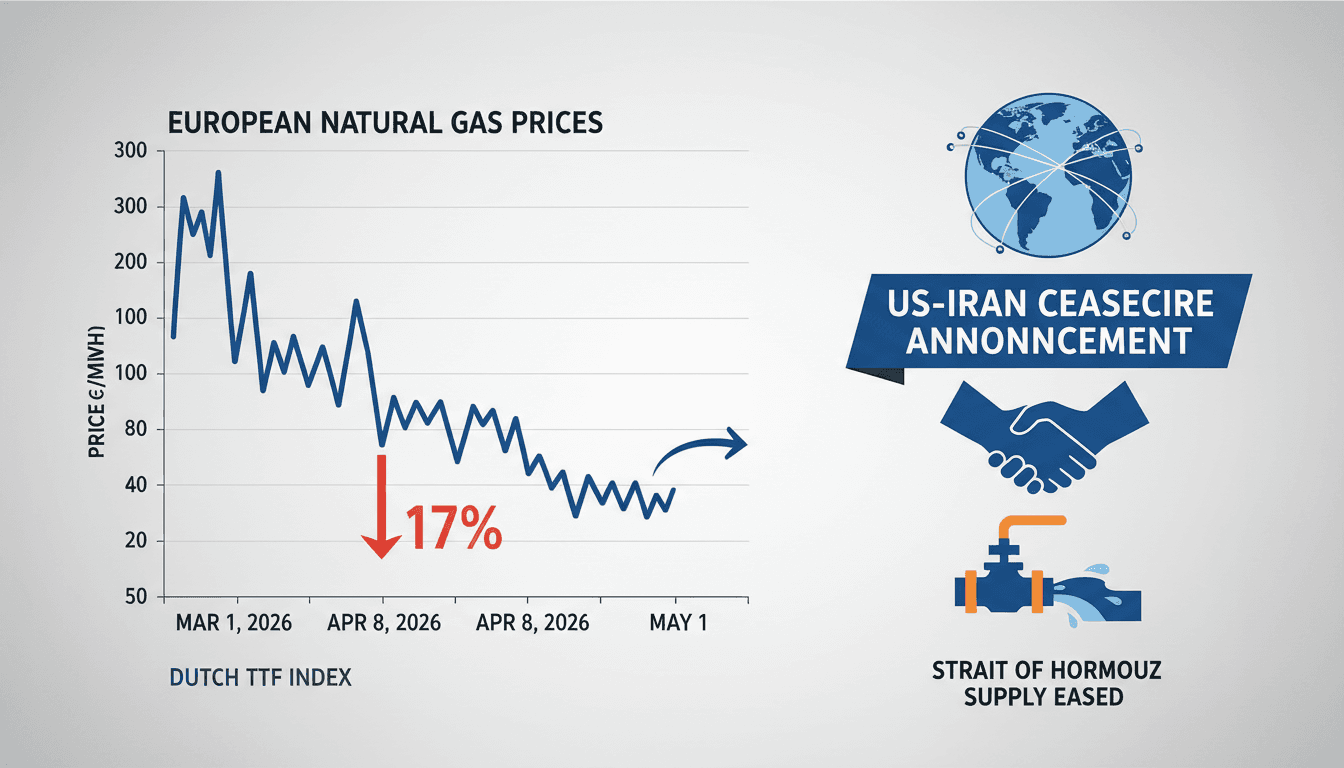
Here's what it means for you.
If you rely on energy markets, the recent ceasefire could stabilize prices and impact your costs.
Why it matters
The ceasefire between the U.S. and Iran directly influences European energy prices, which can ripple through global markets.
What happened (in 30 seconds)
- European natural gas prices fell 17.14% to €44.12 per MWh on April 8, 2026, after a ceasefire announcement.
- The ceasefire was proposed by U.S. President Trump and accepted conditionally by Iranian Foreign Minister Araghchi.
- Market reactions reflected relief over potential normalization of supply through the critical Strait of Hormuz.
The context you actually need
- Escalating tensions in early 2026 had already disrupted global energy supplies, causing prices to surge over 50% in March.
- Prior to the ceasefire, TTF prices peaked at €53.25 per MWh amid fears of prolonged supply shortages.
- The Strait of Hormuz is a vital chokepoint for global LNG shipments, making geopolitical stability crucial for energy prices.
What's really happening
The recent ceasefire announcement between the U.S. and Iran has sent ripples through the energy market, particularly affecting European natural gas prices. On April 8, 2026, European natural gas prices on the Dutch TTF benchmark saw a significant drop of 17.14%, settling at €44.12 per MWh. This decline followed a conditional two-week ceasefire proposed by U.S. President Donald Trump, aimed at suspending hostilities and reopening the Strait of Hormuz, a crucial passage for liquefied natural gas (LNG) shipments.
The backdrop to this price drop is a series of escalating tensions between the U.S. and Iran that began in early 2026. Iranian actions had previously halted LNG exports from Qatar and restricted shipping through the Strait of Hormuz, leading to a spike in prices that exceeded 50% in March. The World Bank labeled this surge a "black swan" event, highlighting its unexpected nature and severe impact on the market. Before the ceasefire, TTF prices had already risen to over €53 per MWh, driven by fears of prolonged supply shortages.
The announcement of the ceasefire was met with immediate market relief, as traders anticipated a return to normalcy in supply chains. The plummeting prices indicate that market participants were quick to price in the potential for increased stability in energy supplies. However, energy analysts caution that prices could remain elevated without a full restoration of stability in the Strait of Hormuz. The geopolitical landscape remains fraught with uncertainty, and while the ceasefire offers a temporary reprieve, the underlying tensions could resurface.
In the aftermath, global oil prices also experienced a notable decline of 13-15%, which contributed to a boost in stock markets, such as a 5% increase in the Nikkei. The Australian Prime Minister welcomed the reopening of shipping lanes, signaling a positive outlook for international trade. However, European governments are closely monitoring supply chains, as lingering inflationary pressures on fuel remain a concern.
Who feels it first (and how)
- Energy traders: Immediate market reactions affect trading strategies and profit margins.
- Consumers in Europe: Lower gas prices could translate to reduced energy bills.
- Businesses reliant on energy: Companies in manufacturing and transportation sectors may see cost savings.
- Residents in Dubai: Potential stabilization of global energy imports could alleviate recent fuel price surges.
What to watch next
- Market volatility: Keep an eye on fluctuations in gas prices as the ceasefire progresses and geopolitical tensions evolve.
- Supply chain adjustments: Monitor how quickly LNG shipments resume through the Strait of Hormuz and their impact on European markets.
- Inflation trends: Watch for signs of inflationary pressures on fuel and energy costs in Europe and beyond.
European natural gas prices dropped 17.14% following the ceasefire announcement.
Continued monitoring of the Strait of Hormuz will influence future market stability.
The long-term implications of the ceasefire on U.S.-Iran relations and energy markets remain uncertain.
Frequently Asked Questions
- Why it matters?
- The ceasefire between the U.S. and Iran directly influences European energy prices, which can ripple through global markets.
- What happened (in 30 seconds)?
- European natural gas prices fell 17.14% to €44.12 per MWh on April 8, 2026, after a ceasefire announcement. The ceasefire was proposed by U.S. President Trump and accepted conditionally by Iranian Foreign Minister Araghchi. Market reactions reflected relief over potential normalization of supply through the critical Strait of Hormuz.
- What's really happening?
- The recent ceasefire announcement between the U.S. and Iran has sent ripples through the energy market, particularly affecting European natural gas prices. On April 8, 2026, European natural gas prices on the Dutch TTF benchmark saw a significant drop of 17.14%, settling at €44.12 per MWh. This decline followed a conditional two-week ceasefire proposed by U.S. President Donald Trump, aimed at suspending hostilities and reopening the Strait of Hormuz, a crucial passage for liquefied natural gas (
- Who feels it first (and how)?
- Energy traders: Immediate market reactions affect trading strategies and profit margins. Consumers in Europe: Lower gas prices could translate to reduced energy bills. Businesses reliant on energy: Companies in manufacturing and transportation sectors may see cost savings. Residents in Dubai: Potential stabilization of global energy imports could alleviate recent fuel price surges.
- What to watch next?
- Market volatility: Keep an eye on fluctuations in gas prices as the ceasefire progresses and geopolitical tensions evolve. Supply chain adjustments: Monitor how quickly LNG shipments resume through the Strait of Hormuz and their impact on European markets. Inflation trends: Watch for signs of inflationary pressures on fuel and energy costs in Europe and beyond.
Arabic-language digital news outlet covering UAE, regional, and international developments with broad general-news coverage.
"Al Ain News coverage typically blends UAE-focused reporting with wider Arab regional and international news."
— A47 Editor
انخفاض أسعار الغاز الأوروبي 20% بعد إعلان الهدنة في الشرق الأوسط
European natural gas prices dropped by 20% at the start of trading on Wednesday, following a two-week ceasefire agreement between the United States and Iran. This significant decrease reflects market reactions to geopolitical developments in the Midd...
Global markets, investing, and macroeconomics from a premier financial newsroom.
"Bloomberg is respected for in-depth financial reporting and data-driven analysis."
— A47 Editor
European Gas Futures Tumble on US-Iran Ceasefire Agreement
European natural gas prices have experienced a significant decline following the announcement of a two-week ceasefire agreement between the US and Iran, which could lead to the reopening of the crucial Strait of Hormuz. This development is expected t...