
France's DINUM Begins Transition from Microsoft Windows to Linux for Government Workstations
Here's what it means for you.
If you rely on European digital services, expect a shift toward more localized software solutions.
Why it matters
This migration reflects a growing trend among European governments to enhance digital sovereignty and reduce reliance on U.S. technology.
What happened (in 30 seconds)
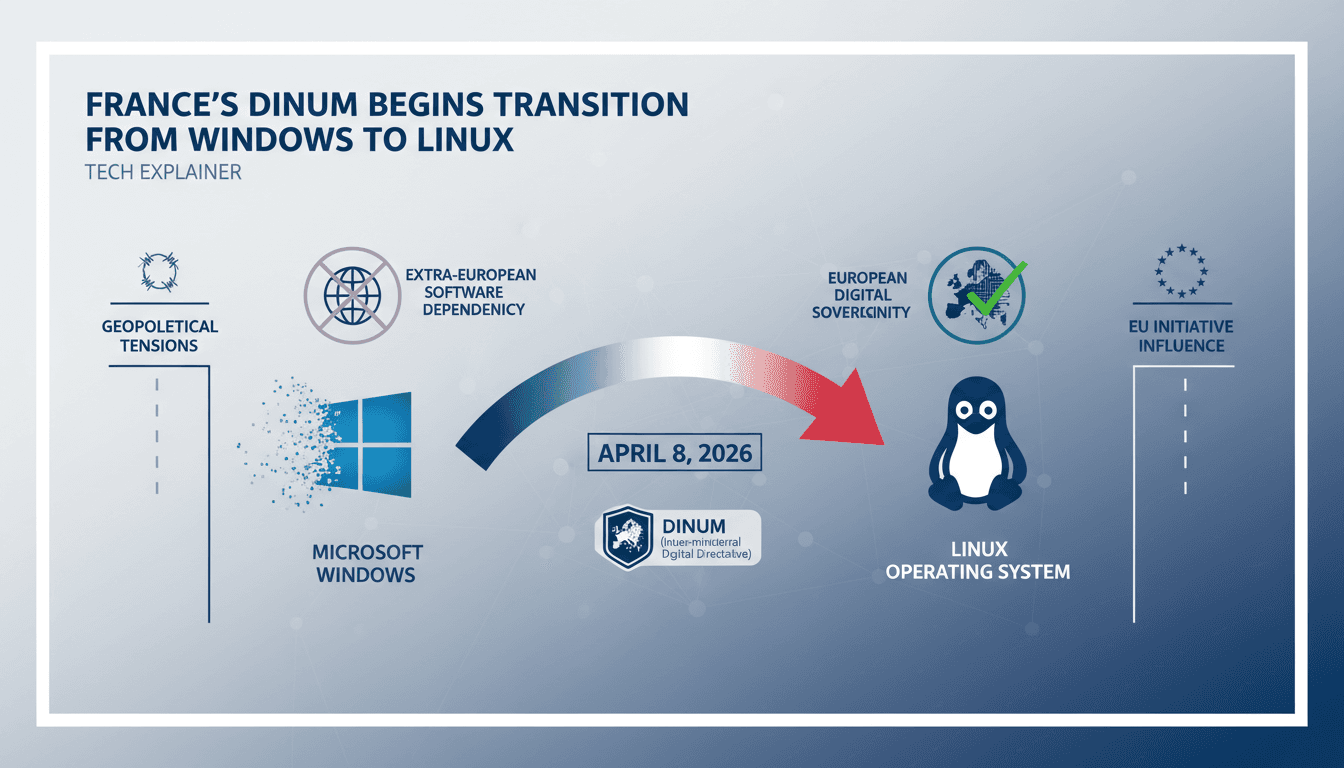
- On April 8, 2026, France's Inter-ministerial Digital Directorate (DINUM) announced the transition of government workstations from Microsoft Windows to Linux.
- All ministries are required to submit plans for this transition by autumn 2026, targeting 2.5 million civil servants.
- The initiative aims to promote European-developed alternatives and strengthen digital sovereignty amid geopolitical tensions.
The context you actually need
- European governments have pursued digital sovereignty for years, driven by concerns over dependence on U.S. technology providers.
- Previous initiatives include France's mandate to replace Microsoft Teams and Zoom with Visio for 2.5 million civil servants by 2027 and Germany's migration to Linux and LibreOffice.
- Geopolitical tensions with the U.S. have accelerated these efforts, as Europe seeks to regain control over data and infrastructure.
What's really happening
On April 8, 2026, the French government took a significant step towards digital independence by announcing the migration of its workstations from Microsoft Windows to Linux. This move, spearheaded by the Inter-ministerial Digital Directorate (DINUM), is part of a broader strategy to reduce dependencies on extra-European software and promote European alternatives. The directive mandates that all ministries formalize their reduction plans by autumn 2026, indicating a systematic approach to transitioning the digital landscape of the French public sector.
At the core of this initiative is the recognition of the vulnerabilities associated with relying on U.S. technology providers. The French government, like many European nations, has been increasingly concerned about data privacy, security, and the implications of geopolitical tensions with the U.S. The Digital Services Act and other regulations have further highlighted the need for Europe to assert its digital sovereignty. By migrating to Linux, France aims to bolster its control over its digital infrastructure and reduce potential risks associated with foreign software.
The transition will not only affect the operating systems used by civil servants but also extend to collaboration tools, security solutions, artificial intelligence, databases, virtualization, and network equipment. This comprehensive approach ensures that the shift to Linux is not merely a change in operating systems but a fundamental rethinking of how digital services are delivered within the French government. The initiative also promotes the use of European-developed alternatives, such as Tchap, Visio, and FranceTransfert, which are designed to enhance digital sovereignty.
The announcement has been met with positive reactions from open-source communities, which see this as a significant momentum shift towards Linux adoption. However, the broader market implications remain to be seen. The French government is coordinating interministerial plans and forming public-private partnerships to facilitate this transition, with industrial meetings scheduled for June 2026. As the migration progresses, it will be crucial to monitor how these changes impact not only the French public sector but also the wider European digital landscape.
Who feels it first (and how)
- French civil servants: Approximately 2.5 million will transition to Linux workstations, affecting their daily operations.
- IT departments: Responsible for implementing and supporting the migration, facing new training and resource allocation challenges.
- European software developers: Opportunities for growth as demand for local alternatives increases.
- U.S. tech companies: Potential loss of market share in the public sector as European governments shift towards local solutions.
What to watch next
- Interministerial plans: The submission and approval of these plans by autumn 2026 will indicate the pace and scope of the migration.
- Public-private partnerships: The formation of alliances in June 2026 will reveal how the private sector adapts to support government needs.
- Adoption rates of European alternatives: Monitoring the uptake of tools like Tchap and Visio will provide insight into the success of the initiative.
The migration of French government workstations from Windows to Linux has been officially announced.
Other European nations may follow suit, accelerating the trend towards digital sovereignty.
The long-term impact on U.S. technology providers and their market share in Europe remains to be seen.
Frequently Asked Questions
- Why it matters?
- This migration reflects a growing trend among European governments to enhance digital sovereignty and reduce reliance on U.S. technology.
- What happened (in 30 seconds)?
- On April 8, 2026, France's Inter-ministerial Digital Directorate (DINUM) announced the transition of government workstations from Microsoft Windows to Linux. All ministries are required to submit plans for this transition by autumn 2026, targeting 2.5 million civil servants. The initiative aims to promote European-developed alternatives and strengthen digital sovereignty amid geopolitical tensions.
- What's really happening?
- On April 8, 2026, the French government took a significant step towards digital independence by announcing the migration of its workstations from Microsoft Windows to Linux. This move, spearheaded by the Inter-ministerial Digital Directorate (DINUM), is part of a broader strategy to reduce dependencies on extra-European software and promote European alternatives. The directive mandates that all ministries formalize their reduction plans by autumn 2026, indicating a systematic approach to transit
- Who feels it first (and how)?
- French civil servants: Approximately 2.5 million will transition to Linux workstations, affecting their daily operations. IT departments: Responsible for implementing and supporting the migration, facing new training and resource allocation challenges. European software developers: Opportunities for growth as demand for local alternatives increases. U.S. tech companies: Potential loss of market share in the public sector as European governments shift towards local solutions.
- What to watch next?
- Interministerial plans: The submission and approval of these plans by autumn 2026 will indicate the pace and scope of the migration. Public-private partnerships: The formation of alliances in June 2026 will reveal how the private sector adapts to support government needs. Adoption rates of European alternatives: Monitoring the uptake of tools like Tchap and Visio will provide insight into the success of the initiative.
Tech news, hardware, and AI tools coverage.
"PC/tech site increasingly covering AI hardware and apps."
— A47 Editor
France starts moving government systems from Windows to Linux
France's Inter-ministerial Digital Directorate (DINUM) has initiated a transition of government systems from Microsoft Windows to Linux, aiming to enhance digital sovereignty and reduce reliance on non-European software. This strategic shift reflects...
Arabic tech news covering startups, apps, AI, and gadgets.
"AITnews is a well-known Arabic technology outlet covering regional tech developments."
— A47 Editor
بدلًا من ويندوز.. فرنسا تتجه إلى لينكس لتقليص الاعتماد على الولايات المتحدة
The French government is considering transitioning several of its government devices from Microsoft Windows to the open-source operating system Linux to reduce reliance on American technologies and enhance what is referred to as 'digital sovereignty....
Opinionated AI coverage for general audiences.
"TNW’s AI vertical covering tools, ethics, and trends."
— A47 Editor
France orders all government ministries to ditch Windows for Linux in digital sovereignty push
France's Interministerial Digital Directorate (DINUM) announced on April 8, 2026, a significant transition from Windows to Linux across all government ministries, aiming to eliminate extra-European digital dependencies by autumn 2026. This directive ...