
China's Aluminum Exports Set to Rise Due to Ongoing Iranian Conflict Disruptions
Here's what it means for you.
If you're in construction or manufacturing, expect rising costs and potential delays due to aluminum supply shortages.
Why it matters
The ongoing conflict in Iran is disrupting a significant portion of global aluminum production, impacting prices and availability.
What happened (in 30 seconds)
- China's aluminum exports are set to increase as global buyers look for alternatives due to supply disruptions from the Persian Gulf.
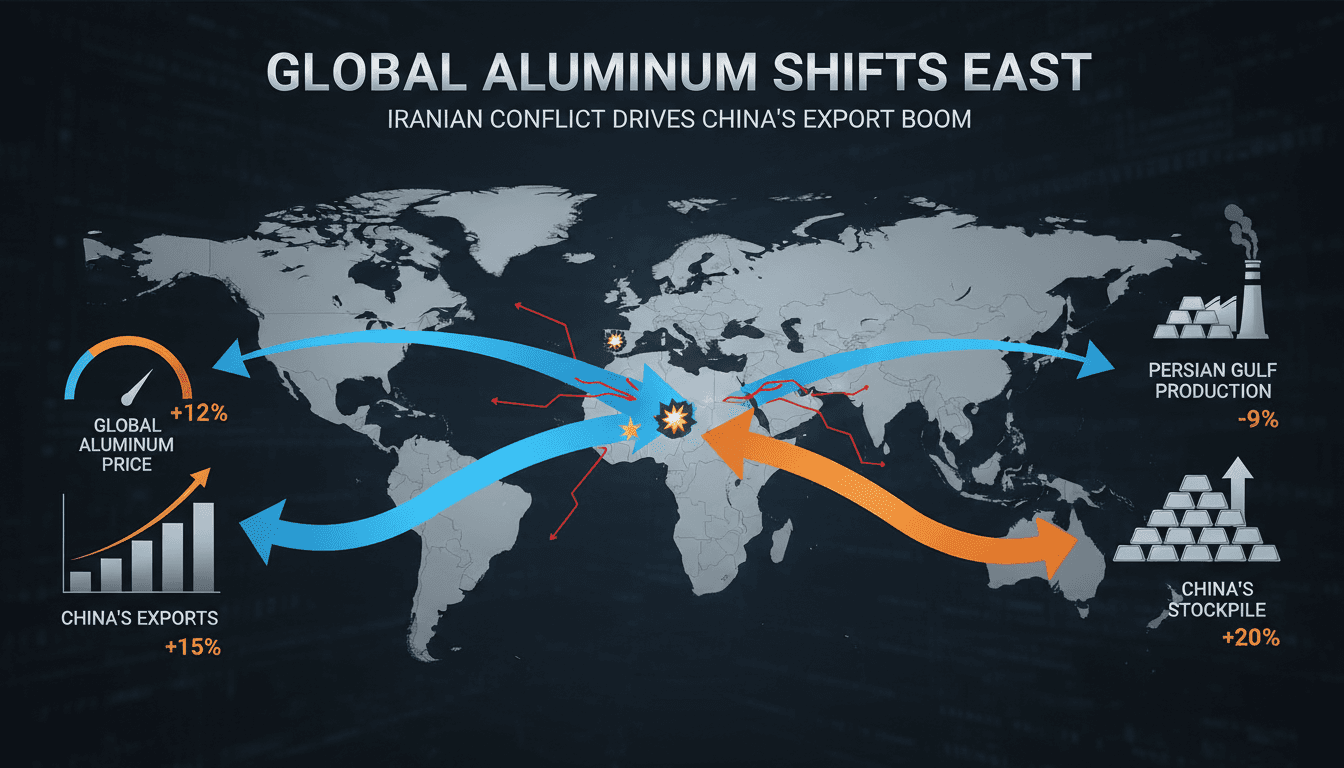
- The Iranian conflict has damaged key smelters and affected 9% of global aluminum output, pushing prices to near four-year highs.
- Chinese producers are leveraging high inventories and price premiums to ramp up exports, with stockpiles exceeding 1.3 million tons.
The context you actually need
- Iran's conflict escalated in late February 2026, leading to attacks on Gulf smelters and the effective closure of the Strait of Hormuz, a critical shipping route.
- China dominates global aluminum production, accounting for 60% of the market, and has seen a softening of domestic demand, allowing for increased exports.
- The London Metal Exchange (LME) prices surged to $3,492 per ton, reflecting heightened concerns over supply and the impact of geopolitical tensions.
What's really happening
The ongoing conflict in Iran has created a significant disruption in the global aluminum supply chain, particularly affecting the Persian Gulf region, which contributes approximately 9% of the world's primary aluminum production. The conflict began in late February 2026, with Iranian strikes targeting key smelters, including Emirates Global Aluminium's Al Taweelah plant in the UAE and Aluminium Bahrain. These attacks have not only damaged infrastructure but also effectively closed the Strait of Hormuz, a vital shipping route for global trade.
As a result, the London Metal Exchange (LME) has seen aluminum prices surge, reaching levels not seen since 2022. The price spike is driven by supply fears, with LME prices hitting $3,492 per ton. In response to the disruptions, Gulf producers have curtailed output and declared force majeure on contracts, further tightening the market. This situation has created a unique opportunity for China, the world's largest aluminum producer, which has been able to capitalize on its high domestic inventories—currently at a six-year high—and the price arbitrage between international and domestic markets.
China's aluminum stockpiles exceeded 1.3 million tons by March 2026, allowing producers to ramp up exports to meet the demand from global buyers seeking alternatives to the disrupted supplies from the Middle East. The shift in trade dynamics has prompted companies like Rusal to reroute their exports from China to markets in Japan and South Korea, indicating a significant reshaping of global aluminum trade flows.
The implications of this situation extend beyond just pricing; they affect construction and manufacturing sectors worldwide. As aluminum is a critical material for building facades and infrastructure, the supply shortages are likely to lead to increased costs and potential delays in construction projects, particularly in regions heavily reliant on aluminum imports.
Who feels it first (and how)
- Construction companies: Facing rising material costs and potential project delays.
- Manufacturers: Experiencing increased production costs due to aluminum shortages.
- Global commodity traders: Adjusting strategies to navigate the shifting supply landscape.
- Consumers: Likely to see higher prices for goods that rely on aluminum, such as vehicles and electronics.
What to watch next
- Aluminum price trends: Monitor LME prices for indications of ongoing supply tightness and market reactions.
- Production updates from Gulf producers: Keep an eye on announcements from EGA and Alba regarding output levels and force majeure declarations.
- Chinese export volumes: Watch for data on China's aluminum exports to gauge how effectively they are meeting global demand.
The Iranian conflict is disrupting aluminum supplies from the Persian Gulf.
Prices for aluminum will remain elevated as supply tightness persists.
The duration of the conflict and its long-term impact on global aluminum trade dynamics.
Frequently Asked Questions
- Why it matters?
- The ongoing conflict in Iran is disrupting a significant portion of global aluminum production, impacting prices and availability.
- What happened (in 30 seconds)?
- China's aluminum exports are set to increase as global buyers look for alternatives due to supply disruptions from the Persian Gulf. The Iranian conflict has damaged key smelters and affected 9% of global aluminum output, pushing prices to near four-year highs. Chinese producers are leveraging high inventories and price premiums to ramp up exports, with stockpiles exceeding 1.3 million tons.
- What's really happening?
- The ongoing conflict in Iran has created a significant disruption in the global aluminum supply chain, particularly affecting the Persian Gulf region, which contributes approximately 9% of the world's primary aluminum production. The conflict began in late February 2026, with Iranian strikes targeting key smelters, including Emirates Global Aluminium's Al Taweelah plant in the UAE and Aluminium Bahrain. These attacks have not only damaged infrastructure but also effectively closed the Strait of
- Who feels it first (and how)?
- Construction companies: Facing rising material costs and potential project delays. Manufacturers: Experiencing increased production costs due to aluminum shortages. Global commodity traders: Adjusting strategies to navigate the shifting supply landscape. Consumers: Likely to see higher prices for goods that rely on aluminum, such as vehicles and electronics.
- What to watch next?
- Aluminum price trends: Monitor LME prices for indications of ongoing supply tightness and market reactions. Production updates from Gulf producers: Keep an eye on announcements from EGA and Alba regarding output levels and force majeure declarations. Chinese export volumes: Watch for data on China's aluminum exports to gauge how effectively they are meeting global demand.
Global markets, investing, and macroeconomics from a premier financial newsroom.
"Bloomberg is respected for in-depth financial reporting and data-driven analysis."
— A47 Editor
China’s Aluminum Exports to Surge as Mideast Disruptions Persist
Chinese aluminum exports are projected to increase significantly in the coming months as global buyers seek alternative sources to mitigate supply disruptions in the Persian Gulf, primarily due to ongoing geopolitical tensions.
Global markets, investing, and macroeconomics from a premier financial newsroom.
"Bloomberg is respected for in-depth financial reporting and data-driven analysis."
— A47 Editor
Oil Swings as Traders Decode Talk Signals With Hormuz Closed
Oil prices have experienced fluctuations as traders assess the implications of ongoing peace talks between the U.S. and Iran, alongside a significant blockade affecting crude oil flows through the Strait of Hormuz. This blockade has heightened market...
Arabic-language UAE newspaper coverage focused on domestic affairs, public institutions, business, society, and regional developments.
"Al Khaleej coverage generally reflects a mainstream UAE editorial lens with strong attention to public affairs, institutions, and regional developments."
— A47 Editor
حصار هرمز يرفع الألومنيوم لأعلى مستوى في 4 سنوات
The price of aluminum on the London Stock Exchange surged to its highest level in four years on Tuesday, following the recent blockade in the Strait of Hormuz. This significant increase reflects the impact of geopolitical tensions on commodity prices...
Global markets, investing, and macroeconomics from a premier financial newsroom.
"Bloomberg is respected for in-depth financial reporting and data-driven analysis."
— A47 Editor
Aluminum Market Faces Two Million Tons Deficit, ING Says
The aluminum market is facing a significant deficit of two million tons, as prices surged to a four-year high in London due to supply disruptions linked to U.S. President Donald Trump's blockade of Iranian ports. ING strategist Ewa Manthey highlighte...
Global political, business, and cultural coverage from WSJ international desks.
"The Wall Street Journal offers extensive international reporting with a reputation for financial insight and a center-right editorial stance."
— A47 Editor
Aluminum Prices Rise to Four-Year High on Hormuz Blockade Fears, Failed Iran Talks
Aluminum prices have surged to a four-year high due to fears surrounding a potential blockade of the Strait of Hormuz and the collapse of recent peace talks between the U.S. and Iran. This situation has raised concerns about supply disruptions, parti...
Pan-Arab news coverage spanning politics, business, sports, and regional affairs.
"Asharq Al-Awsat reflects a broad Arab editorial perspective with strong attention to regional geopolitics."
— A47 Editor
أسعار الألمنيوم تلامس ذروة 4 سنوات عقب تعثر محادثات واشنطن وطهران
Aluminum prices on the London Metal Exchange have surged to their highest level in over four years, driven by renewed concerns over supply disruptions following stalled negotiations between Washington and Tehran.
Business, markets, economy, and corporate news with strong UAE and regional relevance.
"Emirates 24|7 business coverage tends to center UAE markets, property, regulation, and regional economic developments."
— A47 Editor
Gold drops as Hormuz blockade lifts dollar, dents Fed rate cut bets Gold drops as Hormuz blockade lifts dollar, dents Fed rate cut bets
Gold prices fell to a near one-week low as the U.S. dollar strengthened following the announcement of a blockade on Iranian ports by the U.S. military, which came after failed peace talks with Iran. Spot gold was down 0.4% at $4,730.75 per ounce, whi...
Global markets, investing, and macroeconomics from a premier financial newsroom.
"Bloomberg is respected for in-depth financial reporting and data-driven analysis."
— A47 Editor
Copper Falls, Aluminum Spreads Spike as US Plans Hormuz Blockade
Copper prices have declined and aluminum spreads have increased following President Donald Trump's announcement of a blockade on the Strait of Hormuz, a vital maritime route for global oil shipments, amidst ongoing tensions in the Middle East. This d...
Global markets, investing, and macroeconomics from a premier financial newsroom.
"Bloomberg is respected for in-depth financial reporting and data-driven analysis."
— A47 Editor
Asian LNG Prices Set to Rise as US Threatens to Block Hormuz
Asian spot liquefied natural gas prices are poised to increase as the United States has announced a blockade of the Strait of Hormuz following unsuccessful peace negotiations with Iran. This escalation in tensions is expected to impact global energy ...
Global markets, investing, and macroeconomics from a premier financial newsroom.
"Bloomberg is respected for in-depth financial reporting and data-driven analysis."
— A47 Editor
Gold Eases as US Plan to Blockade Hormuz Raises Inflation Risks
Gold prices have decreased as inflation concerns rise following U.S. President Donald Trump's announcement of a blockade on the Strait of Hormuz, a crucial maritime route for global oil shipments. This decision comes after failed peace talks with Ira...