
2026 Iran War Economic Fallout Disproportionately Affects Developing Economies
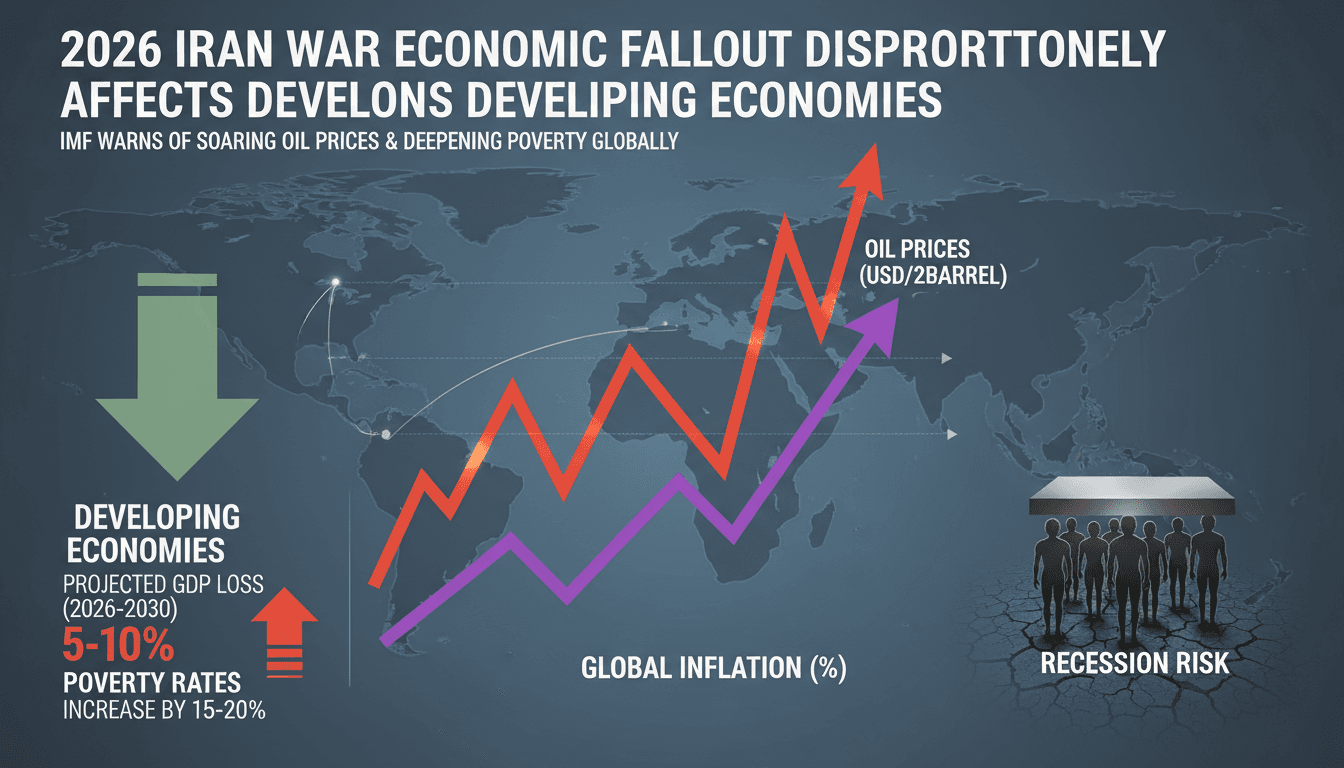
Here's what it means for you.
If you work in a developing economy, rising costs and potential job losses could soon impact your financial stability.
Why it matters
The ongoing conflict is expected to exacerbate global economic disparities, particularly affecting low-income nations reliant on imports.
What happened (in 30 seconds)
- The 2026 Iran War began on February 28, 2026, following U.S. and Israeli airstrikes against Iran, leading to significant geopolitical tensions.
- IMF officials predict a 0.3 percentage point GDP reduction for developing economies due to war-induced economic shocks, with oil prices soaring above $118 per barrel.
- The UNDP estimates a staggering $194 billion loss for Arab states within the first month of conflict, pushing millions into poverty.
The context you actually need
- The conflict's origins lie in Iran's nuclear advancements and proxy attacks, culminating in military strikes that disrupted oil shipments through the Strait of Hormuz.
- Developing economies are particularly vulnerable due to their reliance on imported energy and food, making them susceptible to inflation and recession.
- Dubai's financial markets have already lost $120 billion in value, reflecting broader regional economic instability and the potential for long-term impacts on tourism and trade.
What's really happening
The 2026 Iran War has triggered a complex web of economic consequences that disproportionately affect developing economies. As the conflict escalated, oil prices surged, reaching over $118 per barrel, which has a direct impact on countries that rely heavily on energy imports. For many developing nations, this spike in oil prices translates into increased transportation and production costs, leading to higher prices for goods and services. The International Monetary Fund (IMF) has warned that these rising costs could push many of these economies into recession, with a projected 0.3 percentage point reduction in GDP.
The war's immediate aftermath has seen a significant economic downturn in the Arab states, with the UNDP estimating a staggering $194 billion loss in economic output within just one month of conflict. This loss is not merely a statistic; it represents real hardship for millions, as the conflict has already pushed an additional four million people into poverty. The IMF's Managing Director, Kristalina Georgieva, emphasized that low-income nations are facing the brunt of these economic shocks, as they lack the financial buffers that wealthier nations possess.
In response to the crisis, many developing countries have implemented measures such as fuel rationing and food subsidies to mitigate the effects of inflation. However, these measures may only provide temporary relief. Gulf states are also taking steps to bolster their defenses against potential Iranian strikes while attempting to cushion their economies with existing reserves. The volatility in global markets has led to initial plunges in stock values, followed by partial recoveries, but the long-term outlook remains uncertain.
As the conflict continues, the IMF has urged nations to exercise fiscal restraint to avoid spiraling into debt. The U.S. and its allies have extended military blockades, further complicating the situation. UN agencies have warned that as many as 30 million people globally are at risk of falling into poverty due to the economic fallout from the war. This situation underscores the interconnectedness of global economies and the ripple effects that conflicts can have on even the most distant markets.
Who feels it first (and how)
- Low-income households in developing nations facing rising food and energy prices.
- Small businesses reliant on imports that are now experiencing increased costs and supply chain disruptions.
- Tourism sectors in regions like Dubai, where economic instability is leading to decreased visitor numbers and spending.
What to watch next
- Oil price fluctuations: Continued volatility in oil prices will directly impact inflation rates and economic stability in developing nations.
- Global poverty rates: Monitoring changes in poverty levels will provide insight into the broader social implications of the conflict.
- International aid responses: The effectiveness and scale of humanitarian aid efforts will be crucial in mitigating the economic fallout for affected populations.
The conflict has already led to significant economic losses in Arab states and rising oil prices.
Developing economies will continue to face heightened recession risks and increased poverty levels.
The long-term recovery trajectory for affected regions and the potential for further geopolitical escalations remain uncertain.
Frequently Asked Questions
- Why it matters?
- The ongoing conflict is expected to exacerbate global economic disparities, particularly affecting low-income nations reliant on imports.
- What happened (in 30 seconds)?
- The 2026 Iran War began on February 28, 2026, following U.S. and Israeli airstrikes against Iran, leading to significant geopolitical tensions. IMF officials predict a 0.3 percentage point GDP reduction for developing economies due to war-induced economic shocks, with oil prices soaring above $118 per barrel. The UNDP estimates a staggering $194 billion loss for Arab states within the first month of conflict, pushing millions into poverty.
- What's really happening?
- The 2026 Iran War has triggered a complex web of economic consequences that disproportionately affect developing economies. As the conflict escalated, oil prices surged, reaching over $118 per barrel, which has a direct impact on countries that rely heavily on energy imports. For many developing nations, this spike in oil prices translates into increased transportation and production costs, leading to higher prices for goods and services. The International Monetary Fund (IMF) has warned that the
- Who feels it first (and how)?
- Low-income households in developing nations facing rising food and energy prices. Small businesses reliant on imports that are now experiencing increased costs and supply chain disruptions. Tourism sectors in regions like Dubai, where economic instability is leading to decreased visitor numbers and spending.
- What to watch next?
- Oil price fluctuations: Continued volatility in oil prices will directly impact inflation rates and economic stability in developing nations. Global poverty rates: Monitoring changes in poverty levels will provide insight into the broader social implications of the conflict. International aid responses: The effectiveness and scale of humanitarian aid efforts will be crucial in mitigating the economic fallout for affected populations.
Editor-curated FT homepage stories spanning markets, business, world, and opinion.
"The Financial Times is a globally respected business publication with a centrist/center-left tone and strong markets focus."
— A47 Editor
Economic pain from Iran war will hit poor countries hardest, officials say
The ongoing conflict in Iran is expected to have severe economic repercussions, particularly for developing countries, as highlighted during the recent IMF and World Bank spring meetings. Officials warned that many of these nations may require additi...
Markets desk coverage, trading insights, and investor updates.
"WSJ’s markets reporting provides in-depth analysis and context for investors."
— A47 Editor
Iran War Casts Gloom Over Outlook of World Finance Ministers and Investors
The ongoing conflict in Iran has cast a shadow over the recent meetings of finance ministers and investors at the IMF and World Bank, with participants predicting that economic and financial turbulence will continue for weeks or months. The war has d...
Regional coverage and analysis focused on politics, diplomacy, and business across the Middle East.
"Al-Monitor is known for analytical reporting on Middle East politics and policy developments."
— A47 Editor
IMF warns of war's human impact far from Middle East
The International Monetary Fund (IMF) has issued a warning regarding the severe human impact of the ongoing war in Iran, highlighting that the repercussions extend far beyond the Middle East, particularly affecting energy-importing nations in East As...
Capitol Hill news, legislation, and policy insight.
"The Hill specializes in U.S. politics and policy, with a focus on Capitol Hill developments and a reputation for insider reporting."
— A47 Editor
War-torn global economy needs IMF emergency assistance
The ongoing U.S.-Israeli war on Iran has triggered a significant supply shock in the global energy market, leading to heightened economic instability and rising costs for energy importers. The International Monetary Fund (IMF) has the capacity to all...