
U.S. Fertilizer Buyers Redirect Shipments Overseas Amid Iran War Price Surge
Here's what it means for you.
If you're in agriculture or food production, expect rising costs and potential supply shortages as global fertilizer prices remain volatile.
Why it matters
The disruption in fertilizer supply chains directly impacts food production costs and availability, affecting consumers and farmers alike.
What happened (in 30 seconds)
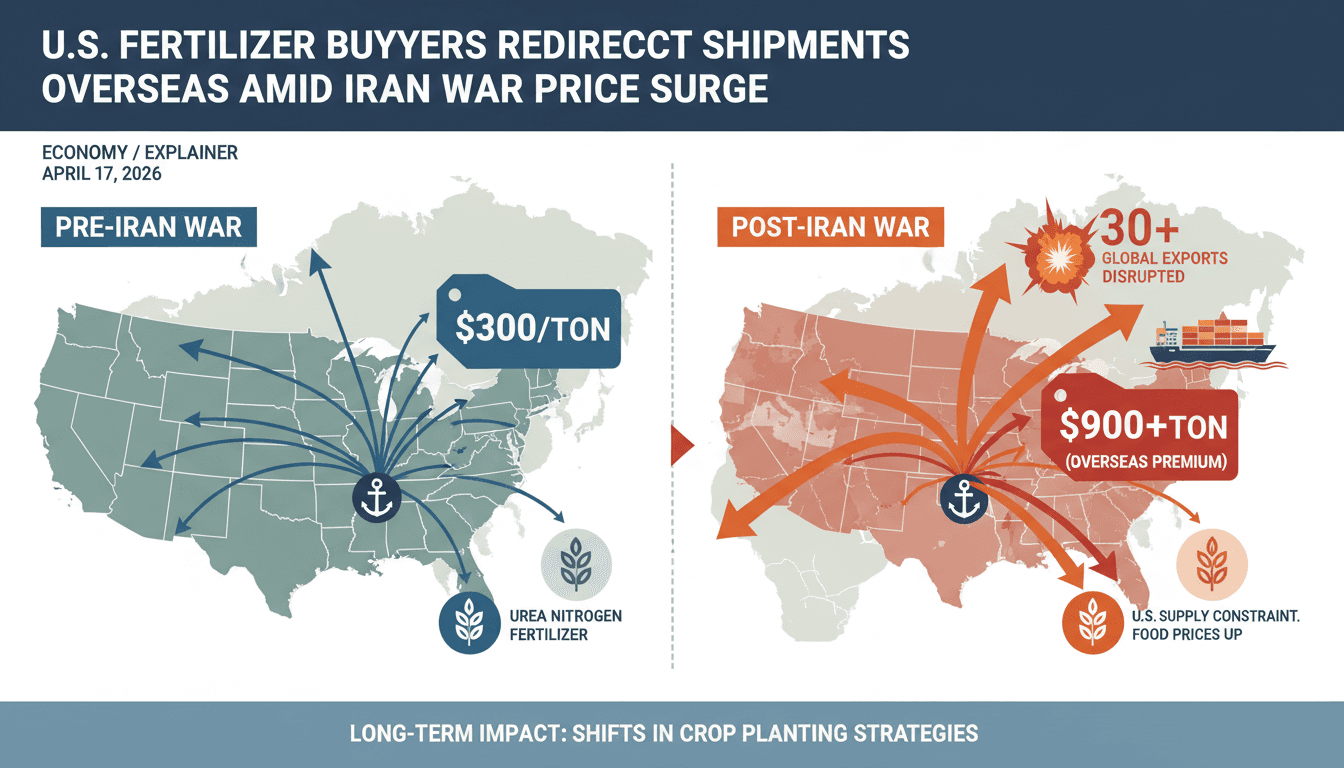
- U.S. buyers redirected imported urea shipments from the Port of New Orleans to overseas markets as global prices surged due to the Iran War.
- The Strait of Hormuz was nearly closed, disrupting over 30% of global fertilizer exports and creating a $170 per short ton price premium overseas.
- Senator Josh Hawley called for a DOJ investigation into alleged price gouging by fertilizer companies, as U.S. farmers faced escalating input costs during the critical planting season.
The context you actually need
- The 2026 Iran War began on February 28, 2026, when U.S. and Israeli airstrikes targeted Iranian military sites, leading to a partial closure of the Strait of Hormuz.
- Fertilizer prices in the U.S. rose by 30-50% in March 2026, exacerbating existing vulnerabilities from low crop prices and high input costs.
- Farmers are shifting planting strategies, reducing corn acreage in favor of soybeans due to soaring fertilizer costs and supply constraints.
What's really happening
The ongoing conflict in Iran has created a significant disruption in global fertilizer supply chains, particularly affecting urea nitrogen, which is crucial for crop production. The Strait of Hormuz, a vital maritime route for over 30% of global seaborne fertilizer exports, faced near-closure due to military actions, leading to a spike in prices. As a result, U.S. fertilizer buyers began redirecting shipments overseas, where prices were significantly higher, creating a $170 per short ton premium compared to domestic markets.
This diversion of shipments has raised concerns about market opportunism, as U.S. traders and retailers capitalize on the price disparities. Senator Josh Hawley has publicly accused companies like CF Industries of price gouging, prompting calls for a Department of Justice investigation. The situation is further complicated by the fact that U.S. farmers are already grappling with reduced crop prices, which have not rebounded since the peaks of 2022, following the onset of the Russia-Ukraine conflict.
The implications of these dynamics are profound. Farmers are now forced to reconsider their planting strategies, with many opting to reduce corn acreage in favor of more cost-effective crops like soybeans. This shift could have long-term effects on crop yields and food supply in the U.S. and beyond. Additionally, the reopening of the Strait of Hormuz on April 17, 2026, has not fully alleviated the price pressures, as elevated costs persist in the market.
Globally, the fallout from the Iran War has prompted responses from other nations. The European Union has proposed farming subsidies to mitigate the impact on farmers, while India has increased fertilizer aid to support its agricultural sector. Analysts warn that the effects of this supply chain disruption could linger, leading to prolonged volatility in fertilizer prices and availability.
Who feels it first (and how)
- U.S. Farmers: Facing higher input costs and shifting planting strategies, impacting crop yields.
- Agricultural Traders: Redirecting shipments to capitalize on price disparities, affecting domestic supply.
- Consumers: Potentially facing higher food prices as production costs rise.
- Global Markets: Countries reliant on fertilizer imports from the U.S. may experience supply shortages and inflationary pressures.
What to watch next
- Price Trends: Monitor fertilizer prices in both domestic and international markets to gauge ongoing supply chain impacts.
- Government Responses: Watch for potential legislative actions or subsidies aimed at stabilizing agricultural input costs.
- Crop Yield Reports: Keep an eye on planting and yield forecasts, particularly for corn and soybeans, to assess the long-term agricultural impact.
The Iran War has disrupted global fertilizer supply chains, leading to price increases.
U.S. farmers will continue to adjust planting strategies in response to rising costs.
The long-term effects on global food prices and agricultural output remain uncertain.
Frequently Asked Questions
- Why it matters?
- The disruption in fertilizer supply chains directly impacts food production costs and availability, affecting consumers and farmers alike.
- What happened (in 30 seconds)?
- U.S. buyers redirected imported urea shipments from the Port of New Orleans to overseas markets as global prices surged due to the Iran War. The Strait of Hormuz was nearly closed, disrupting over 30% of global fertilizer exports and creating a $170 per short ton price premium overseas. Senator Josh Hawley called for a DOJ investigation into alleged price gouging by fertilizer companies, as U.S. farmers faced escalating input costs during the critical planting season.
- What's really happening?
- The ongoing conflict in Iran has created a significant disruption in global fertilizer supply chains, particularly affecting urea nitrogen, which is crucial for crop production. The Strait of Hormuz, a vital maritime route for over 30% of global seaborne fertilizer exports, faced near-closure due to military actions, leading to a spike in prices. As a result, U.S. fertilizer buyers began redirecting shipments overseas, where prices were significantly higher, creating a $170 per short ton premium
- Who feels it first (and how)?
- U.S. Farmers: Facing higher input costs and shifting planting strategies, impacting crop yields. Agricultural Traders: Redirecting shipments to capitalize on price disparities, affecting domestic supply. Consumers: Potentially facing higher food prices as production costs rise. Global Markets: Countries reliant on fertilizer imports from the U.S. may experience supply shortages and inflationary pressures.
- What to watch next?
- Price Trends: Monitor fertilizer prices in both domestic and international markets to gauge ongoing supply chain impacts. Government Responses: Watch for potential legislative actions or subsidies aimed at stabilizing agricultural input costs. Crop Yield Reports: Keep an eye on planting and yield forecasts, particularly for corn and soybeans, to assess the long-term agricultural impact.
Oil, metals, and agriculture: supply/demand headlines, OPEC chatter, inventories, and price action.
"Solid tape for energy and metals traders tracking macro and micro catalysts."
— A47 Editor
US buyers redirect imported fertilizer overseas as Iran war drives up global prices
The ongoing conflict in Iran has led U.S. buyers to redirect imported fertilizer overseas, as global prices surge due to supply chain disruptions. This shift reflects the increasing economic pressures faced by farmers and agricultural sectors in the ...
Editor-curated FT homepage stories spanning markets, business, world, and opinion.
"The Financial Times is a globally respected business publication with a centrist/center-left tone and strong markets focus."
— A47 Editor
The coming global food crisis
The ongoing conflict in Iran is projected to lead to a global food crisis, with hunger and famine becoming foreseeable consequences as supply chains are disrupted. The war has already begun to affect essential goods, raising concerns about food avail...