
World Bank President Warns of 800 Million Jobs Deficit in Developing Economies Post-Middle East War
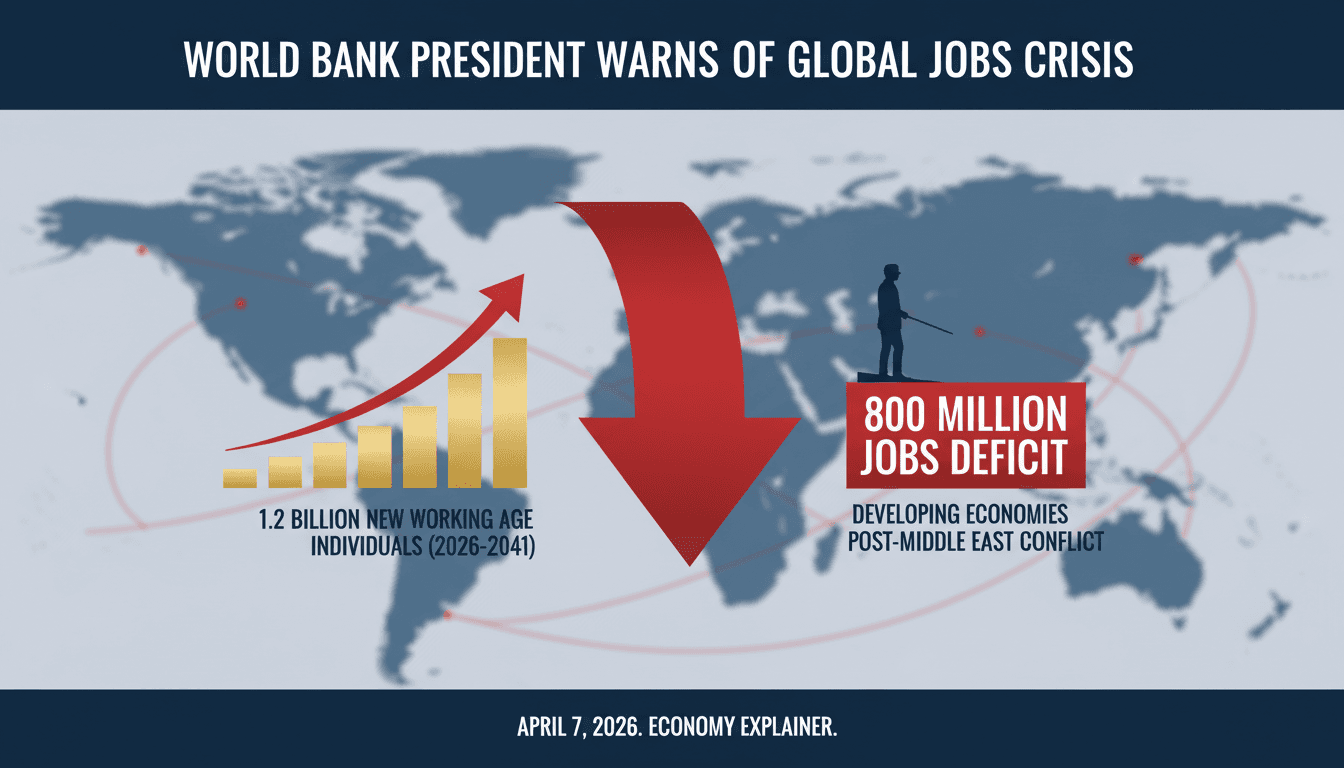
Here's what it means for you.
If you work in a developing economy, the ongoing geopolitical tensions could severely limit your job prospects in the coming years.
Why it matters
This jobs deficit threatens economic stability and growth in developing regions, impacting global markets and trade.
What happened (in 30 seconds)
- Ajay Banga, World Bank President, warned of an 800 million jobs deficit in developing economies due to a surge in working-age individuals.
- The warning came during the IMF and World Bank Spring Meetings amidst the ongoing Middle East war, which began on February 28, 2026.
- A tenuous ceasefire was announced by US President Donald Trump, but the geopolitical situation continues to disrupt global economic conditions.
The context you actually need
- 1.2 billion individuals are projected to enter the labor market in developing countries over the next 10-15 years, but only 400 million jobs are expected to be created.
- The Middle East conflict has led to a blockade of the Strait of Hormuz, causing energy prices to spike and inflation to rise globally.
- The IMF forecasts a 0.3-1% reduction in global growth and an inflation increase of up to 0.9% due to these geopolitical tensions.
What's really happening
The ongoing conflict in the Middle East, particularly the war involving US and Israeli forces against Iran and Hezbollah, is creating a ripple effect that extends far beyond the immediate region. The blockade of the Strait of Hormuz has disrupted global energy supplies, leading to inflated prices and increased inflation rates worldwide. This situation is compounded by the fact that a staggering 1.2 billion young people are set to enter the labor market in developing economies over the next decade. However, current projections indicate that only 400 million jobs will be available, resulting in an alarming 800 million jobs deficit.
This jobs crisis is not merely a statistic; it represents a significant challenge for economic stability in developing regions. As the World Bank's Ajay Banga pointed out, the implications of this deficit could lead to heightened social unrest and economic instability, particularly in areas already facing challenges such as poverty and limited access to education. The projected shortfall in job creation is likely to exacerbate existing inequalities and hinder economic growth, making it imperative for global leaders and financial institutions to address these issues urgently.
The World Bank is activating crisis response windows to provide access to $30-70 billion for war-affected nations, but this is only a temporary measure. The long-term solution requires a concerted effort from governments, private sectors, and international organizations to create sustainable job opportunities. The IMF's forecasts of reduced growth and increased inflation further complicate the situation, as countries may struggle to invest in job creation while managing rising costs.
Moreover, the geopolitical landscape remains precarious, with ongoing tensions and potential escalations in conflict. The fragile ceasefire announced by President Trump may not hold, and any further disruptions could lead to additional economic fallout. The interconnectedness of global markets means that the repercussions of this conflict will be felt worldwide, particularly in regions reliant on trade and energy imports.
Who feels it first (and how)
- Young professionals in developing economies facing limited job opportunities.
- Logistics and energy sectors in the UAE, affected by rising costs and disrupted shipping routes.
- Expatriates in Dubai, whose employment may be threatened by economic strain in the region.
- Governments in developing countries struggling to manage rising unemployment and social unrest.
What to watch next
- Job creation initiatives: Monitor efforts by governments and international organizations to implement programs aimed at creating jobs in developing economies. This will indicate how seriously the global community is addressing the projected deficit.
- Energy prices: Keep an eye on fluctuations in oil prices, as they will directly impact inflation rates and economic stability in both developing and developed nations.
- Geopolitical developments: Watch for any changes in the Middle East conflict, particularly regarding the ceasefire and potential escalations, as these will have immediate effects on global markets.
An 800 million jobs deficit is projected in developing economies over the next 10-15 years.
Continued inflation and reduced global growth due to the ongoing conflict and its economic repercussions.
The long-term effectiveness of crisis response measures and whether they will sufficiently address the job shortfall.
Frequently Asked Questions
- Why it matters?
- This jobs deficit threatens economic stability and growth in developing regions, impacting global markets and trade.
- What happened (in 30 seconds)?
- Ajay Banga, World Bank President, warned of an 800 million jobs deficit in developing economies due to a surge in working-age individuals. The warning came during the IMF and World Bank Spring Meetings amidst the ongoing Middle East war, which began on February 28, 2026. A tenuous ceasefire was announced by US President Donald Trump, but the geopolitical situation continues to disrupt global economic conditions.
- What's really happening?
- The ongoing conflict in the Middle East, particularly the war involving US and Israeli forces against Iran and Hezbollah, is creating a ripple effect that extends far beyond the immediate region. The blockade of the Strait of Hormuz has disrupted global energy supplies, leading to inflated prices and increased inflation rates worldwide. This situation is compounded by the fact that a staggering 1.2 billion young people are set to enter the labor market in developing economies over the next decad
- Who feels it first (and how)?
- Young professionals in developing economies facing limited job opportunities. Logistics and energy sectors in the UAE, affected by rising costs and disrupted shipping routes. Expatriates in Dubai, whose employment may be threatened by economic strain in the region. Governments in developing countries struggling to manage rising unemployment and social unrest.
- What to watch next?
- Job creation initiatives: Monitor efforts by governments and international organizations to implement programs aimed at creating jobs in developing economies. This will indicate how seriously the global community is addressing the projected deficit. Energy prices: Keep an eye on fluctuations in oil prices, as they will directly impact inflation rates and economic stability in both developing and developed nations. Geopolitical developments: Watch for any changes in the Middle East conflict,
Regional and international reporting focused on Middle Eastern politics, diplomacy, and economics.
"Asharq Al-Awsat is a Saudi-owned international newspaper reflecting mainstream Gulf political perspectives."
— A47 Editor
World Bank Chief Sounds Alarm about Looming Jobs Crisis Even after War Ends
The World Bank Chief has raised concerns about a potential jobs crisis that may persist even after the resolution of ongoing conflicts in the Middle East, particularly the war in Iran. This warning comes amid forecasts of a significant economic slowd...
Oil, metals, and agriculture: supply/demand headlines, OPEC chatter, inventories, and price action.
"Solid tape for energy and metals traders tracking macro and micro catalysts."
— A47 Editor
World Bank chief sounds alarm about looming jobs crisis even after war ends
The World Bank chief has raised concerns about a potential jobs crisis that may arise even after the resolution of ongoing conflicts, highlighting the fragility of economic recovery in various regions. This warning comes amid a backdrop of declining ...