
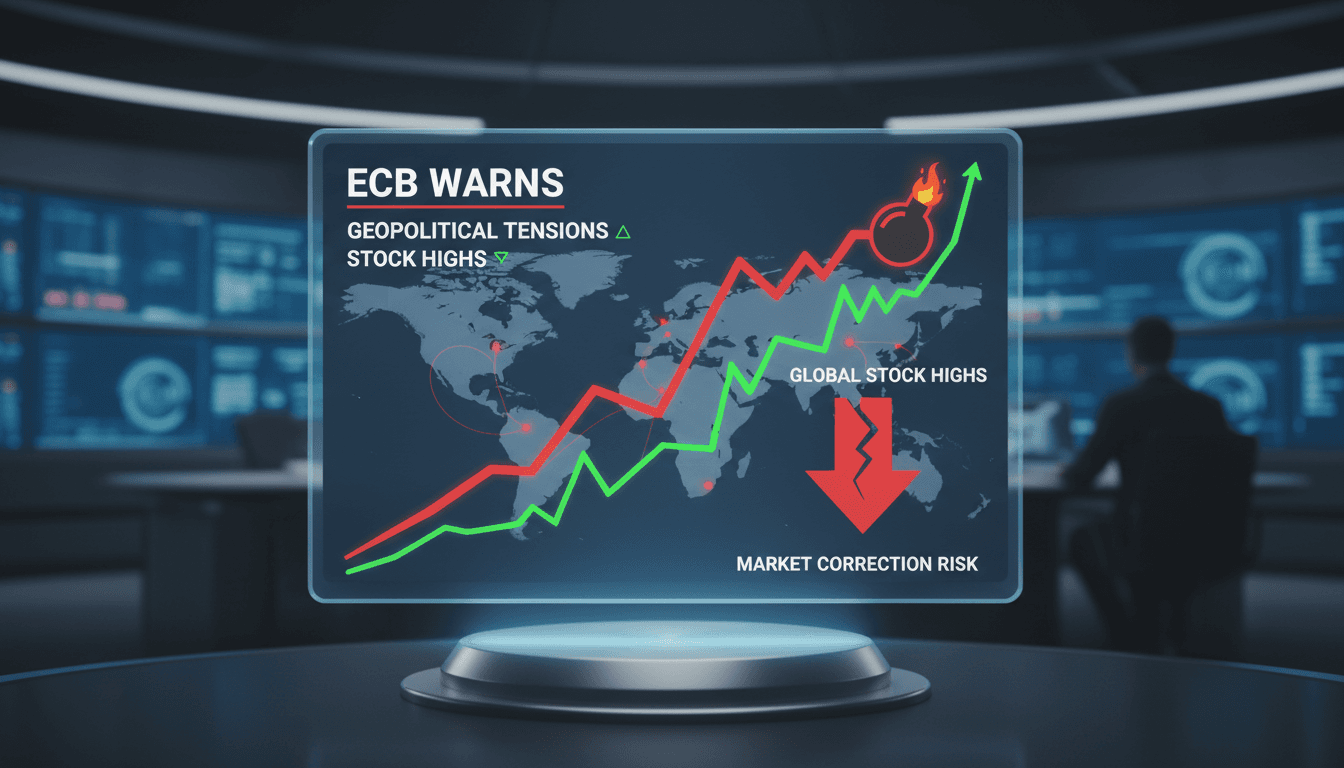
ECB warns of potential market correction amid geopolitical tensions and record stock highs
Here's what it means for you.
The European Central Bank's warning signals a critical juncture for investors as geopolitical tensions rise, particularly concerning the Iran war. With global stock markets reaching unprecedented highs, there is a growing concern that investor complacency may lead to a sudden market correction. Policymakers are urging market participants to reassess their strategies in light of these risks, emphasizing the need for vigilance. As geopolitical uncertainties continue to unfold, the implications for financial stability are significant. Investors must remain alert to shifts in sentiment that could trigger volatility in the markets.
What happened
The European Central Bank has issued a stark warning about the increasing risks of a significant market correction. This caution arises amid escalating geopolitical tensions, particularly related to the ongoing conflict in Iran, and coincides with global stock markets hitting record highs. The ECB's assessment indicates that financial markets may be underestimating these threats, which could have serious repercussions.
Despite the orderly market reactions to the Middle East conflict, the ECB highlights a troubling level of investor complacency. Policymakers are increasingly concerned about the implications of these geopolitical and economic risks on market stability.
The Context
The backdrop of this warning includes a complex interplay of geopolitical factors and economic uncertainties that are affecting investor confidence. The Iran war is a key contributor to the current climate of uncertainty, prompting top European policymakers to express their concerns. As global stocks continue to climb, the ECB's warnings reflect a growing unease about the sustainability of this upward trend.
The timing of the ECB's warning is crucial, as it coincides with a period of heightened geopolitical tensions. Investors are currently navigating a landscape where risks are not fully accounted for, raising questions about the long-term stability of financial markets.
Takeaway
Looking ahead, investors should closely monitor developments in the Middle East and any shifts in geopolitical dynamics that could impact market stability. The ECB's warning serves as a reminder that complacency in the face of rising risks can lead to abrupt market corrections. As such, market participants may need to reassess their investment strategies to mitigate potential volatility.
In the coming weeks, it will be essential to watch for changes in investor sentiment and how these may influence market movements. The outlook remains cautious, with the potential for increased volatility as geopolitical tensions evolve.
Markets desk coverage, trading insights, and investor updates.
"WSJ’s markets reporting provides in-depth analysis and context for investors."
— A47 Editor
Financial Markets Underestimate Geopolitical And Fiscal Risks, ECB Warns
The European Central Bank (ECB) has warned that financial markets are underestimating geopolitical and fiscal risks, particularly in light of the ongoing conflict in the Middle East. Despite orderly market movements, the ECB highlighted a sense of co...
Global business headlines with AI angles.
"General business outlet that frequently covers AI."
— A47 Editor
ECB Warns Risk Of Market Correction Rising As Stocks Hit Record Highs
The European Central Bank (ECB) has issued fresh warnings regarding the increasing risk of a market correction as global stock markets continue to reach record highs, despite the backdrop of escalating geopolitical and economic uncertainties. This al...
Global markets, investing, and macroeconomics from a premier financial newsroom.
"Bloomberg is respected for in-depth financial reporting and data-driven analysis."
— A47 Editor
ECB Sees Danger of Sudden and Sharp Repricing in Markets
The European Central Bank (ECB) has warned that financial markets are at risk of a sudden and sharp correction, as investors appear to be underestimating the potential impacts of geopolitical tensions, particularly the ongoing conflict in Iran.