
Chinese Exports Slow to 2.5% Amid Middle East Conflict and Oil Supply Disruptions
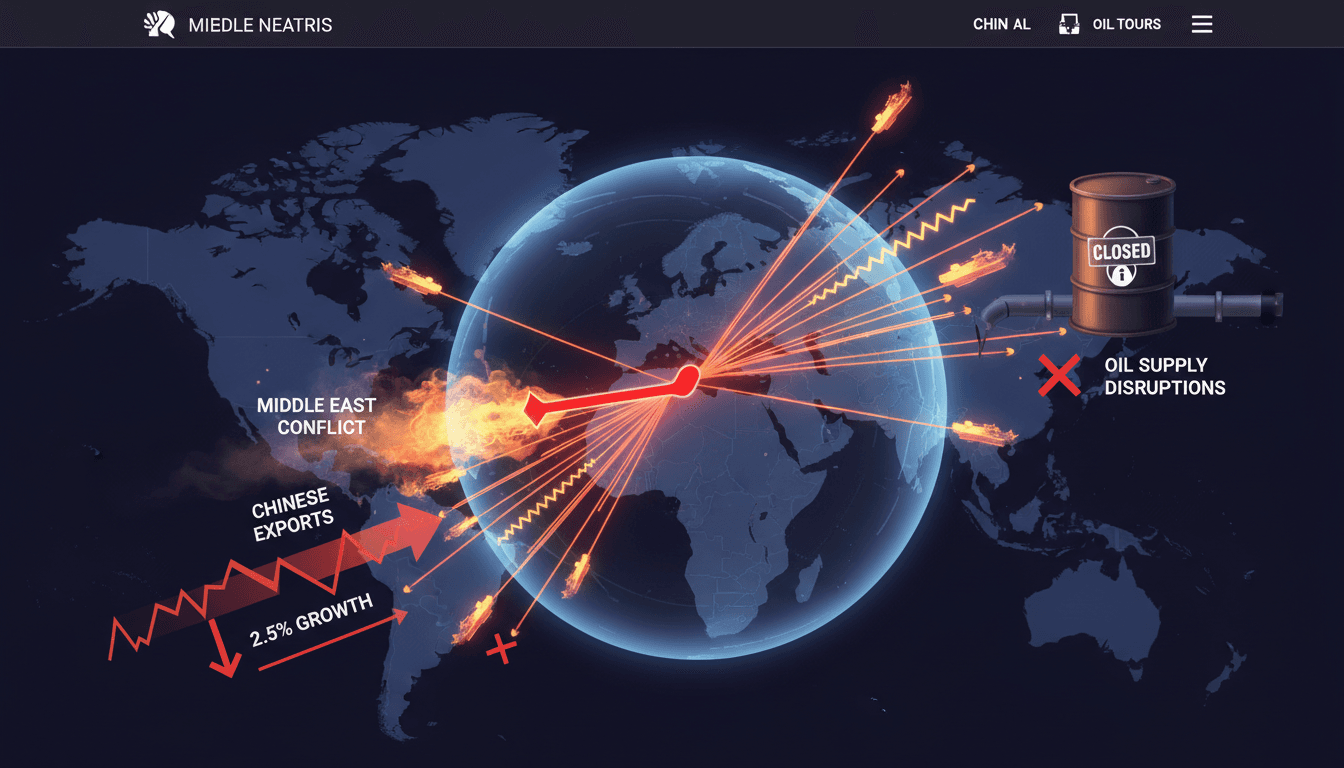
Here's what it means for you.
If you rely on global supply chains or energy markets, the ripple effects of the Middle East conflict could impact your costs and availability of goods.
Why it matters
This slowdown in Chinese exports signals broader economic vulnerabilities tied to geopolitical tensions, affecting global trade dynamics.
What happened (in 30 seconds)
- Chinese exports grew by only 2.5% year-on-year in March 2026, a significant drop from earlier months.
- The Strait of Hormuz was closed due to the February 2026 war, halting 21 million barrels of oil per day and causing energy price spikes.
- Imports surged by 27.8%, driven by record crude purchases from Brazil, indicating a shift in supply chain strategies.
The context you actually need
- The Middle East conflict escalated in February 2026, involving the US, Israel, and Iran, leading to significant disruptions in oil supply.
- China's economic growth heavily relies on external demand, making it particularly vulnerable to global supply chain shocks.
- Elevated energy prices have inflated costs across various sectors, impacting industries reliant on Gulf exports, such as fertilizers and petrochemicals.
What's really happening
In February 2026, escalating tensions in the Middle East culminated in a war involving the United States and Israel against Iran. This conflict led to the effective closure of the Strait of Hormuz, a critical chokepoint for global oil transit, halting approximately 21 million barrels of oil per day. The immediate consequence was a surge in Brent crude prices, which exceeded $100 per barrel, and a 40% increase in natural gas prices in Europe.
As a result, China's export growth plummeted to just 2.5% year-on-year in March 2026, a stark contrast to the anticipated 8.6% growth. This deceleration followed a remarkable 21.8% increase in January and February combined, highlighting the abrupt shift in economic momentum. The war's impact on energy prices and shipping costs has dampened global demand, particularly affecting industries that rely on Gulf exports of sulfur and nitrogen fertilizers.
China's import figures tell a different story, with a record surge of 27.8% in March. This spike was largely driven by increased crude oil purchases from Brazil, as Chinese importers sought to circumvent disruptions caused by the conflict. The elevated fuel and transportation costs have created a ripple effect, leading to higher prices for consumer goods and essential commodities.
The ongoing geopolitical tensions have exacerbated vulnerabilities in China's supply chains, particularly for petrochemicals and fertilizers, which are crucial for its manufacturing sector. As the conflict continues, the Chinese government is preparing for a high-stakes summit with the US in mid-May 2026, hoping to address trade surpluses and stabilize economic relations.
Who feels it first (and how)
- Migrant workers in Dubai: Increased living costs due to energy inflation and higher commodity prices.
- Logistics and shipping sectors: Job insecurity and reduced demand as global trade slows.
- Agricultural producers: Threats to supply chains for fertilizers, impacting crop yields and food prices.
- Consumers globally: Higher prices for goods reliant on oil and gas, affecting purchasing power.
What to watch next
- US-China trade talks in May 2026: These discussions could influence tariffs and trade policies, impacting global supply chains.
- Energy price fluctuations: Continued volatility in oil and gas prices will affect production costs and consumer prices worldwide.
- Middle East conflict developments: Any escalation or resolution in the conflict will have direct implications for global trade and energy markets.
Chinese exports have slowed significantly due to the Middle East conflict.
Continued high energy prices will persist, affecting global economic conditions.
The long-term impact on US-China relations and global trade dynamics remains uncertain.
Frequently Asked Questions
- Why it matters?
- This slowdown in Chinese exports signals broader economic vulnerabilities tied to geopolitical tensions, affecting global trade dynamics.
- What happened (in 30 seconds)?
- Chinese exports grew by only 2.5% year-on-year in March 2026, a significant drop from earlier months. The Strait of Hormuz was closed due to the February 2026 war, halting 21 million barrels of oil per day and causing energy price spikes. Imports surged by 27.8%, driven by record crude purchases from Brazil, indicating a shift in supply chain strategies.
- What's really happening?
- In February 2026, escalating tensions in the Middle East culminated in a war involving the United States and Israel against Iran. This conflict led to the effective closure of the Strait of Hormuz, a critical chokepoint for global oil transit, halting approximately 21 million barrels of oil per day. The immediate consequence was a surge in Brent crude prices, which exceeded $100 per barrel, and a 40% increase in natural gas prices in Europe. As a result, China's export growth plummeted to just
- Who feels it first (and how)?
- Migrant workers in Dubai: Increased living costs due to energy inflation and higher commodity prices. Logistics and shipping sectors: Job insecurity and reduced demand as global trade slows. Agricultural producers: Threats to supply chains for fertilizers, impacting crop yields and food prices. Consumers globally: Higher prices for goods reliant on oil and gas, affecting purchasing power.
- What to watch next?
- US-China trade talks in May 2026: These discussions could influence tariffs and trade policies, impacting global supply chains. Energy price fluctuations: Continued volatility in oil and gas prices will affect production costs and consumer prices worldwide. Middle East conflict developments: Any escalation or resolution in the conflict will have direct implications for global trade and energy markets.
Pan-Arab news coverage spanning politics, business, sports, and regional affairs.
"Asharq Al-Awsat reflects a broad Arab editorial perspective with strong attention to regional geopolitics."
— A47 Editor
تباطؤ الصادرات الصينية تحت وطأة الاضطرابات في الشرق الأوسط
Recent trade data from China indicates a significant slowdown in export growth during March, attributed to ongoing disruptions in the Middle East. This decline reflects the challenges faced by Chinese exporters amid geopolitical tensions in the regio...
Arabic-language UAE newspaper coverage focused on domestic affairs, public institutions, business, society, and regional developments.
"Al Khaleej coverage generally reflects a mainstream UAE editorial lens with strong attention to public affairs, institutions, and regional developments."
— A47 Editor
تباطؤ نمو الصادرات الصينية في مارس.. وأفضل أداء للواردات منذ 4 سنوات
China's export growth slowed in March as manufacturers faced rising costs of raw materials and energy, influenced by the ongoing conflict in the Middle East affecting supply chains. Meanwhile, imports recorded their strongest growth in over four year...
Editor-curated FT homepage stories spanning markets, business, world, and opinion.
"The Financial Times is a globally respected business publication with a centrist/center-left tone and strong markets focus."
— A47 Editor
China’s exports slow as Middle East turmoil weighs on trade
China's exports have significantly slowed as of March 2026, primarily due to the ongoing turmoil in the Middle East, particularly the conflict in Iran, which has disrupted global supply chains and diminished trade confidence. This decline follows a p...