
FAO Food Price Index Hits Six-Month High Amid Near East Conflict
Here's what it means for you.
As food prices climb, your grocery bills may increase, impacting your budget and purchasing decisions.
Why it matters
The ongoing conflict in the Near East is disrupting global supply chains, leading to higher food prices that affect consumers worldwide.
What happened (in 30 seconds)
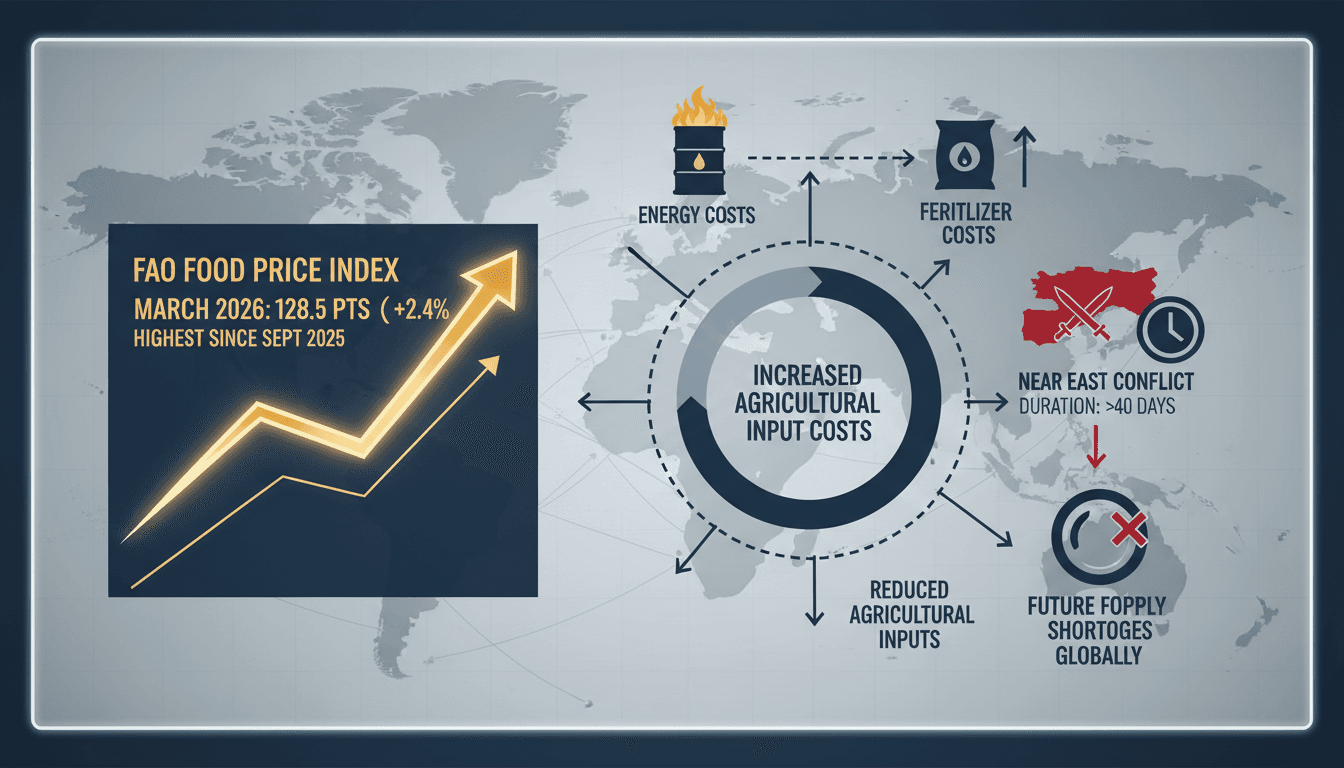
- FAO Food Price Index rose 2.4% in March 2026, reaching 128.5 points, the highest level in six months.
- Vegetable oils surged 5.1%, and sugar increased by 7.2%, driven by rising energy costs linked to the Near East conflict.
- FAO Chief Economist warned that prolonged conflict could lead to reduced agricultural inputs, threatening future food supplies.
The context you actually need
- Near East conflict: The war involving Iran has escalated, disrupting critical supply routes through the Strait of Hormuz, affecting oil and fertilizer trade.
- Production costs: Increased energy and fertilizer prices are raising agricultural production and transport costs globally, impacting food prices.
- Cereal supplies: Despite the price increases, current cereal supplies remain adequate, but prolonged conflict could lead to reduced yields in the future.
What's really happening
The FAO Food Price Index's rise to 128.5 points in March 2026 reflects a complex interplay of geopolitical tensions and market dynamics. The Near East conflict, particularly the disruptions in the Strait of Hormuz—where 20% of global oil and one-third of fertilizer trade passes—has triggered a surge in energy prices. This spike in energy costs directly impacts agricultural production, as farmers face higher expenses for fuel and fertilizers.
In March, the index recorded notable increases across all food categories, with vegetable oils rising 5.1% and sugar up 7.2%. These increases are primarily attributed to the spillover effects of crude oil prices on agricultural commodities. The FAO's Chief Economist, Máximo Torero, indicated that while the current price increases are moderate, they could escalate if the conflict persists beyond 40 days. Such a scenario could compel farmers to cut back on essential inputs like fertilizers, leading to lower crop yields and further exacerbating food price inflation.
The FAO's report highlights the delicate balance of supply and demand in the global food market. Although current cereal supplies are robust, the potential for reduced agricultural inputs poses a significant risk to future production. If farmers are unable to maintain their planting schedules or quality due to rising costs, the repercussions could be felt across the supply chain, leading to a tighter market and higher prices for consumers.
Moreover, the situation is compounded by the fact that many countries, particularly in the Gulf region, are heavily reliant on food imports. As fertilizer prices are projected to rise by 15-20%, local food prices are expected to follow suit. This creates a precarious situation for import-dependent populations, where even slight increases in global food prices can lead to significant inflationary pressures domestically.
In summary, the rising FAO Food Price Index is not just a statistic; it reflects a broader narrative of geopolitical instability affecting food security and economic stability worldwide. The implications are profound, as consumers may soon feel the pinch at the grocery store if these trends continue.
Who feels it first (and how)
- Consumers: Higher grocery bills as food prices increase.
- Farmers: Potential reduction in yields due to increased input costs.
- Import-dependent countries: Increased vulnerability to food price inflation, particularly in the Gulf region.
- Commodity traders: Immediate market reactions to rising food prices, affecting trading strategies.
What to watch next
- Conflict duration: Monitor the length of the Near East conflict; prolonged tensions could lead to further price increases.
- Fertilizer prices: Watch for fluctuations in fertilizer costs, which directly impact agricultural production and food prices.
- Global supply chain disruptions: Keep an eye on any additional disruptions in supply routes that could exacerbate the situation.
The FAO Food Price Index has risen 2.4% in March 2026.
Continued price increases if the Near East conflict persists and fertilizer prices rise.
The long-term impact on global food security and agricultural production if current trends continue.
Frequently Asked Questions
- Why it matters?
- The ongoing conflict in the Near East is disrupting global supply chains, leading to higher food prices that affect consumers worldwide.
- What happened (in 30 seconds)?
- FAO Food Price Index rose 2.4% in March 2026, reaching 128.5 points, the highest level in six months. Vegetable oils surged 5.1%, and sugar increased by 7.2%, driven by rising energy costs linked to the Near East conflict. FAO Chief Economist warned that prolonged conflict could lead to reduced agricultural inputs, threatening future food supplies.
- What's really happening?
- The FAO Food Price Index's rise to 128.5 points in March 2026 reflects a complex interplay of geopolitical tensions and market dynamics. The Near East conflict, particularly the disruptions in the Strait of Hormuz—where 20% of global oil and one-third of fertilizer trade passes—has triggered a surge in energy prices. This spike in energy costs directly impacts agricultural production, as farmers face higher expenses for fuel and fertilizers. In March, the index recorded notable increases across
- Who feels it first (and how)?
- Consumers: Higher grocery bills as food prices increase. Farmers: Potential reduction in yields due to increased input costs. Import-dependent countries: Increased vulnerability to food price inflation, particularly in the Gulf region. Commodity traders: Immediate market reactions to rising food prices, affecting trading strategies.
- What to watch next?
- Conflict duration: Monitor the length of the Near East conflict; prolonged tensions could lead to further price increases. Fertilizer prices: Watch for fluctuations in fertilizer costs, which directly impact agricultural production and food prices. Global supply chain disruptions: Keep an eye on any additional disruptions in supply routes that could exacerbate the situation.
Arabic-language economic and business reporting with strong UAE market relevance.
"Emarat Al Youm business coverage often centers UAE property, banking, consumer issues, and economic policy."
— A47 Editor
«الفاو» تتوقع ارتفاعاً أكبر في أسعار الغذاء العالمية «الفاو» تتوقع ارتفاعاً أكبر في أسعار الغذاء العالمية
The Food and Agriculture Organization (FAO) of the United Nations reported that global food prices rose to their highest level in March, indicating a significant increase in food costs. This rise reflects ongoing challenges in the agricultural sector...
Pan-Arab news coverage spanning politics, business, sports, and regional affairs.
"Asharq Al-Awsat reflects a broad Arab editorial perspective with strong attention to regional geopolitics."
— A47 Editor
«الفاو» تُحذّر من ارتفاع أسعار الغذاء العالمية إذا استمرت حرب إيران
The Food and Agriculture Organization (FAO) has warned that global food prices surged in March to their highest level since September 2025, with potential for further increases if the conflict in the Middle East, particularly involving Iran, continue...
Sports reporting with a focus on Saudi and regional competitions.
"Okaz sports coverage is broad and audience-friendly, with strong attention to Saudi teams and leagues."
— A47 Editor
ارتفاع أسعار الغذاء عالميًا في مارس بسبب توترات الشرق الأوسط
The Food and Agriculture Organization (FAO) of the United Nations announced a rise in global food prices in March, primarily driven by increased energy costs linked to escalating tensions in the Middle East. The average food price index reached appro...