
Iranian Cyber Actors Target US Critical Infrastructure with Exploits on PLCs
Here's what it means for you.
If you rely on U.S. critical infrastructure, the escalating cyber threats could disrupt services you depend on.
Why it matters
The ongoing cyber operations against U.S. critical infrastructure highlight vulnerabilities that could impact global supply chains and operational stability.
What happened (in 30 seconds)
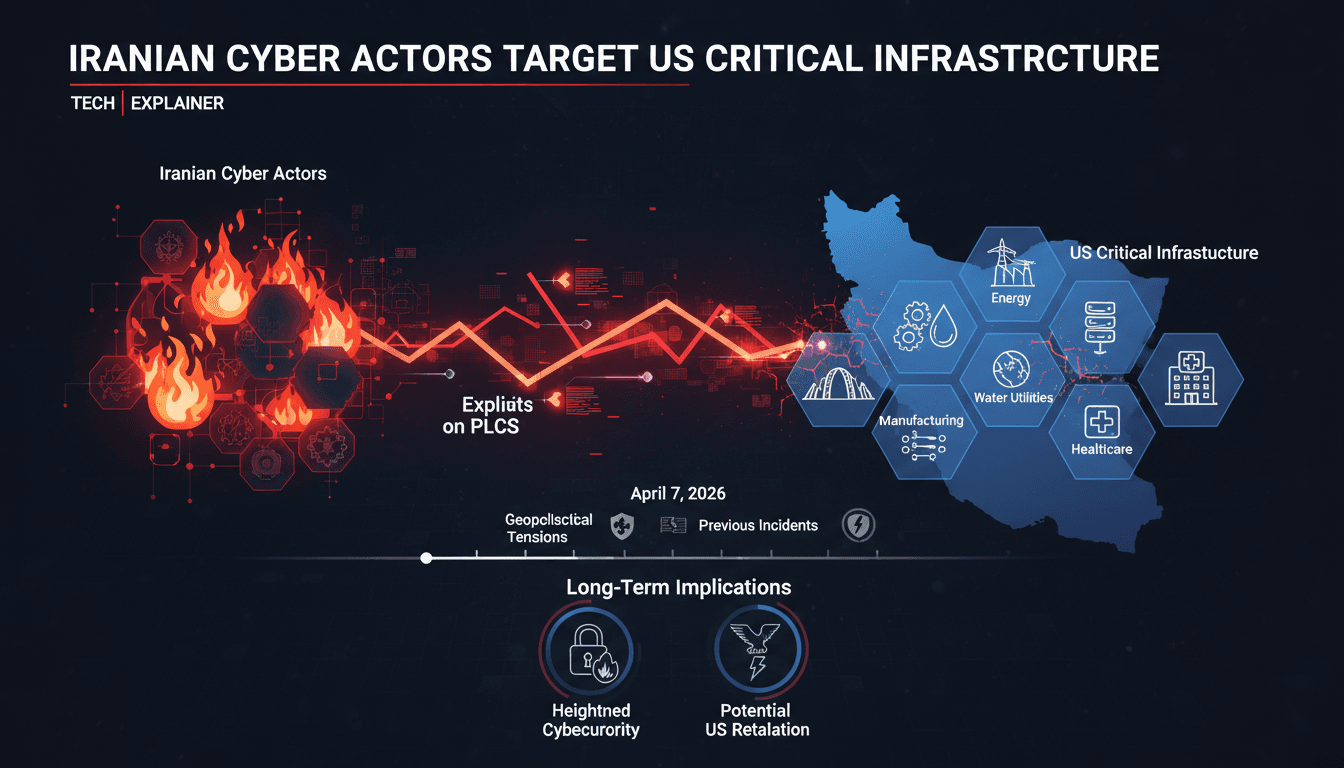
- On April 7, 2026, a multi-agency advisory warned of Iranian-affiliated hackers targeting U.S. critical infrastructure.
- The actors, linked to Iran's IRGC Cyber Electronic Command, have been exploiting programmable logic controllers (PLCs) since March 2026.
- Mitigations are urgently recommended, including isolating PLCs and enhancing cybersecurity measures across sectors like water, energy, and government services.
The context you actually need
- Iranian cyber operations have intensified amid geopolitical tensions with the U.S. and Israel, raising the stakes for critical infrastructure security.
- Previous attacks by the CyberAv3ngers group compromised at least 75 PLC devices in U.S. water systems, indicating a pattern of targeting vulnerable networks.
- Current exploitation tactics leverage unpatched vulnerabilities in widely used PLCs, posing significant risks to operational technology across multiple sectors.
What's really happening
The recent advisory from the FBI, CISA, NSA, and other agencies underscores a critical escalation in cyber warfare tactics employed by Iranian-affiliated advanced persistent threat (APT) actors. These groups, particularly the CyberAv3ngers, have shifted their focus to programmable logic controllers (PLCs) that are integral to the functioning of essential services such as water treatment, energy distribution, and government operations.
Since March 2026, these actors have exploited internet-facing PLCs, taking advantage of default configurations and unpatched vulnerabilities in systems manufactured by companies like Rockwell Automation. Their activities have included manipulating data on human-machine interfaces (HMIs) and supervisory control and data acquisition (SCADA) systems, leading to operational disruptions and potential financial losses for critical infrastructure operators.
The implications of these cyber threats extend beyond immediate operational risks. As geopolitical tensions rise, particularly between Iran and the U.S., the potential for retaliatory cyber actions increases. The U.S. government has warned of severe consequences for any attacks that disrupt critical infrastructure, indicating a heightened state of alert and readiness to respond to cyber incursions. This environment creates a precarious balance where the stakes are high, and the potential for escalation is significant.
Moreover, the advisory highlights the need for immediate action among critical infrastructure operators. Recommendations include isolating PLCs from the internet, implementing multi-factor authentication (MFA), and regularly patching firmware to mitigate vulnerabilities. The urgency of these measures reflects the understanding that the current exploitation activities are ongoing and that the threat landscape is evolving rapidly.
As these cyber threats continue to unfold, the potential for collateral damage increases, affecting not only the targeted sectors but also the broader economy and public safety. The interconnected nature of modern infrastructure means that disruptions in one area can have cascading effects, impacting businesses and consumers alike.
Who feels it first (and how)
- Critical infrastructure operators: Water, energy, and government services face immediate operational risks.
- Cybersecurity professionals: Increased demand for protective measures and incident response strategies.
- Consumers and businesses: Potential disruptions in essential services could lead to financial and operational challenges.
What to watch next
- Increased cybersecurity measures: Watch for new regulations or guidelines from U.S. agencies aimed at bolstering defenses against cyber threats.
- Geopolitical developments: Monitor tensions between the U.S., Iran, and Israel, as these may influence the frequency and severity of cyber attacks.
- Public sector responses: Observe how critical infrastructure sectors implement recommended mitigations and the effectiveness of these strategies in preventing breaches.
Iranian-affiliated actors are actively targeting U.S. critical infrastructure.
The frequency of cyber attacks will increase as geopolitical tensions escalate.
The full extent of potential disruptions and their impact on global supply chains remains uncertain.
Frequently Asked Questions
- Why it matters?
- The ongoing cyber operations against U.S. critical infrastructure highlight vulnerabilities that could impact global supply chains and operational stability.
- What happened (in 30 seconds)?
- On April 7, 2026, a multi-agency advisory warned of Iranian-affiliated hackers targeting U.S. critical infrastructure. The actors, linked to Iran's IRGC Cyber Electronic Command, have been exploiting programmable logic controllers (PLCs) since March 2026. Mitigations are urgently recommended, including isolating PLCs and enhancing cybersecurity measures across sectors like water, energy, and government services.
- What's really happening?
- The recent advisory from the FBI, CISA, NSA, and other agencies underscores a critical escalation in cyber warfare tactics employed by Iranian-affiliated advanced persistent threat (APT) actors. These groups, particularly the CyberAv3ngers, have shifted their focus to programmable logic controllers (PLCs) that are integral to the functioning of essential services such as water treatment, energy distribution, and government operations. Since March 2026, these actors have exploited internet-faci
- Who feels it first (and how)?
- Critical infrastructure operators: Water, energy, and government services face immediate operational risks. Cybersecurity professionals: Increased demand for protective measures and incident response strategies. Consumers and businesses: Potential disruptions in essential services could lead to financial and operational challenges.
- What to watch next?
- Increased cybersecurity measures: Watch for new regulations or guidelines from U.S. agencies aimed at bolstering defenses against cyber threats. Geopolitical developments: Monitor tensions between the U.S., Iran, and Israel, as these may influence the frequency and severity of cyber attacks. Public sector responses: Observe how critical infrastructure sectors implement recommended mitigations and the effectiveness of these strategies in preventing breaches.
UAE-based English-language newspaper covering regional politics, economics, and global affairs.
"The National reflects Emirati policy perspectives while maintaining international editorial standards."
— A47 Editor
Iranian hackers aim at critical US infrastructure, FBI warns
The FBI has issued a warning regarding Iranian hackers targeting critical infrastructure in the United States, indicating a significant escalation in cyber attacks since the onset of hostilities between the two nations. This warning highlights the in...
Regional coverage and analysis focused on politics, diplomacy, and business across the Middle East.
"Al-Monitor is known for analytical reporting on Middle East politics and policy developments."
— A47 Editor
Iranian hackers' targeting of US critical infrastructure has escalated since start of war, US says
U.S. cybersecurity, law enforcement, and intelligence agencies reported an escalation in Iranian hacking campaigns targeting critical infrastructure in the U.S. since the onset of hostilities between the U.S. and Iran. The hackers are focusing on pub...
Business tech stories, startups, and innovation coverage.
"The Los Angeles Times is a major West Coast newspaper offering in-depth reporting with a liberal editorial tone and strong regional focus."
— A47 Editor
Iran attempting cyberattacks against critical U.S. infrastructure, officials say
Iranian cyber activity has intensified, with officials warning of attempts to infiltrate critical U.S. infrastructure, coinciding with President Trump's threats to target Iran's civilian infrastructure, including bridges and power plants.
California news and regional developments.
"The Los Angeles Times is a major West Coast newspaper offering in-depth reporting with a liberal editorial tone and strong regional focus."
— A47 Editor
Iran attempting cyberattacks against critical U.S. infrastructure, officials say
Iranian cyber activity has intensified, with officials warning of attempts to infiltrate critical U.S. infrastructure, coinciding with President Trump's threats to target Iran's civilian infrastructure, including bridges and power plants.
International news with cultural insight.
"The Los Angeles Times is a major West Coast newspaper offering in-depth reporting with a liberal editorial tone and strong regional focus."
— A47 Editor
Iran attempting cyberattacks against critical U.S. infrastructure, officials say
Iranian cyber activity has intensified, with officials warning of attempts to infiltrate critical U.S. infrastructure, coinciding with President Trump's threats to target Iran's civilian infrastructure, including bridges and power plants.