
IEA Reports Oil Prices Understate Impact of Iran War Supply Crisis
Here's what it means for you.
Rising oil prices could affect your daily expenses and investment strategies as global supply chains face unprecedented disruptions.
Why it matters
The ongoing conflict in Iran is causing the largest supply shock in oil market history, which could lead to sustained price volatility and economic repercussions worldwide.
What happened (in 30 seconds)
- IEA's warning: On April 14, 2026, the International Energy Agency (IEA) stated that current oil prices do not reflect the severity of the supply crisis caused by the Iran war.
- Demand contraction: The IEA revised its 2026 global oil demand growth forecast to a contraction of 80,000 barrels per day, down from a previous estimate of 730,000 barrels per day.
- Supply shock: The conflict has led to a historic supply drop of 10.1 million barrels per day, with the Strait of Hormuz flows plummeting to 3.8 million barrels per day.
The context you actually need
- Conflict escalation: The Iran war began on February 28, 2026, following US-Israel airstrikes, leading to Iranian retaliation and significant damage to energy facilities across the region.
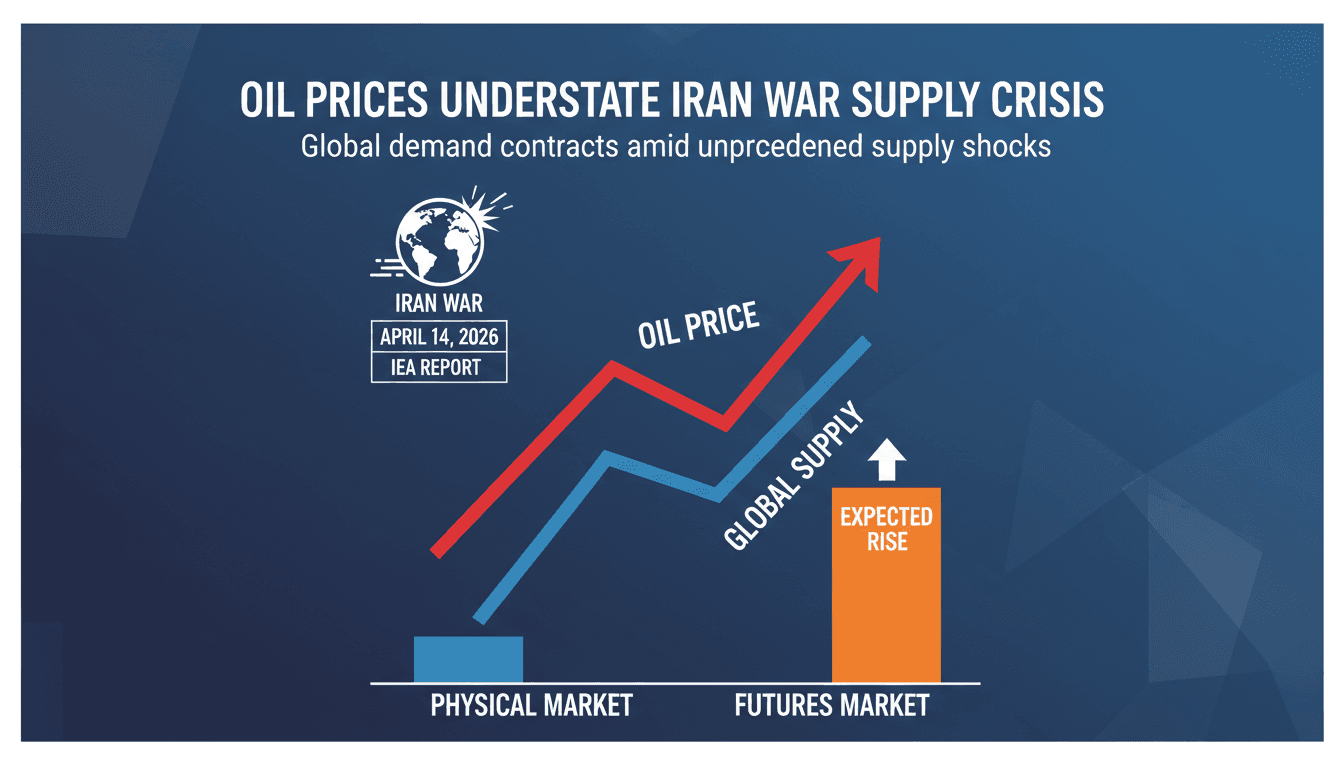
- Market disconnect: Despite a temporary ceasefire announcement, oil futures dipped below $100 per barrel, while physical crude prices approached $150 per barrel, indicating a disconnect between market expectations and physical realities.
- Regional impact: The UAE and Saudi Arabia have ramped up alternative exports, but the ongoing instability continues to strain local economies and global supply chains.
What's really happening
The Iran war has triggered a seismic shift in the global oil market, primarily due to the unprecedented supply disruptions resulting from military actions and geopolitical tensions. The IEA's April Oil Market Report highlighted a staggering decline in global oil supply, with a drop of 10.1 million barrels per day in March alone. This decline is attributed to the destruction of over 80 energy facilities across Iran, Saudi Arabia, UAE, and Qatar, leading to export losses exceeding 13 million barrels per day. The Strait of Hormuz, a critical chokepoint for global oil transport, has seen flows plummet from over 20 million barrels per day in February to just 3.8 million barrels per day in early April.
As the IEA's Executive Director Fatih Birol pointed out, the current oil prices do not adequately reflect the severity of the crisis. The disconnect between futures pricing and physical market realities suggests that prices could rise further as the situation evolves. The IEA's revised forecast of a contraction in global oil demand growth to -80,000 barrels per day underscores the significant impact of the conflict on consumption patterns, as businesses and consumers alike adjust to the new economic landscape.
The ramifications of this crisis extend beyond immediate price fluctuations. Higher oil prices are likely to lead to increased costs for transportation and goods, affecting consumers directly. Additionally, sectors reliant on stable energy prices, such as manufacturing and logistics, may face increased operational costs, which could be passed on to consumers. The luxury retail and tourism sectors in regions like Dubai are already feeling the strain, with local stock markets shedding approximately $120 billion in value since the conflict began.
Moreover, the geopolitical landscape is shifting as OPEC+ faces production losses without immediate policy shifts. Analysts are closely monitoring the potential resumption of flows through the Strait of Hormuz, as its prolonged closure could lead to deeper demand destruction and further economic instability.
Who feels it first (and how)
- Consumers: Higher petrol prices will directly impact daily commuting and transportation costs.
- Businesses: Companies in logistics, manufacturing, and retail will face increased operational costs, affecting pricing strategies.
- Investors: Volatility in oil prices may lead to shifts in investment strategies, particularly in energy stocks and commodities.
- Tourism sector: Regions dependent on tourism, like Dubai, will see strain on luxury retail and travel due to rising fuel costs.
What to watch next
- Strait of Hormuz flows: Monitoring the resumption of oil flows through this critical chokepoint is essential, as it will significantly impact global supply stability.
- OPEC+ production policies: Any announcements regarding production adjustments from OPEC+ could influence market expectations and pricing strategies.
- Geopolitical developments: Continued monitoring of US-Iran relations and potential peace talks will be crucial in assessing future market conditions.
The Iran war has caused the largest supply shock in oil market history.
Oil prices will remain volatile as geopolitical tensions persist and supply disruptions continue.
The long-term impact on global demand and economic growth remains uncertain as the situation evolves.
Frequently Asked Questions
- Why it matters?
- The ongoing conflict in Iran is causing the largest supply shock in oil market history, which could lead to sustained price volatility and economic repercussions worldwide.
- What happened (in 30 seconds)?
- IEA's warning: On April 14, 2026, the International Energy Agency (IEA) stated that current oil prices do not reflect the severity of the supply crisis caused by the Iran war. Demand contraction: The IEA revised its 2026 global oil demand growth forecast to a contraction of 80,000 barrels per day, down from a previous estimate of 730,000 barrels per day. Supply shock: The conflict has led to a historic supply drop of 10.1 million barrels per day, with the Strait of Hormuz flows plummeting to
- What's really happening?
- The Iran war has triggered a seismic shift in the global oil market, primarily due to the unprecedented supply disruptions resulting from military actions and geopolitical tensions. The IEA's April Oil Market Report highlighted a staggering decline in global oil supply, with a drop of 10.1 million barrels per day in March alone. This decline is attributed to the destruction of over 80 energy facilities across Iran, Saudi Arabia, UAE, and Qatar, leading to export losses exceeding 13 million barre
- Who feels it first (and how)?
- Consumers: Higher petrol prices will directly impact daily commuting and transportation costs. Businesses: Companies in logistics, manufacturing, and retail will face increased operational costs, affecting pricing strategies. Investors: Volatility in oil prices may lead to shifts in investment strategies, particularly in energy stocks and commodities. Tourism sector: Regions dependent on tourism, like Dubai, will see strain on luxury retail and travel due to rising fuel costs.
- What to watch next?
- Strait of Hormuz flows: Monitoring the resumption of oil flows through this critical chokepoint is essential, as it will significantly impact global supply stability. OPEC+ production policies: Any announcements regarding production adjustments from OPEC+ could influence market expectations and pricing strategies. Geopolitical developments: Continued monitoring of US-Iran relations and potential peace talks will be crucial in assessing future market conditions.
Sports reporting with a focus on Saudi and regional competitions.
"Okaz sports coverage is broad and audience-friendly, with strong attention to Saudi teams and leagues."
— A47 Editor
«الطاقة الدولية»: أسعار النفط لا تعكس الوضع الحالي
The International Energy Agency announced that current oil prices do not reflect the actual situation and may rise further. In its monthly report, the agency sharply reduced its forecasts for oil supply and demand growth, citing the impact of the Ira...
Global business headlines with AI angles.
"General business outlet that frequently covers AI."
— A47 Editor
IEA Head Says Current Oil Prices Don't Show Gravity Of Threat To Energy Markets Posed By Iran War
Fatih Birol, head of the International Energy Agency, stated that current oil prices do not accurately reflect the severe risks posed to energy markets by the ongoing war in Iran and broader Middle Eastern conflicts. He emphasized that the situation ...
Pan-Arab news coverage spanning politics, business, sports, and regional affairs.
"Asharq Al-Awsat reflects a broad Arab editorial perspective with strong attention to regional geopolitics."
— A47 Editor
«وكالة الطاقة الدولية»: أسعار النفط الحالية لا تعكس الوضع الراهن
Fatih Birol, the head of the International Energy Agency, stated on Tuesday that current oil prices do not reflect the severity of the threat posed by Iran's actions on global energy markets. This statement highlights concerns regarding the geopoliti...