
U.S. Producer Price Index Increases 4.0 Percent Year-Over-Year Amid Iran War Energy Crisis
Here's what it means for you.
If you rely on energy or transportation, expect rising costs as geopolitical tensions escalate.
Why it matters
The surge in the Producer Price Index (PPI) signals increasing inflationary pressures that could impact consumer prices and economic stability.
What happened (in 30 seconds)
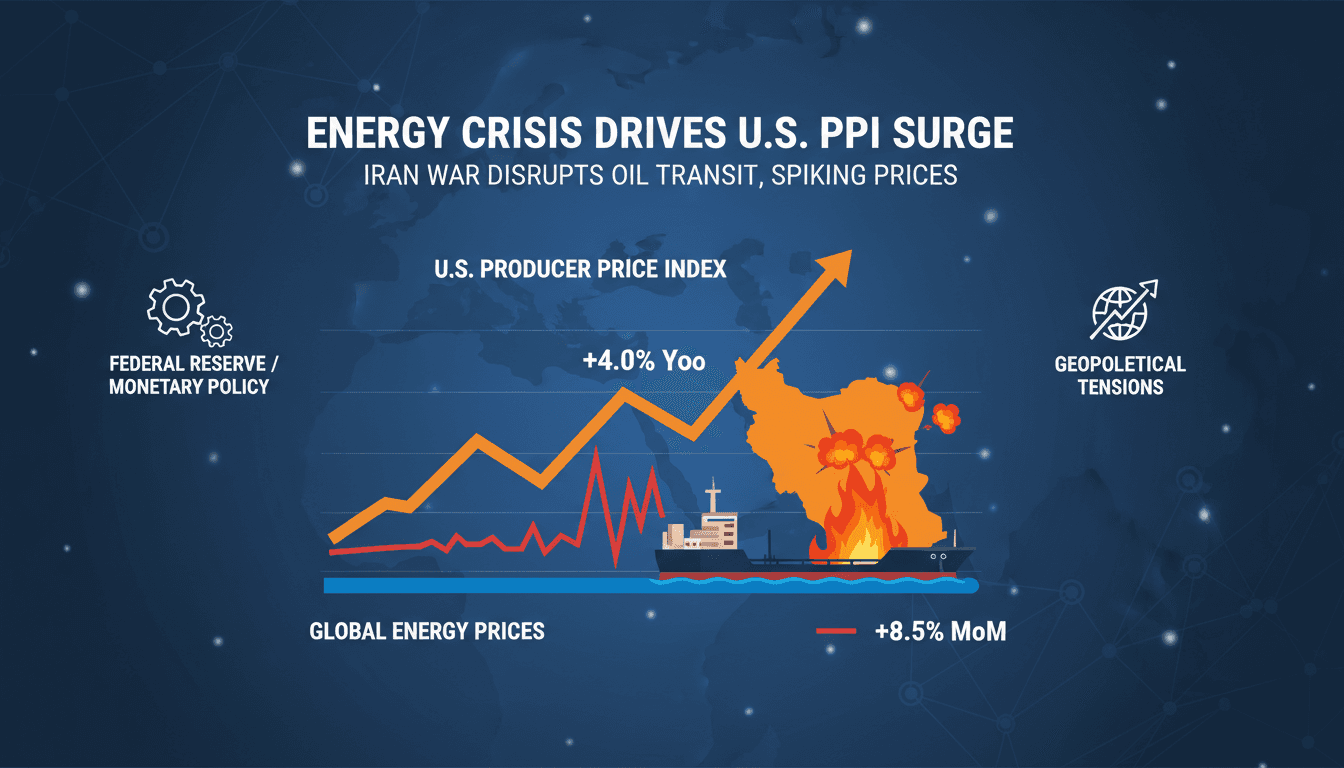
- PPI increased 4.0 percent year-over-year in March 2026, driven by energy price spikes.
- Energy prices surged 8.5 percent month-over-month, largely due to the ongoing war in Iran and its impact on oil supply.
- Federal Reserve faces inflation challenges, with core PPI rising 3.6 percent year-over-year, complicating monetary policy decisions.
The context you actually need
- The Iran war began on February 28, 2026, with U.S. and Israeli airstrikes targeting Iranian military assets, leading to Iran's closure of the Strait of Hormuz.
- The Strait of Hormuz is crucial, accounting for approximately 20 percent of global oil transit, and its disruption has immediate effects on energy prices worldwide.
- U.S. gasoline prices have exceeded $4 per gallon, marking a 30 percent increase from the previous year, which directly affects consumers and businesses alike.
What's really happening
The recent rise in the U.S. Producer Price Index (PPI) is a direct consequence of geopolitical instability stemming from the ongoing war in Iran. The conflict, which began with coordinated U.S.-Israeli airstrikes, has led to significant disruptions in global oil supply, particularly through the strategically vital Strait of Hormuz. This waterway is essential for the transit of oil, and its closure by Iran has resulted in acute energy supply shocks.
As energy prices surged—evidenced by an 8.5 percent month-over-month increase in March 2026—this has had a cascading effect on the PPI. The PPI measures the average change over time in the selling prices received by domestic producers for their output, and the 4.0 percent year-over-year increase reflects the heightened costs of production driven by energy price volatility.
The Federal Reserve is now faced with a complex challenge. With core PPI rising 3.6 percent year-over-year, the central bank must navigate the delicate balance between controlling inflation and supporting economic growth. President Trump has called for rate cuts to stimulate the economy, while some policymakers are considering interest rate hikes to combat inflation. This divergence in strategy highlights the uncertainty surrounding the economic outlook as inflationary pressures mount.
Moreover, the International Energy Agency has revised global oil demand downward by 1.5 million barrels per day quarterly, indicating that the market is adjusting to the new reality of constrained supply. As U.S. gasoline prices soar, averaging over $4 per gallon, consumers are likely to feel the pinch in their daily expenses, affecting everything from commuting costs to the price of goods transported by road.
The implications of these developments extend beyond the U.S. economy. In Dubai, for instance, residents are already experiencing heightened gasoline and jet fuel costs due to the disruptions in the Strait of Hormuz. The UAE's Fujairah marine fuel sales have declined sharply, and the local crude benchmark has reached historic highs. Airlines are suspending routes to Dubai amid soaring oil prices, exacerbating local transport and living expenses.
Who feels it first (and how)
- Consumers: Higher gasoline and utility bills directly impact household budgets.
- Transport and logistics sectors: Increased fuel costs lead to higher operational expenses.
- Airlines: Route suspensions and increased fuel prices affect travel availability and costs.
- Businesses reliant on energy: Manufacturing and service industries face rising production costs, potentially leading to higher prices for consumers.
What to watch next
- Federal Reserve policy decisions: Watch for announcements regarding interest rate adjustments, as these will influence borrowing costs and economic growth.
- Global oil prices: Monitor fluctuations in crude oil prices, as they will directly impact inflation and consumer spending.
- Geopolitical developments in Iran: Any resolution or escalation in the conflict could significantly alter energy supply dynamics and economic forecasts.
The PPI has risen 4.0 percent year-over-year, driven by energy prices.
Continued inflationary pressures will challenge the Federal Reserve's monetary policy.
The long-term impact of the Iran conflict on global oil supply and prices remains uncertain.
Frequently Asked Questions
- Why it matters?
- The surge in the Producer Price Index (PPI) signals increasing inflationary pressures that could impact consumer prices and economic stability.
- What happened (in 30 seconds)?
- PPI increased 4.0 percent year-over-year in March 2026, driven by energy price spikes. Energy prices surged 8.5 percent month-over-month, largely due to the ongoing war in Iran and its impact on oil supply. Federal Reserve faces inflation challenges, with core PPI rising 3.6 percent year-over-year, complicating monetary policy decisions.
- What's really happening?
- The recent rise in the U.S. Producer Price Index (PPI) is a direct consequence of geopolitical instability stemming from the ongoing war in Iran. The conflict, which began with coordinated U.S.-Israeli airstrikes, has led to significant disruptions in global oil supply, particularly through the strategically vital Strait of Hormuz. This waterway is essential for the transit of oil, and its closure by Iran has resulted in acute energy supply shocks. As energy prices surged—evidenced by an 8.5 p
- Who feels it first (and how)?
- Consumers: Higher gasoline and utility bills directly impact household budgets. Transport and logistics sectors: Increased fuel costs lead to higher operational expenses. Airlines: Route suspensions and increased fuel prices affect travel availability and costs. Businesses reliant on energy: Manufacturing and service industries face rising production costs, potentially leading to higher prices for consumers.
- What to watch next?
- Federal Reserve policy decisions: Watch for announcements regarding interest rate adjustments, as these will influence borrowing costs and economic growth. Global oil prices: Monitor fluctuations in crude oil prices, as they will directly impact inflation and consumer spending. Geopolitical developments in Iran: Any resolution or escalation in the conflict could significantly alter energy supply dynamics and economic forecasts.
Coverage of national news and events from across the United States.
"HuffPost is known for its progressive editorial stance, offering opinionated yet comprehensive coverage on social, political, and cultural topics."
— A47 Editor
U.S. Wholesale Prices Surged 4% Last Month After The War In Iran Sent Energy Prices Soaring
U.S. wholesale prices surged by 4% last month, driven by soaring energy costs linked to the ongoing conflict in Iran. This increase complicates the Federal Reserve's efforts to manage inflation, especially amid external pressures to lower interest ra...
Global coverage of politics, crises, and international affairs.
"HuffPost provides progressive-oriented reporting on international developments, often focusing on humanitarian and social justice issues."
— A47 Editor
U.S. Wholesale Prices Surged 4% Last Month After The War In Iran Sent Energy Prices Soaring
U.S. wholesale prices surged by 4% last month, primarily driven by a significant increase in energy prices following the escalation of conflict in Iran. This surge complicates the Federal Reserve's efforts to manage inflation amid ongoing pressure fr...
Pan-Arab news coverage spanning politics, business, sports, and regional affairs.
"Asharq Al-Awsat reflects a broad Arab editorial perspective with strong attention to regional geopolitics."
— A47 Editor
تضخم المنتجين الأميركيين يقفز 4 % في أكبر زيادة سنوية منذ 3 سنوات
Producer price inflation in the United States surged by 4% last month, marking the largest annual increase in three years, driven primarily by rising energy costs linked to developments in the conflict with Iran.
Global news coverage with extensive reporting on Middle Eastern conflicts and geopolitics.
"Al Jazeera is a Qatar-based broadcaster known for wide regional coverage and alternative perspectives."
— A47 Editor
Energy prices rise despite Jones Act suspension by Trump
Energy prices have risen by over 10% in the past month, driven by escalating shipping costs amid the ongoing US-Israel conflict with Iran. This surge comes despite President Trump's suspension of the Jones Act, which was intended to alleviate shippin...
Comprehensive coverage of Middle Eastern and global issues.
"Al Jazeera is a prominent voice from the Global South, especially the Middle East, with an emphasis on underreported stories."
— A47 Editor
Energy prices rise despite Jones Act suspension by Trump
Energy prices have risen by over 10% in the past month, driven by escalating shipping costs amid the ongoing US-Israel conflict with Iran. This surge comes despite President Trump's suspension of the Jones Act, which was intended to alleviate shippin...