
U.S. Forces Board Iranian Tanker Amid Ongoing Sanctions Enforcement
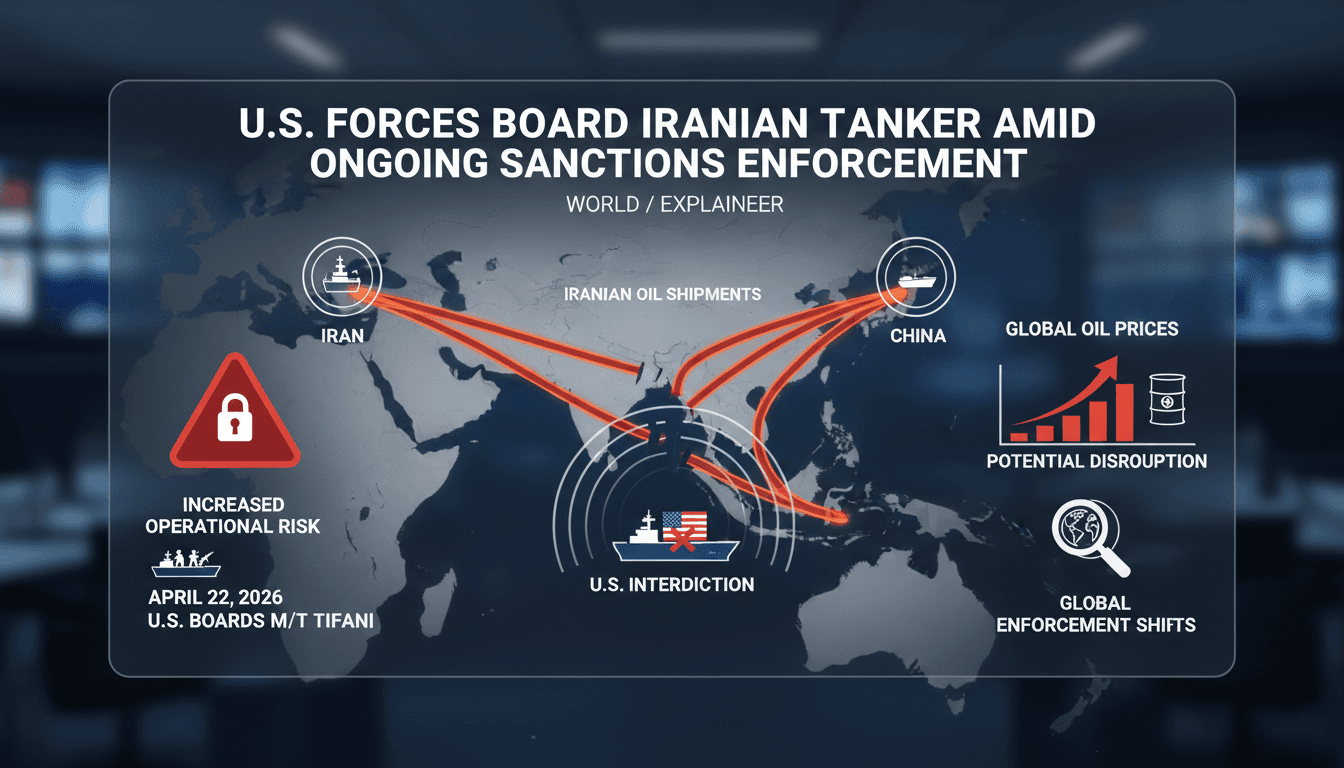
Here's what it means for you.
If you rely on global oil markets, the U.S. actions against Iranian tankers could impact prices and availability.
Why it matters
This interdiction escalates tensions in the oil supply chain, particularly affecting China's energy security and global oil prices.
What happened (in 30 seconds)
- On April 22, 2026, U.S. forces boarded the stateless M/T Tifani tanker in the Indian Ocean, targeting Iran's shadow fleet.
- Iran's shadow fleet, consisting of over 500 vessels, has been evading U.S. sanctions by shipping oil to China, which imports approximately 1.4 million barrels per day.
- The U.S. blockade of Iranian ports during an ongoing war has heightened operational risks for these vessels, complicating their ability to deliver oil.
The context you actually need
- Iran's oil exports to China are facilitated by a shadow fleet using tactics like frequent flag changes and mislabeling oil origins, generating significant revenue for Iran amid sanctions.
- The M/T Tifani, a 23-year-old tanker, has made multiple trips to China since late 2022 and was sanctioned by the U.S. for its involvement in illicit oil transfers.
- Over 160 million barrels of Iranian oil are currently stored on floating tankers outside the blockade zone, indicating a substantial supply still available to meet China's demand.
What's really happening
The U.S. boarding of the M/T Tifani is a strategic move in a broader campaign to disrupt Iran's oil exports to China, which have been a lifeline for the Iranian economy amid stringent U.S. sanctions. The shadow fleet, which has been operating under the radar, employs various tactics to evade detection and enforcement. These include changing flags and ship names, conducting ship-to-ship transfers in Southeast Asian waters, and mislabeling the origins of the oil as Malaysian or Indonesian. This clandestine operation allows Iran to supply China with discounted oil, which constitutes about 12% of China's seaborne imports.
The U.S. military's actions come at a time when tensions are high due to the ongoing U.S.-Iran war, which has seen a blockade of Iranian ports. This blockade has forced Iran to rely heavily on its shadow fleet, increasing the operational risks for these vessels as U.S. enforcement extends thousands of miles from Iranian shores. The recent seizure of the Iranian-flagged MV Touska, accused of transporting rocket-fuel precursors, underscores the U.S. commitment to targeting Iran's maritime operations.
The implications of these actions are significant. Analysts suggest that while the immediate market has not reacted dramatically, the interdictions signal a broader enforcement strategy that could lead to increased costs and risks for shadow fleet operators. With Iranian oil at sea sufficient to supply China's demand for approximately 2.5 months, the potential for disruption remains high. The U.S. sanctions on UAE-based networks facilitating Iranian oil smuggling further complicate the situation, exposing Dubai's maritime sector to enforcement risks that could disrupt local shipping services and employment.
As the U.S. continues to ramp up its enforcement efforts, the shadow fleet's ability to operate effectively will be tested. The outcome of this confrontation could reshape the dynamics of oil supply and pricing in the global market, particularly for countries reliant on Iranian oil.
Who feels it first (and how)
- Oil traders: Increased volatility in oil prices due to potential supply disruptions.
- Shipping companies: Heightened risks and insurance costs associated with operating in affected regions.
- Chinese importers: Potential shortages or increased costs for Iranian oil, impacting energy security.
- UAE maritime sector: Possible disruptions in shipping services and employment due to enforcement actions against smuggling networks.
What to watch next
- U.S. enforcement actions: Continued boarding of Iranian vessels could lead to further disruptions in oil supply chains.
- China's response: How China adapts its oil sourcing strategies in light of increased U.S. enforcement could reshape its energy imports.
- Market reactions: Watch for fluctuations in global oil prices as the situation develops, particularly if supply from Iran is significantly impacted.
The U.S. has intensified its enforcement against Iranian oil shipments.
Increased operational risks for Iran's shadow fleet and potential disruptions in oil supply to China.
The long-term impact on global oil prices and the effectiveness of U.S. sanctions on Iran's economy.
Frequently Asked Questions
- Why it matters?
- This interdiction escalates tensions in the oil supply chain, particularly affecting China's energy security and global oil prices.
- What happened (in 30 seconds)?
- On April 22, 2026, U.S. forces boarded the stateless M/T Tifani tanker in the Indian Ocean, targeting Iran's shadow fleet. Iran's shadow fleet, consisting of over 500 vessels, has been evading U.S. sanctions by shipping oil to China, which imports approximately 1.4 million barrels per day. The U.S. blockade of Iranian ports during an ongoing war has heightened operational risks for these vessels, complicating their ability to deliver oil.
- What's really happening?
- The U.S. boarding of the M/T Tifani is a strategic move in a broader campaign to disrupt Iran's oil exports to China, which have been a lifeline for the Iranian economy amid stringent U.S. sanctions. The shadow fleet, which has been operating under the radar, employs various tactics to evade detection and enforcement. These include changing flags and ship names, conducting ship-to-ship transfers in Southeast Asian waters, and mislabeling the origins of the oil as Malaysian or Indonesian. This cl
- Who feels it first (and how)?
- Oil traders: Increased volatility in oil prices due to potential supply disruptions. Shipping companies: Heightened risks and insurance costs associated with operating in affected regions. Chinese importers: Potential shortages or increased costs for Iranian oil, impacting energy security. UAE maritime sector: Possible disruptions in shipping services and employment due to enforcement actions against smuggling networks.
- What to watch next?
- U.S. enforcement actions: Continued boarding of Iranian vessels could lead to further disruptions in oil supply chains. China's response: How China adapts its oil sourcing strategies in light of increased U.S. enforcement could reshape its energy imports. Market reactions: Watch for fluctuations in global oil prices as the situation develops, particularly if supply from Iran is significantly impacted.
Global political, business, and cultural coverage from WSJ international desks.
"The Wall Street Journal offers extensive international reporting with a reputation for financial insight and a center-right editorial stance."
— A47 Editor
Secretive Shipments of Iranian Oil to China Are Under Threat by U.S.
The United States has intensified its efforts to disrupt Iranian oil shipments to China, which have long evaded U.S. sanctions through the use of aging tankers and complex networks. This escalation follows the seizure of an Iranian-flagged cargo ship...
Oil, metals, and agriculture: supply/demand headlines, OPEC chatter, inventories, and price action.
"Solid tape for energy and metals traders tracking macro and micro catalysts."
— A47 Editor
Seized Iranian ship likely carrying equipment deemed dual-use by US, sources say
The U.S. Navy seized an Iranian-flagged cargo ship in the Gulf of Oman, marking a significant escalation in tensions in the Strait of Hormuz. This incident occurred amid reports that the ship was likely carrying equipment deemed dual-use by the U.S.,...
U.S. political news and right-leaning commentary.
"Fox News is a highly influential conservative news outlet known for right-leaning political commentary and coverage."
— A47 Editor
China-linked route exposed after US seizes Iran-bound ship with suspected dual-use cargo
The U.S. military has seized an Iranian-flagged cargo ship that was reportedly attempting to bypass a naval blockade in the Strait of Hormuz. This ship, which had recently visited Chinese ports, is now under scrutiny for its suspected dual-use cargo,...
Global political, business, and cultural coverage from WSJ international desks.
"The Wall Street Journal offers extensive international reporting with a reputation for financial insight and a center-right editorial stance."
— A47 Editor
Seized Iranian-Flagged Ship Was Part of Fleet That Frequented China
U.S. forces have seized a cargo ship in the Gulf of Oman that is linked to a subsidiary of a sanctioned Iranian state-owned group. This action highlights ongoing tensions in the region and the enforcement of sanctions against Iran.
International stories from NPR’s global desk.
"NPR is an American public media organization known for thoughtful reporting and a slightly left-leaning editorial tone."
— A47 Editor
U.S. seizes Iranian cargo ship. And, tariff refund portal launches
U.S. forces have seized an Iranian-flagged cargo vessel in the Strait of Hormuz, a strategic maritime route, amid ongoing tensions between the U.S. and Iran. This operation is part of a broader U.S. strategy to exert pressure on Iran, particularly co...
National headlines across the United States including breaking stories and societal issues.
"NBC News is a mainstream media outlet known for comprehensive national and international news coverage with a centrist to slightly left-leaning editorial tone."
— A47 Editor
U.S. military seizes Iranian-flagged cargo ship
The U.S. military has seized an Iranian-flagged cargo ship that reportedly attempted to breach a U.S. naval blockade, a move announced by President Donald Trump amid rising tensions between the U.S. and Iran over maritime security.