
Henry Paulson Warns of Impending U.S. Treasury Market Shock
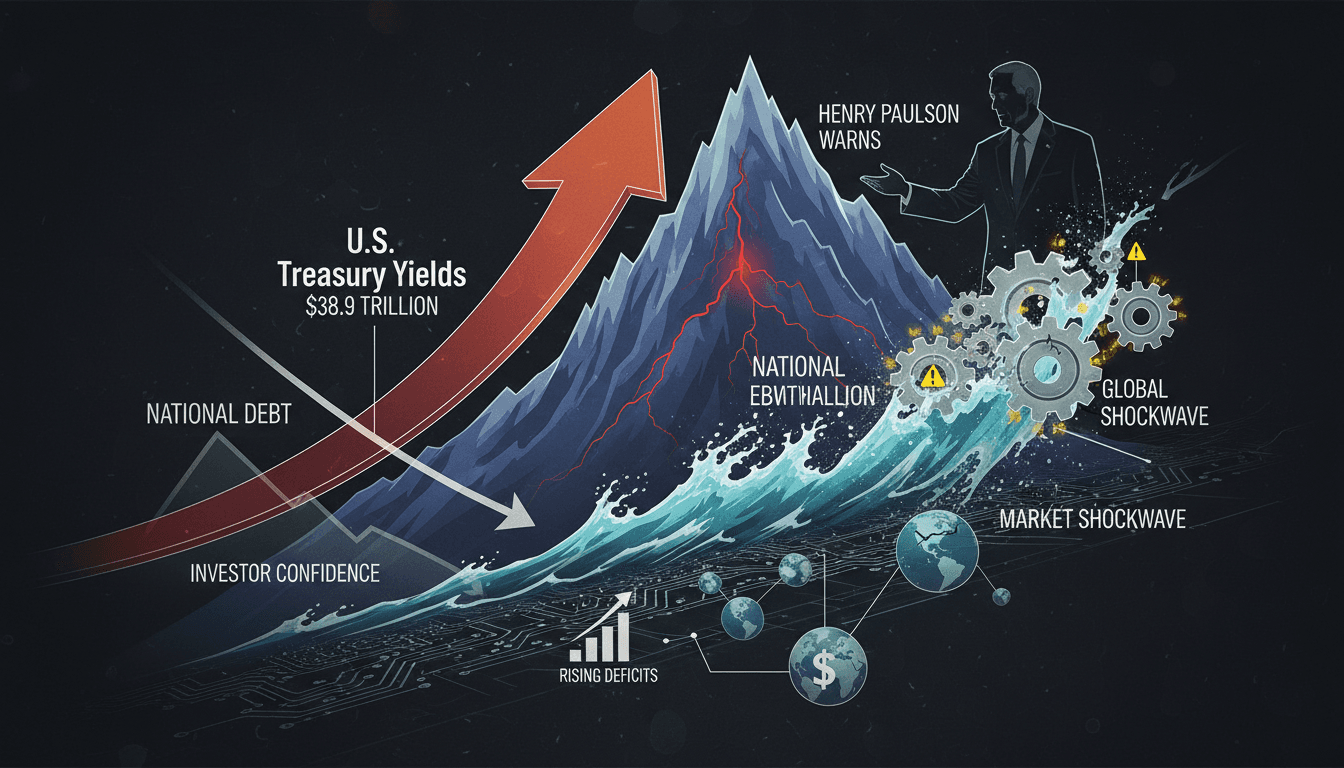
Here's what it means for you.
If you’re invested in U.S. Treasuries or rely on stable interest rates, prepare for potential shifts that could affect your financial landscape.
Why it matters
A potential shock in the U.S. Treasury market could destabilize global financial systems, impacting everything from mortgage rates to government borrowing costs.
What happened (in 30 seconds)
- Henry Paulson, former U.S. Treasury Secretary, warned of a potential shock in the Treasury market during an April 16, 2026, interview.
- The U.S. national debt has reached approximately $38.9 trillion, raising concerns about investor confidence in Treasury securities.
- Paulson advocated for a preemptive emergency plan to mitigate risks associated with a collapse in demand for government bonds.
The context you actually need
- The U.S. national debt has escalated due to persistent budget deficits and pandemic-era expenditures, creating vulnerabilities in the Treasury market.
- Investor confidence in Treasury securities is crucial, as they underpin a $31 trillion market that supports global finance.
- Unlike the 2008 financial crisis, where fiscal resources were available, a sovereign debt shock could limit response capabilities, potentially leading to a cycle of rising yields and deficits.
What's really happening
On April 16, 2026, Henry Paulson, who served as Treasury Secretary during the 2008 financial crisis, appeared on Bloomberg Television's Wall Street Week. He issued a stark warning about the vulnerabilities in the U.S. Treasury market, primarily driven by the staggering national debt of approximately $38.9 trillion. This debt level raises significant concerns about the demand for Treasury securities, which are considered the bedrock of global finance.
Paulson highlighted a scenario where a breakdown in demand for Treasuries could force the Federal Reserve to become the sole buyer of government bonds. This situation would likely lead to depressed bond prices and elevated yields, creating a vicious cycle that could destabilize the market. He emphasized the need for a "break-the-glass" emergency plan, stating, "We need an emergency break-the-glass plan... ready to go when we hit the wall." This proactive approach aims to prepare policymakers for a potential crisis, contrasting sharply with the 2008 financial crisis, where fiscal and monetary interventions were more readily available.
The implications of such a shock are profound. If investor confidence wanes, it could trigger a flight from Treasuries, leading to rising yields that would increase borrowing costs for consumers and businesses alike. This scenario could initiate a "doom loop," where rising yields exacerbate budget deficits, leading to further Fed monetization of debt. The stability of the Treasury market is not just a U.S. issue; it has global ramifications, particularly for economies like Dubai, which holds a significant amount of U.S. Treasuries.
As of April 19, 2026, no official responses from the U.S. government have been reported, and Treasury yields remained stable, with the 10-year note hovering around 4.26%. However, discussions on social media have highlighted alternative hedges, such as gold and cryptocurrencies, indicating that investors are already considering strategies to mitigate potential risks.
Who feels it first (and how)
- Investors in U.S. Treasuries: Increased yields could lead to losses on bond investments.
- Homebuyers: Rising Treasury yields typically translate to higher mortgage rates.
- Small and medium enterprises (SMEs): Increased borrowing costs could limit access to capital.
- Global markets: Economies heavily invested in U.S. Treasuries, like the UAE, may face economic strain.
What to watch next
- Treasury yield movements: Watch for fluctuations in yields, particularly the 10-year note, as they signal investor confidence.
- Government responses: Any announcements regarding contingency plans or fiscal policies will indicate how seriously the government is taking Paulson's warning.
- Market sentiment: Monitor discussions and trends in alternative investments, such as gold and cryptocurrencies, as indicators of investor confidence in Treasuries.
The U.S. national debt is approximately $38.9 trillion.
A breakdown in Treasury demand could lead to rising yields and increased borrowing costs.
The effectiveness of any emergency plans that may be implemented in response to a market shock.
Frequently Asked Questions
- Why it matters?
- A potential shock in the U.S. Treasury market could destabilize global financial systems, impacting everything from mortgage rates to government borrowing costs.
- What happened (in 30 seconds)?
- Henry Paulson, former U.S. Treasury Secretary, warned of a potential shock in the Treasury market during an April 16, 2026, interview. The U.S. national debt has reached approximately $38.9 trillion, raising concerns about investor confidence in Treasury securities. Paulson advocated for a preemptive emergency plan to mitigate risks associated with a collapse in demand for government bonds.
- What's really happening?
- On April 16, 2026, Henry Paulson, who served as Treasury Secretary during the 2008 financial crisis, appeared on Bloomberg Television's Wall Street Week. He issued a stark warning about the vulnerabilities in the U.S. Treasury market, primarily driven by the staggering national debt of approximately $38.9 trillion. This debt level raises significant concerns about the demand for Treasury securities, which are considered the bedrock of global finance. Paulson highlighted a scenario where a break
- Who feels it first (and how)?
- Investors in U.S. Treasuries: Increased yields could lead to losses on bond investments. Homebuyers: Rising Treasury yields typically translate to higher mortgage rates. Small and medium enterprises (SMEs): Increased borrowing costs could limit access to capital. Global markets: Economies heavily invested in U.S. Treasuries, like the UAE, may face economic strain.
- What to watch next?
- Treasury yield movements: Watch for fluctuations in yields, particularly the 10-year note, as they signal investor confidence. Government responses: Any announcements regarding contingency plans or fiscal policies will indicate how seriously the government is taking Paulson's warning. Market sentiment: Monitor discussions and trends in alternative investments, such as gold and cryptocurrencies, as indicators of investor confidence in Treasuries.
Stock market news, investing ideas, and trading analysis.
"TheStreet provides market news and retail-investor-focused analysis."
— A47 Editor
Henry Paulson has blunt message on potential Treasury market shock
Former Treasury Secretary Henry Paulson has issued a stark warning regarding the potential for a significant shock to the U.S. Treasury market, emphasizing the need for authorities to prepare a contingency plan to mitigate risks. In an interview on B...
Global markets, investing, and macroeconomics from a premier financial newsroom.
"Bloomberg is respected for in-depth financial reporting and data-driven analysis."
— A47 Editor
Hank Paulson on Iran War, Inflation, and Market Risk
The ongoing war in Iran is exerting significant pressure on global energy markets, with former US Treasury Secretary Hank Paulson warning that it could lead to higher inflation and sustained elevated interest rates, impacting various industries inclu...
Global markets, investing, and macroeconomics from a premier financial newsroom.
"Bloomberg is respected for in-depth financial reporting and data-driven analysis."
— A47 Editor
Wall Street Week | Paulson on Iran War, Energy Market Disruptions, Copper Supply Strain, Tax Debate
Former Treasury Secretary Hank Paulson has highlighted that the ongoing conflict in Iran poses significant economic risks, particularly as global shocks may affect US markets. He emphasized that disruptions in energy markets and supply chains could l...
Real-time updates, analysis, and reports on the blockchain and cryptocurrency sectors.
"Crypto News delivers real-time updates, analysis, and reports on the blockchain and cryptocurrency sectors."
— A47 Editor
Former Treasury Secretary warns of “vicious” fallout if U.S. Treasury demand weakens
Former Treasury Secretary Henry Paulson has warned U.S. policymakers to prepare for a potential crisis in the Treasury market, citing a possible breakdown in demand for U.S. Treasurys. In a recent Bloomberg interview, he described the potential fallo...
Covers blockchain, cryptocurrency news, project analysis, and market insights.
"Cointelegraph is a leading crypto-focused media outlet known for timely news, analysis, and educational content related to blockchain and digital assets."
— A47 Editor
Ex-Treasury chief warns of US bond crash, calls for contingency plan
Former Treasury Secretary Henry Paulson has issued a warning about a potential crisis in the US Treasury market, stating that when it occurs, it will be severe and urging the need for a contingency plan. This statement highlights concerns regarding t...
Global markets, investing, and macroeconomics from a premier financial newsroom.
"Bloomberg is respected for in-depth financial reporting and data-driven analysis."
— A47 Editor
Paulson Says US Should Prepare for a 'Vicious' Bond Crash
Former Treasury Secretary Hank Paulson has warned that the U.S. should prepare for a potential 'vicious' bond crash, urging authorities to develop a contingency plan to avert a collapse in demand for Treasuries. In an interview with David Westin on B...
Macro commentary, policy analysis, growth/inflation themes, and global outlooks.
"Contextual macro coverage that complements day-to-day market headlines."
— A47 Editor
Paulson calls for emergency plan to prevent Treasury market collapse
Paulson has called for an emergency plan to avert a potential collapse of the Treasury market, highlighting concerns over the stability of this critical financial sector. The statement reflects growing anxiety regarding market conditions and the impl...
Global markets, investing, and macroeconomics from a premier financial newsroom.
"Bloomberg is respected for in-depth financial reporting and data-driven analysis."
— A47 Editor
Henry Paulson Suggests US Make a Break-Glass Treasuries Plan
Former Treasury Secretary Henry Paulson has urged U.S. authorities to devise a contingency plan to prevent a potential collapse in demand for Treasuries, which he warned could have 'vicious' consequences for the market. This recommendation comes amid...