
UAE Launches Innovative Sharia-Compliant Financial Tools to Enhance Individual Savings
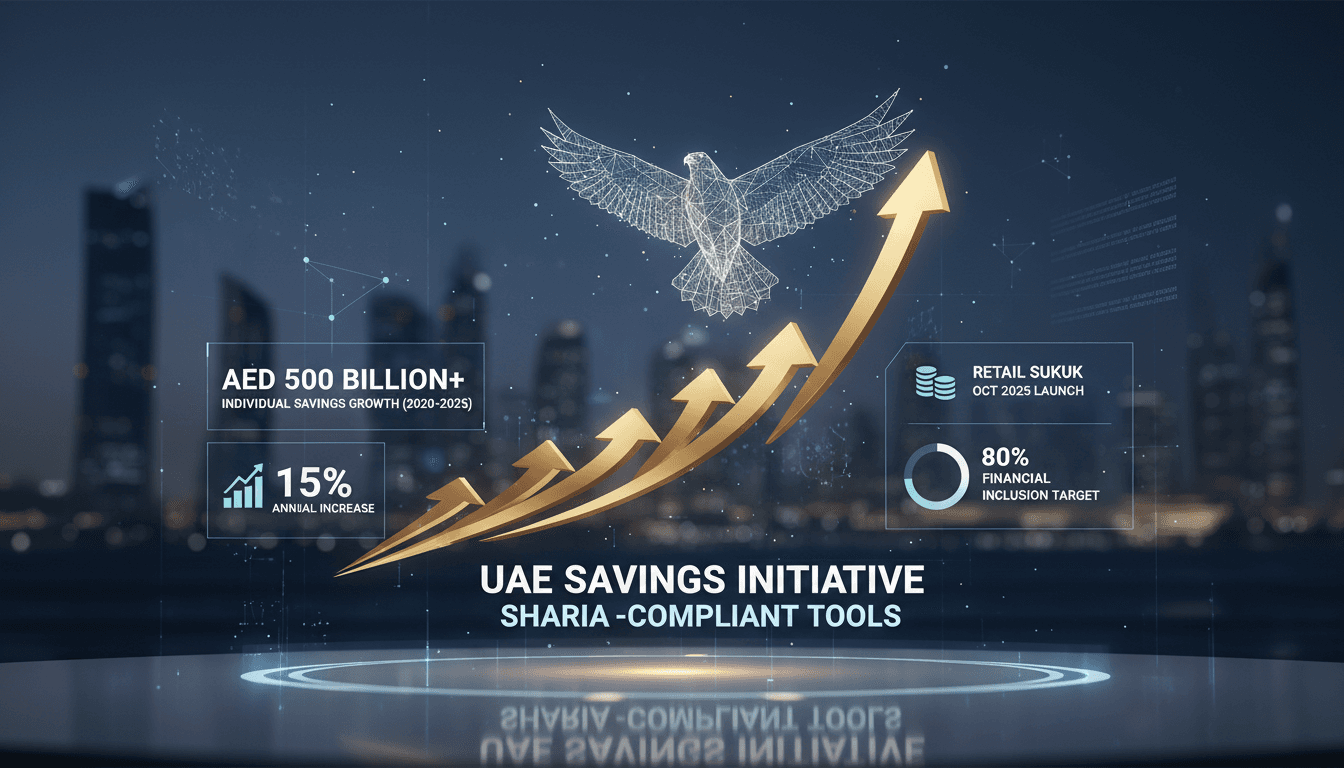
Here's what it means for you.
If you're in the UAE, new Sharia-compliant savings tools can help you secure your financial future with lower entry barriers.
Why it matters
This model enhances financial inclusion and economic resilience, crucial for personal and national stability.
What happened (in 30 seconds)
- The UAE launched Retail Sukuk in October 2025, allowing fractional investments in government bonds starting at AED 4,000.
- National Bonds Corporation reported a 37% increase in savers in 2025, with total funds exceeding AED 18 billion.
- UAE Central Bank data shows savings deposits reached AED 413.568 billion and time deposits surpassed AED 1.186 trillion by January 2026.
The context you actually need
- The UAE's savings ecosystem has evolved since 2006, focusing on Sharia-compliant options to promote financial empowerment.
- Retail Sukuk democratizes access to government bonds, previously limited to institutional investors, aligning with global trends in personal savings.
- Economic diversification efforts are driving these initiatives, aimed at enhancing financial stability amid a robust labor market and non-oil growth.
What's really happening
The UAE's innovative approach to individual savings is a response to both domestic needs and global economic trends. The introduction of Retail Sukuk by the Ministry of Finance in October 2025 marks a significant shift in how citizens and residents can invest in government securities. Previously, access to T-Sukuk was limited to institutions, but now individuals can participate with a minimum investment of AED 4,000 through digital banking platforms. This move aligns with the OECD's recommendations for promoting personal savings as a means to bolster economic stability.
The National Bonds Corporation has played a pivotal role since its establishment in 2006, offering flexible savings programs with minimum investments starting from AED 100. This accessibility has led to a remarkable 37% increase in savers in 2025, reflecting a growing awareness of the importance of financial planning among UAE residents. By the end of 2025, National Bonds reported total funds exceeding AED 18 billion, a 14% year-on-year increase, indicating a strong appetite for savings products.
The UAE Central Bank's data further underscores this trend, revealing that savings deposits reached AED 413.568 billion and time deposits exceeded AED 1.186 trillion by January 2026. The introduction of Retail Sukuk has also seen strong demand, with trading reaching AED 10.84 million by March 2026, indicating that 66% of investors were new participants. This suggests a successful outreach to a broader demographic, enhancing financial inclusion.
Moreover, National Bonds has announced new family-oriented savings products and rewards, which are likely to attract more participants, especially among families looking to secure their financial future. The integrated systems praised by officials, including National Bonds CEO Muhammad Qasim Al Ali, highlight the collaborative efforts among the Ministry of Finance, National Bonds, and participating banks to create a robust savings ecosystem.
In essence, the UAE's model is not just about providing financial products; it's about fostering a culture of savings and financial literacy that can withstand economic fluctuations. The initiatives are designed to empower individuals to take charge of their financial futures, contributing to the overall economic resilience of the nation.
Who feels it first (and how)
- Low to middle-income residents: They benefit from low-entry investment options, making savings more accessible.
- Families: New family savings products cater to those planning for education and emergencies.
- Young professionals: Increased financial literacy and access to savings tools can help them plan for retirement and major life events.
What to watch next
- Growth in Retail Sukuk participation: Monitoring the number of new investors will indicate the success of outreach efforts and financial inclusion.
- Changes in savings rates: Analyzing how these initiatives impact overall savings rates in the UAE will provide insights into economic resilience.
- Development of new financial products: The introduction of additional savings products by National Bonds and banks will reflect ongoing innovation in the financial sector.
The UAE has established a framework for Sharia-compliant savings tools that enhance financial inclusion.
Continued growth in the number of savers and the overall savings pool in the UAE.
The long-term impact of these initiatives on the broader economy and individual financial behaviors.
Frequently Asked Questions
- Why it matters?
- This model enhances financial inclusion and economic resilience, crucial for personal and national stability.
- What happened (in 30 seconds)?
- The UAE launched Retail Sukuk in October 2025, allowing fractional investments in government bonds starting at AED 4,000. National Bonds Corporation reported a 37% increase in savers in 2025, with total funds exceeding AED 18 billion. UAE Central Bank data shows savings deposits reached AED 413.568 billion and time deposits surpassed AED 1.186 trillion by January 2026.
- What's really happening?
- The UAE's innovative approach to individual savings is a response to both domestic needs and global economic trends. The introduction of Retail Sukuk by the Ministry of Finance in October 2025 marks a significant shift in how citizens and residents can invest in government securities. Previously, access to T-Sukuk was limited to institutions, but now individuals can participate with a minimum investment of AED 4,000 through digital banking platforms. This move aligns with the OECD's recommendati
- Who feels it first (and how)?
- Low to middle-income residents: They benefit from low-entry investment options, making savings more accessible. Families: New family savings products cater to those planning for education and emergencies. Young professionals: Increased financial literacy and access to savings tools can help them plan for retirement and major life events.
- What to watch next?
- Growth in Retail Sukuk participation: Monitoring the number of new investors will indicate the success of outreach efforts and financial inclusion. Changes in savings rates: Analyzing how these initiatives impact overall savings rates in the UAE will provide insights into economic resilience. Development of new financial products: The introduction of additional savings products by National Bonds and banks will reflect ongoing innovation in the financial sector.
Arabic-language digital news outlet covering UAE, regional, and international developments with broad general-news coverage.
"Al Ain News coverage typically blends UAE-focused reporting with wider Arab regional and international news."
— A47 Editor
الإمارات ترسخ نموذجاً متقدماً لادخار الأفراد بأدوات مبتكرة تعزز الاستقرار المالي
The UAE is witnessing rapid advancements in individual savings systems, driven by a diverse range of financial tools and an increasing awareness of the importance of long-term financial planning. This evolution reflects the nation's commitment to enh...