
IEA Reports Oil Prices Understate Impact of Iran War Supply Disruptions
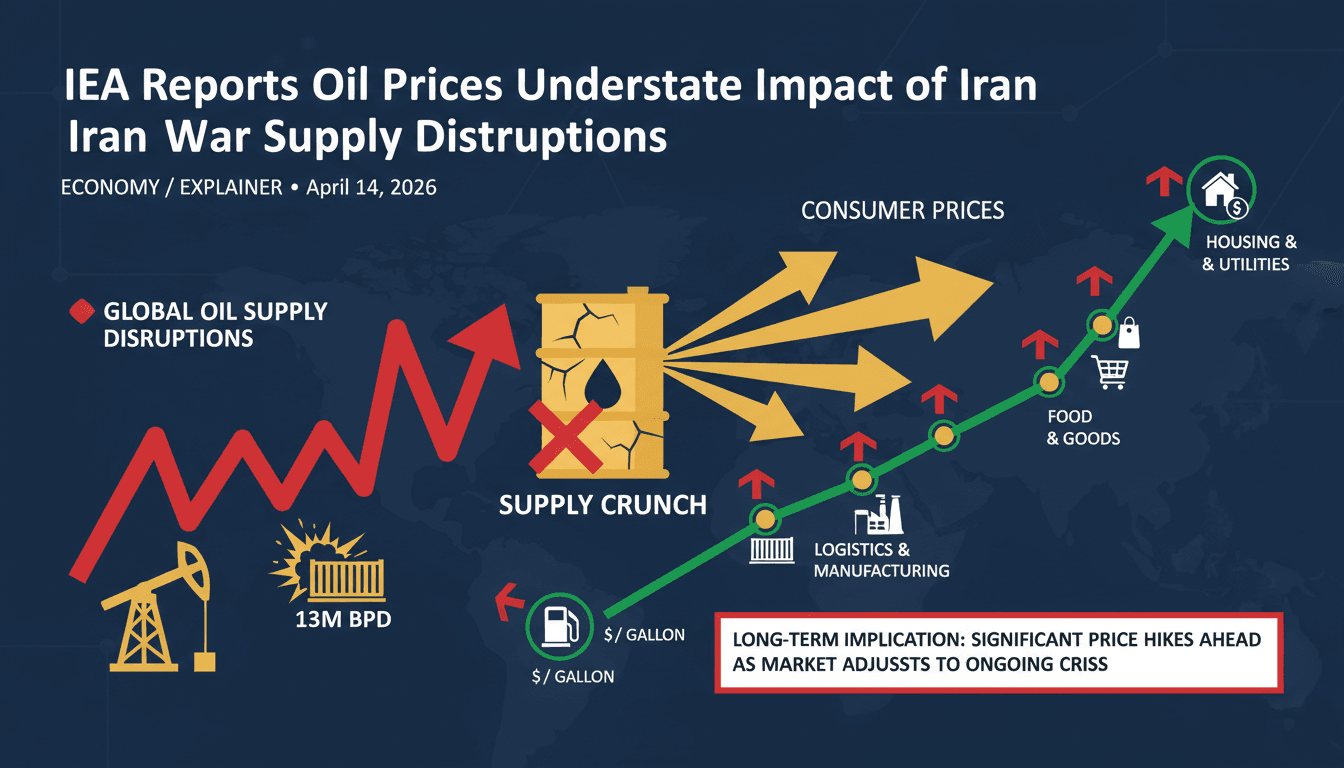
Here's what it means for you.
Rising oil prices could significantly impact your household expenses and business costs.
Why it matters
The ongoing supply crisis in the oil market is poised to affect global economic stability and consumer prices.
What happened (in 30 seconds)
- The IEA issued a stark warning on April 14, 2026, stating that current oil prices do not reflect the severity of supply disruptions caused by the Iran war.
- Global oil demand growth was revised down by 720,000 barrels per day, flipping from a projected increase to a decline due to the loss of over 13 million barrels per day in exports.
- Brent crude prices surged to approximately $95 per barrel, with expectations of further increases as the crisis unfolds.
The context you actually need
- The Iran war escalated in early 2026, leading to significant disruptions in oil supply, including the closure of the Strait of Hormuz and attacks on energy infrastructure.
- The IEA's previous forecasts had anticipated a demand growth of 640,000 barrels per day, but the conflict's escalation has created the largest supply interruption in history.
- Economic pressures from the conflict are expected to ripple through global markets, affecting everything from fuel prices to consumer goods.
What's really happening
The International Energy Agency (IEA) has highlighted a critical disconnect between current oil prices and the realities of supply disruptions stemming from the Iran war. As of April 2026, the conflict has led to the shutdown of approximately 13 million barrels per day of oil exports, marking the most severe supply interruption on record. This unprecedented loss has forced the IEA to revise its global oil demand growth forecast from a projected increase of 640,000 barrels per day to a decline of 80,000 barrels per day.
The IEA's Executive Director, Fatih Birol, emphasized that oil futures prices are not yet reflecting the full extent of the crisis. As the situation continues to evolve, it is expected that prices will adjust upward, further straining consumers and businesses alike. The agency's report underscores the volatility of the oil market, particularly in light of ongoing conflicts in the Middle East, which have historically disrupted supply chains and altered consumption patterns.
The implications of this crisis extend beyond just oil prices. With Brent crude trading at around $95 per barrel, households in Dubai and the wider UAE are already feeling the pinch, as rising fuel prices translate to increased costs for transportation and goods. The aviation sector is also under pressure, with potential disruptions expected as fuel costs rise. Additionally, the property market in the UAE is facing declines, with estimates suggesting a $120 billion loss in market value due to the spillover effects of the conflict.
As global refiners cut back on production in response to shortages, governments are closely monitoring stockpiles and considering export curbs to manage domestic supply. This situation creates a precarious balance, where the need for stable energy supplies clashes with the realities of geopolitical tensions. The interconnectedness of global markets means that disruptions in one region can have far-reaching consequences, affecting everything from inflation rates to international trade dynamics.
Who feels it first (and how)
- Consumers in Dubai and the UAE: Rising fuel prices will directly impact household budgets and transportation costs.
- Aviation sector: Airlines may face increased operational costs, leading to potential fare hikes and reduced flight availability.
- Global refiners: Companies may need to adjust production schedules and pricing strategies in response to supply shortages.
- Investors in the UAE property market: A decline in market value could affect investment returns and consumer confidence.
What to watch next
- Brent crude price movements: Continued increases could signal deeper economic impacts and further strain on consumer budgets.
- Government responses: Watch for potential fuel price hikes and export curbs as governments react to the crisis.
- Global demand forecasts: Changes in demand projections will indicate how the market is adjusting to the ongoing supply disruptions.
The Iran war has caused significant disruptions in oil supply, leading to a sharp decline in global demand growth.
Oil prices will continue to rise as the crisis unfolds, impacting consumer costs and economic stability.
The long-term effects on global markets and consumer behavior remain uncertain as the situation develops.
Frequently Asked Questions
- Why it matters?
- The ongoing supply crisis in the oil market is poised to affect global economic stability and consumer prices.
- What happened (in 30 seconds)?
- The IEA issued a stark warning on April 14, 2026, stating that current oil prices do not reflect the severity of supply disruptions caused by the Iran war. Global oil demand growth was revised down by 720,000 barrels per day, flipping from a projected increase to a decline due to the loss of over 13 million barrels per day in exports. Brent crude prices surged to approximately $95 per barrel, with expectations of further increases as the crisis unfolds.
- What's really happening?
- The International Energy Agency (IEA) has highlighted a critical disconnect between current oil prices and the realities of supply disruptions stemming from the Iran war. As of April 2026, the conflict has led to the shutdown of approximately 13 million barrels per day of oil exports, marking the most severe supply interruption on record. This unprecedented loss has forced the IEA to revise its global oil demand growth forecast from a projected increase of 640,000 barrels per day to a decline of
- Who feels it first (and how)?
- Consumers in Dubai and the UAE: Rising fuel prices will directly impact household budgets and transportation costs. Aviation sector: Airlines may face increased operational costs, leading to potential fare hikes and reduced flight availability. Global refiners: Companies may need to adjust production schedules and pricing strategies in response to supply shortages. Investors in the UAE property market: A decline in market value could affect investment returns and consumer confidence.
- What to watch next?
- Brent crude price movements: Continued increases could signal deeper economic impacts and further strain on consumer budgets. Government responses: Watch for potential fuel price hikes and export curbs as governments react to the crisis. Global demand forecasts: Changes in demand projections will indicate how the market is adjusting to the ongoing supply disruptions.
Sports reporting with a focus on Saudi and regional competitions.
"Okaz sports coverage is broad and audience-friendly, with strong attention to Saudi teams and leagues."
— A47 Editor
«الطاقة الدولية»: أسعار النفط لا تعكس الوضع الحالي
The International Energy Agency announced that current oil prices do not reflect the actual situation and may rise further. In its monthly report, the agency sharply reduced its forecasts for oil supply and demand growth, citing the impact of the Ira...
Global business headlines with AI angles.
"General business outlet that frequently covers AI."
— A47 Editor
IEA Head Says Current Oil Prices Don't Show Gravity Of Threat To Energy Markets Posed By Iran War
Fatih Birol, head of the International Energy Agency, stated that current oil prices do not accurately reflect the severe risks posed to energy markets by the ongoing war in Iran and broader Middle Eastern conflicts. He emphasized that the situation ...
Pan-Arab news coverage spanning politics, business, sports, and regional affairs.
"Asharq Al-Awsat reflects a broad Arab editorial perspective with strong attention to regional geopolitics."
— A47 Editor
«وكالة الطاقة الدولية»: أسعار النفط الحالية لا تعكس الوضع الراهن
Fatih Birol, the head of the International Energy Agency, stated on Tuesday that current oil prices do not reflect the severity of the threat posed by Iran's actions on global energy markets. This statement highlights concerns regarding the geopoliti...
Sports reporting with a focus on Saudi and regional competitions.
"Okaz sports coverage is broad and audience-friendly, with strong attention to Saudi teams and leagues."
— A47 Editor
«الطاقة الدولية»: أكثر من 80 منشأة نفط وغاز تضررت بسبب حرب إيران
The International Energy Agency's Executive Director, Fatih Birol, announced that over 80 oil and gas facilities have been damaged due to the ongoing war with Iran, marking the worst global energy disruption ever. The conflict has severely impacted t...