
Wall Street Banks Begin Trading Credit Default Swaps on Private Credit Funds Amid Market Stress
Here's what it means for you.
If you’re involved in finance or investment, this shift could signal increased volatility and risk in private credit markets.
Why it matters
This development highlights the growing concerns over the stability of private credit, a sector that has rapidly expanded and now faces significant stress.
What happened (in 30 seconds)
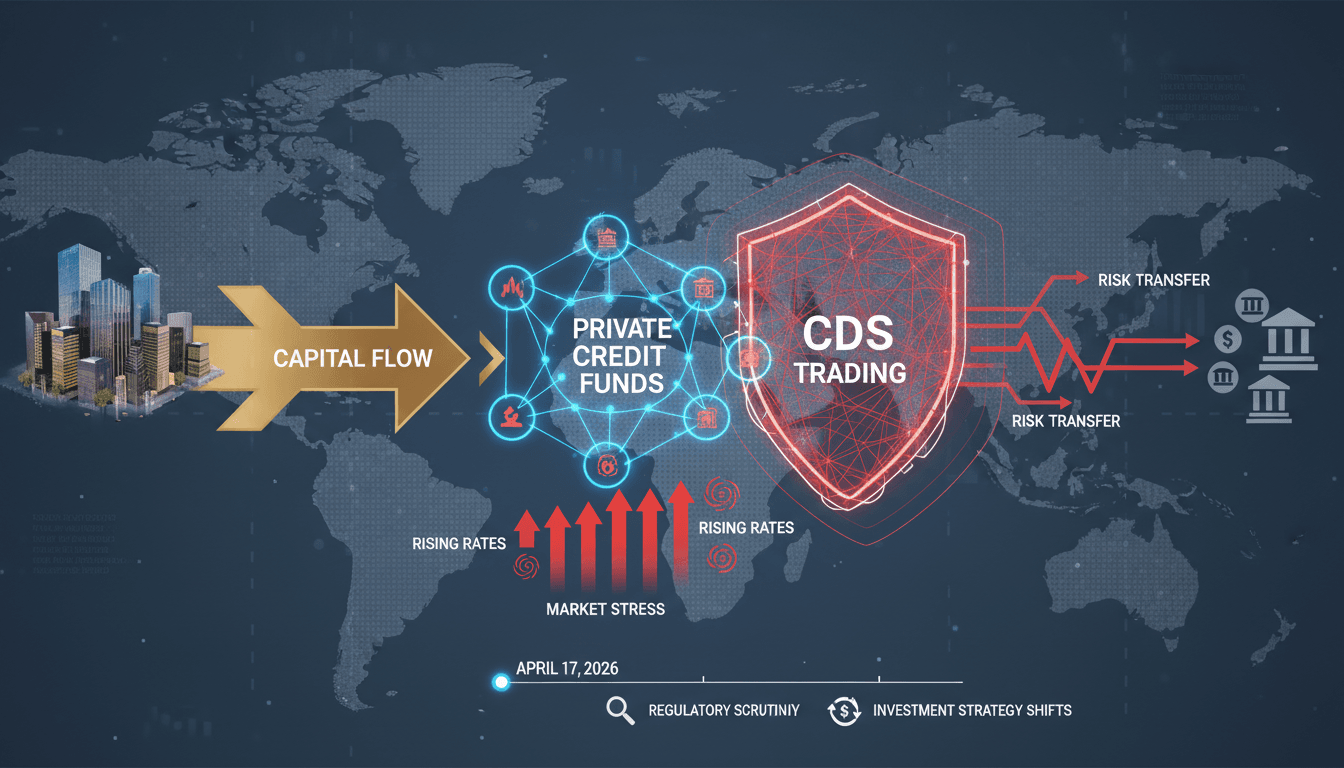
- Wall Street banks began trading credit default swaps (CDS) on April 17, 2026, to hedge against stress in private credit funds.
- Major players like JPMorgan Chase, Barclays, and Citigroup are involved, focusing on funds from Blackstone, Apollo Global Management, and Ares Management.
- Market conditions have worsened due to rising interest rates and liquidity concerns, prompting regulatory scrutiny and stress tests.
The context you actually need
- Private credit has surged to approximately $1.8 trillion in assets since the 2008 financial crisis, driven by low interest rates and limited traditional lending.
- Recent pressures include higher interest rates, increasing defaults, and investor outflows, which have raised alarms about the sector's health.
- The Federal Reserve is closely monitoring banks' exposures to private credit firms amid these market challenges, indicating potential regulatory implications.
What's really happening
On April 10, 2026, S&P Dow Jones Indices launched the first credit default swap index specifically for the private credit market. This index allows investors to make standardized bets against the sector, reflecting a growing recognition of the risks involved. Following this, major Wall Street banks, including JPMorgan Chase and Barclays, began trading bespoke CDS contracts linked to specific private credit funds managed by industry giants like Blackstone, Apollo Global Management, and Ares Management.
This shift is significant as it marks a response to the most severe stress the private credit sector has faced since its rapid expansion post-2008. The backdrop includes a combination of elevated interest rates, which have made borrowing more expensive, and rising defaults among borrowers, leading to investor outflows. The liquidity concerns are further exacerbated by disruptions in sectors reliant on AI technologies, which have altered traditional lending dynamics.
The trading of CDS on private credit funds serves as a hedge for investors who are increasingly wary of the sector's stability. With a combined exposure of $108 billion among three major banks to private credit, the stakes are high. The initiation of CDS trading indicates that financial institutions are preparing for potential downturns, reflecting a broader market sentiment that the private credit landscape may be entering a challenging phase.
As banks conduct stress tests on their private credit portfolios, the Federal Reserve has begun inquiring about U.S. banks' exposures to these firms. This scrutiny suggests that regulators are concerned about the systemic risks posed by the private credit sector, especially in light of recent market turbulence. The lack of significant market shifts reported as of April 17, 2026, indicates that while the situation is being monitored, the immediate impacts may not yet be felt across the broader financial landscape.
Who feels it first (and how)
- Investors in private credit funds may experience increased volatility and risk exposure.
- Financial institutions involved in trading CDS will need to manage their risk profiles more carefully.
- Regulators will likely increase scrutiny on private credit markets, impacting compliance and operational costs for firms.
- Borrowers in the private credit space may face tighter lending conditions as lenders reassess risk.
What to watch next
- Regulatory responses: Keep an eye on how the Federal Reserve and other regulators respond to the stress in private credit, as new regulations could reshape the market.
- Market liquidity: Monitor liquidity levels in private credit funds, as significant outflows could trigger further instability.
- Interest rate trends: Watch for changes in interest rates, as continued hikes could exacerbate stress in the private credit sector.
Major Wall Street banks are now trading CDS linked to private credit funds.
Increased regulatory scrutiny and potential new regulations affecting private credit markets.
The long-term impact on private credit fund performance and investor sentiment.
Frequently Asked Questions
- Why it matters?
- This development highlights the growing concerns over the stability of private credit, a sector that has rapidly expanded and now faces significant stress.
- What happened (in 30 seconds)?
- Wall Street banks began trading credit default swaps (CDS) on April 17, 2026, to hedge against stress in private credit funds. Major players like JPMorgan Chase, Barclays, and Citigroup are involved, focusing on funds from Blackstone, Apollo Global Management, and Ares Management. Market conditions have worsened due to rising interest rates and liquidity concerns, prompting regulatory scrutiny and stress tests.
- What's really happening?
- On April 10, 2026, S&P Dow Jones Indices launched the first credit default swap index specifically for the private credit market. This index allows investors to make standardized bets against the sector, reflecting a growing recognition of the risks involved. Following this, major Wall Street banks, including JPMorgan Chase and Barclays, began trading bespoke CDS contracts linked to specific private credit funds managed by industry giants like Blackstone, Apollo Global Management, and Ares Manag
- Who feels it first (and how)?
- Investors in private credit funds may experience increased volatility and risk exposure. Financial institutions involved in trading CDS will need to manage their risk profiles more carefully. Regulators will likely increase scrutiny on private credit markets, impacting compliance and operational costs for firms. Borrowers in the private credit space may face tighter lending conditions as lenders reassess risk.
- What to watch next?
- Regulatory responses: Keep an eye on how the Federal Reserve and other regulators respond to the stress in private credit, as new regulations could reshape the market. Market liquidity: Monitor liquidity levels in private credit funds, as significant outflows could trigger further instability. Interest rate trends: Watch for changes in interest rates, as continued hikes could exacerbate stress in the private credit sector.
Market-moving headlines impacting equities, bonds, and related risk assets.
"Real-time catalysts and volatility drivers across indices and sectors."
— A47 Editor
Wall Street banks trade derivatives to bet on private credit stress, FT reports
Wall Street banks have begun trading derivatives to bet against private credit, reflecting growing concerns about the stability of this investment sector, as reported by the Financial Times. This move aligns with the introduction of a new credit-defa...
Editor-curated FT homepage stories spanning markets, business, world, and opinion.
"The Financial Times is a globally respected business publication with a centrist/center-left tone and strong markets focus."
— A47 Editor
Wall Street banks start trading derivatives to bet on pain in private credit
Wall Street banks, including JPMorgan and Barclays, have begun trading credit default swaps (CDS) on private equity funds managed by Apollo, Ares, and Blackstone, indicating a shift towards hedging against potential downturns in the private credit ma...