
Iran War Triggers Major Shift in Safe-Haven Assets as Gold Prices Plummet and Bitcoin Faces Volatility
Here's what it means for you.
As global markets react to geopolitical tensions, your investment strategy may need to adapt to shifting asset values.
Why it matters
The conflict has triggered a reevaluation of traditional safe-haven assets, influencing investment decisions worldwide.
What happened (in 30 seconds)
- On February 28, 2026, the U.S. and Israel launched military strikes on Iran, killing its Supreme Leader, Ayatollah Khamenei.
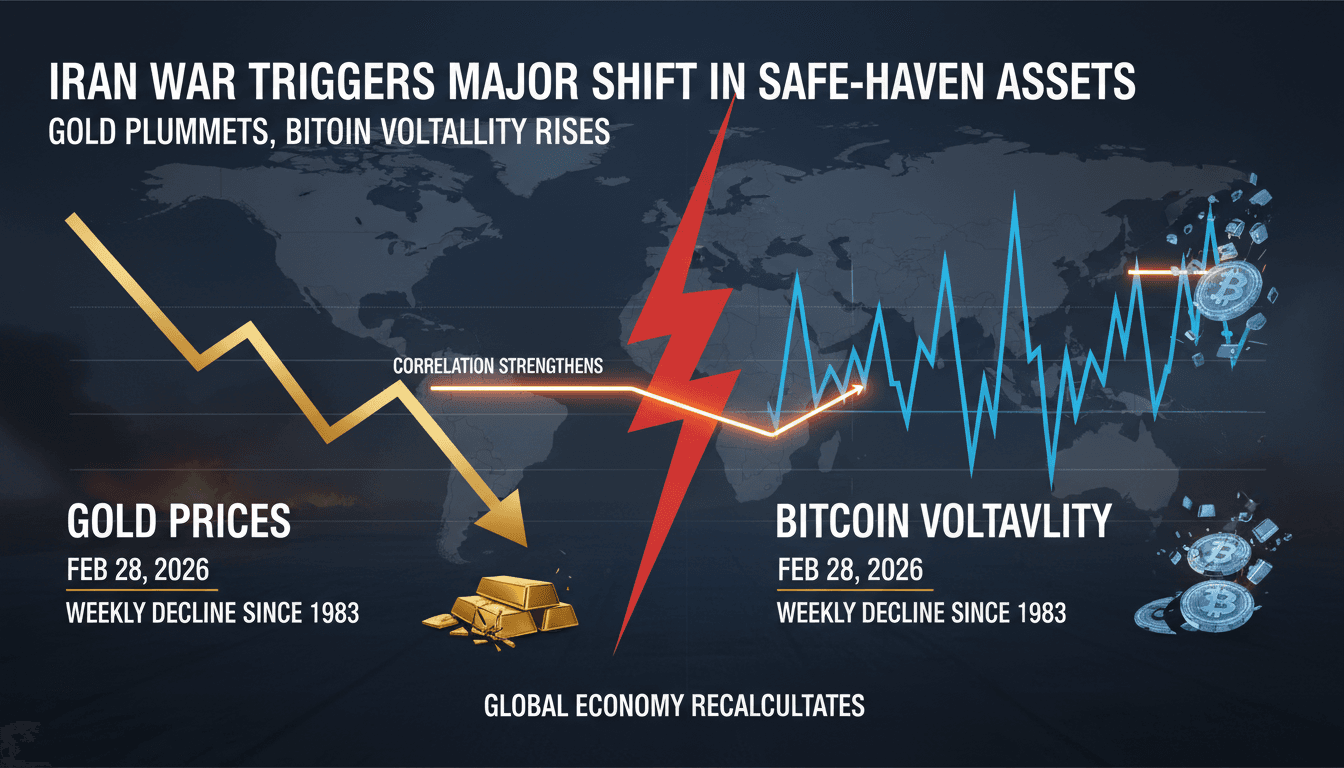
- Gold prices fell 2.36% to $4,494.10 per ounce by March 20, marking the largest weekly decline since 1983.
- Bitcoin experienced volatility, dropping below $70,000 after peaking at nearly $76,000, reflecting market uncertainty.
The context you actually need
- Iran's proxy attacks on Israel and stalled nuclear negotiations escalated tensions, leading to the U.S.-Israeli strikes.
- The Strait of Hormuz, a critical oil shipping route, has been threatened, risking 20% of global oil supply and fueling inflation fears.
- NATO's withdrawal from Iraq and the UAE's condemnation of Iranian actions highlight the geopolitical ramifications of the conflict.
What's really happening
The military escalation in Iran represents a significant shift in the geopolitical landscape, with immediate repercussions for global markets. The U.S. and Israeli strikes were a response to a series of Iranian proxy attacks that had intensified in the months leading up to February 2026. By targeting key Iranian leadership and military sites, the U.S. aimed to disrupt Iran's capacity to retaliate and project power in the region. However, this preemptive action has sparked a fierce Iranian response, including missile strikes on U.S. bases and threats to close the Strait of Hormuz.
The Strait of Hormuz is vital for global oil transportation, and any disruption there can lead to immediate spikes in oil prices. Following the strikes, oil prices surged by 40%, exacerbating inflation concerns globally. Investors traditionally turn to gold as a safe haven during times of geopolitical uncertainty. However, the current situation has led to a paradoxical decline in gold prices, as investors liquidate positions to cover margin calls amid market volatility. This has resulted in gold experiencing its largest weekly decline since 1983, despite its historical role as a safe asset.
Meanwhile, Bitcoin's price fluctuations reflect a growing correlation with traditional safe-haven assets, as both markets react to the same inflationary pressures and liquidity concerns. The cryptocurrency hit a high of nearly $76,000 before dropping below $70,000, indicating that even digital assets are not immune to the broader market's uncertainties.
As the conflict continues, the dynamics of safe-haven assets are shifting. Investors are reevaluating their strategies, leading to a potential redefinition of what constitutes a safe haven in times of crisis. The traditional reliance on gold is being challenged as Bitcoin gains traction among investors seeking alternative stores of value. This shift could have long-term implications for how investors approach asset allocation during geopolitical crises.
Who feels it first (and how)
- Investors in commodities: Those holding gold may face losses as prices decline, while Bitcoin investors experience volatility.
- Energy sector stakeholders: Companies reliant on stable oil prices will feel the impact of any disruptions in the Strait of Hormuz.
- Travel and tourism industries: Airports in Dubai and Abu Dhabi have suspended flights due to regional instability, affecting travel plans and tourism revenues.
What to watch next
- Federal Reserve rate decisions: With a 50% chance of a rate hike by October, this could influence market liquidity and asset prices.
- Geopolitical developments: Any escalation or de-escalation in the Iran conflict will directly impact oil prices and safe-haven asset dynamics.
- Market reactions to inflation data: As inflation fears grow, watch how traditional and digital assets respond to economic indicators.
The U.S. and Israel's military actions have escalated tensions in the Middle East.
Continued volatility in gold and Bitcoin prices as markets react to ongoing geopolitical developments.
The long-term implications for traditional safe-haven assets amidst the rise of cryptocurrencies.
Frequently Asked Questions
- Why it matters?
- The conflict has triggered a reevaluation of traditional safe-haven assets, influencing investment decisions worldwide.
- What happened (in 30 seconds)?
- On February 28, 2026, the U.S. and Israel launched military strikes on Iran, killing its Supreme Leader, Ayatollah Khamenei. Gold prices fell 2.36% to $4,494.10 per ounce by March 20, marking the largest weekly decline since 1983. Bitcoin experienced volatility, dropping below $70,000 after peaking at nearly $76,000, reflecting market uncertainty.
- What's really happening?
- The military escalation in Iran represents a significant shift in the geopolitical landscape, with immediate repercussions for global markets. The U.S. and Israeli strikes were a response to a series of Iranian proxy attacks that had intensified in the months leading up to February 2026. By targeting key Iranian leadership and military sites, the U.S. aimed to disrupt Iran's capacity to retaliate and project power in the region. However, this preemptive action has sparked a fierce Iranian respon
- Who feels it first (and how)?
- Investors in commodities: Those holding gold may face losses as prices decline, while Bitcoin investors experience volatility. Energy sector stakeholders: Companies reliant on stable oil prices will feel the impact of any disruptions in the Strait of Hormuz. Travel and tourism industries: Airports in Dubai and Abu Dhabi have suspended flights due to regional instability, affecting travel plans and tourism revenues.
- What to watch next?
- Federal Reserve rate decisions: With a 50% chance of a rate hike by October, this could influence market liquidity and asset prices. Geopolitical developments: Any escalation or de-escalation in the Iran conflict will directly impact oil prices and safe-haven asset dynamics. Market reactions to inflation data: As inflation fears grow, watch how traditional and digital assets respond to economic indicators.
UAE-based English-language newspaper covering regional politics, economics, and global affairs.
"The National reflects Emirati policy perspectives while maintaining international editorial standards."
— A47 Editor
With gold sinking and Bitcoin swaying, Iran war is reshaping safe-haven bets
The ongoing conflict in Iran has significantly impacted global markets, with gold prices declining and Bitcoin experiencing volatility as investors reassess their safe-haven assets. The war's escalation, particularly following Israeli airstrikes on I...
Bitcoin news, technical analysis, and forecasts across crypto markets.
"NewsBTC covers Bitcoin news, technical analysis, and forecasts across crypto markets and major blockchain projects."
— A47 Editor
Bitcoin Holds As Gold Posts Worst Week Since 1983 Amid Iran War
Bitcoin has gained over 11% since the onset of the Iran conflict, reaching approximately $70,650, while gold has experienced a significant decline of over 12%, marking its worst week since 1983. This divergence highlights the contrasting performance ...
Covers blockchain, cryptocurrency news, project analysis, and market insights.
"Cointelegraph is a leading crypto-focused media outlet known for timely news, analysis, and educational content related to blockchain and digital assets."
— A47 Editor
Bitcoin weakness deepens as war pushes traders to cut risk in BTC and stocks
Bitcoin's price continues to struggle as the ongoing conflict between the US and Iran enters its fourth week, prompting traders to reduce their exposure to both Bitcoin and equities. Recent data indicates significant outflows from Bitcoin and equitie...