
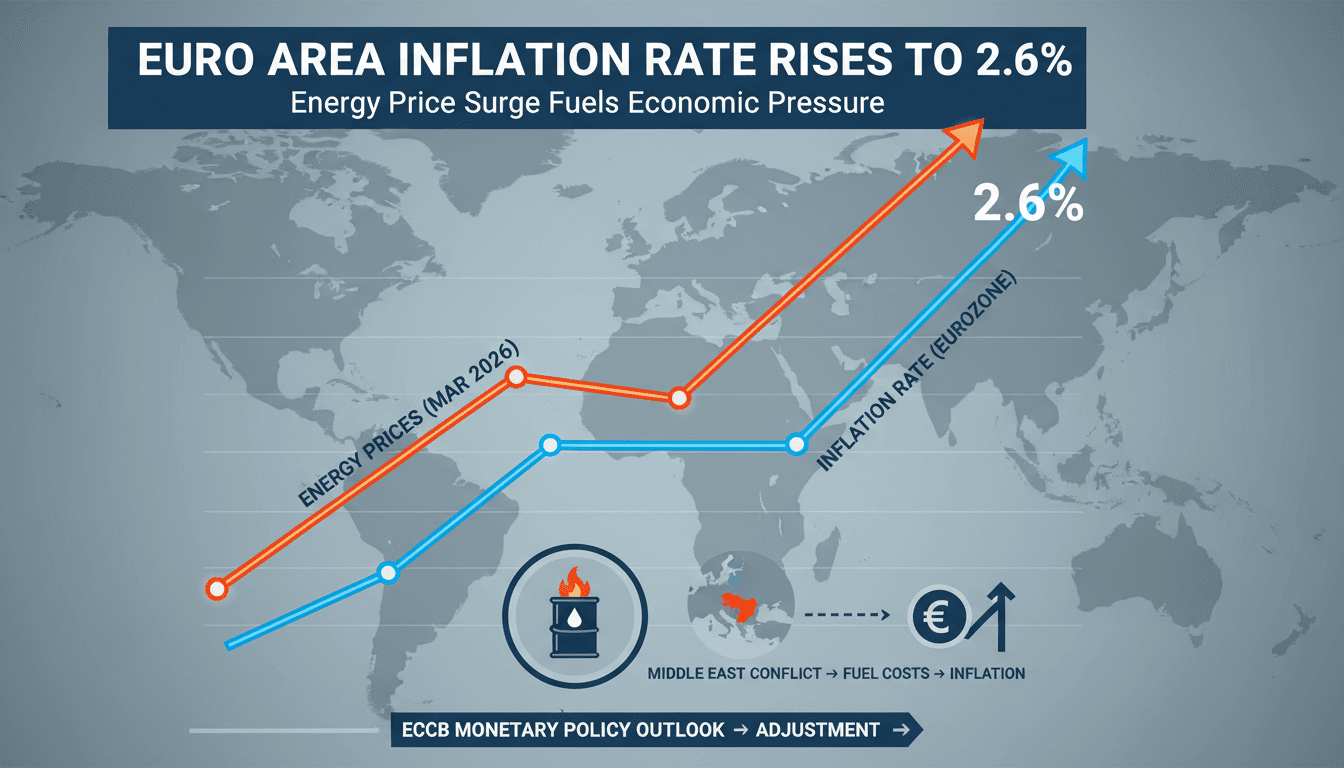
Euro Area Inflation Rate Rises to 2.6% Amid Energy Price Surge
Here's what it means for you.
If you’re in the Eurozone or rely on European markets, expect higher costs and potential shifts in economic policy.
Why it matters
This inflation spike could influence European Central Bank (ECB) monetary policy, affecting interest rates and economic growth across the region.
What happened (in 30 seconds)
- Inflation rose to 2.6% in March 2026, up from 1.9% in February, reversing previous disinflation trends.
- Energy prices surged by 5.1%, primarily due to the ongoing Middle East conflict, including the Iran war.
- The ECB's projections for 2026 now align with this inflation increase, indicating a potential shift in monetary policy.
The context you actually need
- Inflation peaked above 10% in late 2022 due to energy shocks from the Russia-Ukraine war, but fell to 1.7% by January 2026 through ECB interventions.
- The recent escalation in Middle East tensions has driven oil prices up by 10-13%, impacting overall inflation rates.
- Inflation increased in 23 EU states, indicating widespread economic pressure, while only three states saw declines.
What's really happening
The Euro area’s annual Harmonised Index of Consumer Prices (HICP) inflation rate rose to 2.6% in March 2026, a significant increase from February's 1.9%. This uptick is largely attributed to a sharp rise in energy prices, which surged by 5.1% in March alone. The monthly increase of 7.0% in energy costs contributed approximately 0.48 percentage points to the overall inflation rate. Other sectors also saw increases, with services contributing 1.49 percentage points, food, alcohol, and tobacco adding 0.45 percentage points, and non-energy goods contributing 0.13 percentage points.
This inflationary trend marks a reversal from the disinflationary path observed earlier in 2026, where inflation had dropped to 1.7% by January. The ECB had previously implemented rate hikes to combat inflation, which had peaked above 10% in late 2022 due to energy shocks stemming from the Russia-Ukraine conflict. However, the recent escalation of tensions in the Middle East, particularly the Iran war, has led to a significant increase in oil prices, now hovering between $80 and $82 per barrel. This has prompted the ECB to revise its inflation forecasts, now projecting an average inflation rate of 2.6% for the year.
The ECB's hawkish stance, maintaining interest rates amid upward inflation revisions, indicates a cautious approach to monetary policy. Analysts are closely monitoring energy price volatility, as it remains a critical factor influencing inflation. The ECB's upcoming meetings will likely focus on assessing the impact of these developments on economic stability and potential policy adjustments.
The rise in inflation is not just a number; it reflects broader economic pressures that could affect consumer behavior, business costs, and investment decisions across the Eurozone. As inflation rises, purchasing power may decline, leading to shifts in consumer spending patterns and potential economic slowdowns.
Who feels it first (and how)
- Consumers: Higher prices for energy and goods will directly impact household budgets.
- Businesses: Increased operational costs may lead to higher prices for services and products.
- Investors: Market volatility may affect investment strategies, particularly in energy and consumer sectors.
- Tourism sectors: Higher costs in Europe could deter tourists, impacting local economies reliant on tourism.
What to watch next
- ECB policy meetings: Upcoming decisions on interest rates will be crucial in determining how the ECB responds to rising inflation.
- Energy price trends: Continued volatility in oil prices will significantly influence inflation rates and economic stability.
- Consumer spending data: Changes in consumer behavior in response to inflation will provide insights into economic resilience.
Inflation has risen to 2.6% in March 2026, driven by energy prices.
The ECB will adjust its monetary policy in response to ongoing inflation pressures.
The long-term impact of the Middle East conflict on global energy prices and inflation remains uncertain.
Frequently Asked Questions
- Why it matters?
- This inflation spike could influence European Central Bank (ECB) monetary policy, affecting interest rates and economic growth across the region.
- What happened (in 30 seconds)?
- Inflation rose to 2.6% in March 2026, up from 1.9% in February, reversing previous disinflation trends. Energy prices surged by 5.1%, primarily due to the ongoing Middle East conflict, including the Iran war. The ECB's projections for 2026 now align with this inflation increase, indicating a potential shift in monetary policy.
- What's really happening?
- The Euro area’s annual Harmonised Index of Consumer Prices (HICP) inflation rate rose to 2.6% in March 2026, a significant increase from February's 1.9%. This uptick is largely attributed to a sharp rise in energy prices, which surged by 5.1% in March alone. The monthly increase of 7.0% in energy costs contributed approximately 0.48 percentage points to the overall inflation rate. Other sectors also saw increases, with services contributing 1.49 percentage points, food, alcohol, and tobacco addi
- Who feels it first (and how)?
- Consumers: Higher prices for energy and goods will directly impact household budgets. Businesses: Increased operational costs may lead to higher prices for services and products. Investors: Market volatility may affect investment strategies, particularly in energy and consumer sectors. Tourism sectors: Higher costs in Europe could deter tourists, impacting local economies reliant on tourism.
- What to watch next?
- ECB policy meetings: Upcoming decisions on interest rates will be crucial in determining how the ECB responds to rising inflation. Energy price trends: Continued volatility in oil prices will significantly influence inflation rates and economic stability. Consumer spending data: Changes in consumer behavior in response to inflation will provide insights into economic resilience.
Arabic-language UAE newspaper coverage focused on domestic affairs, public institutions, business, society, and regional developments.
"Al Khaleej coverage generally reflects a mainstream UAE editorial lens with strong attention to public affairs, institutions, and regional developments."
— A47 Editor
2.6 % التضخم السنوي في منطقة اليورو
The Eurozone recorded an annual inflation rate of 2.6% in March 2026, indicating a rise compared to previous months. This increase reflects ongoing economic trends and consumer price changes within the region.
Social/economic commentary and analysis relevant to business and markets.
"WSJ blends data-driven economic insight with commentary on policy and society."
— A47 Editor
Eurozone Inflation for March Revised Higher on Sharper Energy Prices
Eurozone inflation for March has been revised upward to 2.6%, the highest level since July 2024, primarily driven by sharper energy prices linked to the ongoing conflict in Iran. This increase reflects a more severe impact from rising energy costs th...
Pan-Arab news coverage spanning politics, business, sports, and regional affairs.
"Asharq Al-Awsat reflects a broad Arab editorial perspective with strong attention to regional geopolitics."
— A47 Editor
«تضخم اليورو» يقفز إلى 2.6 % في بيانات مُعدّلة وسط تداعيات الحرب
The inflation rate in the Eurozone surged to 2.6% in March, driven by rising energy prices as a consequence of the ongoing conflict in the Middle East, according to revised data.
Arabic-language digital news outlet covering UAE, regional, and international developments with broad general-news coverage.
"Al Ain News coverage typically blends UAE-focused reporting with wider Arab regional and international news."
— A47 Editor
التضخم يقفز في اليورو.. 2.6% خلال مارس
The inflation rate in the Eurozone surged to 2.6% in March, driven by rising energy prices attributed to the ongoing Iran conflict, according to data released by the European Statistical Agency on Thursday.
Global markets, investing, and macroeconomics from a premier financial newsroom.
"Bloomberg is respected for in-depth financial reporting and data-driven analysis."
— A47 Editor
Euro-Zone Inflation Was Faster Than Thought in March at 2.6%
Euro-zone inflation for March has been revised upward to 2.6%, indicating stronger price pressures than previously reported, largely influenced by the ongoing conflict in Iran.
Global markets, investing, and macroeconomics from a premier financial newsroom.
"Bloomberg is respected for in-depth financial reporting and data-driven analysis."
— A47 Editor
French Inflation Was Faster Than Initially Thought in March
France's inflation rate for March was revised upward, reflecting a more severe impact from rising energy costs linked to the ongoing conflict in Iran. This surge in inflation highlights the economic challenges facing the country as it grapples with e...