
IMF Reports Economic Impact of 2026 Iran War on MENA Region
Why it matters
The ongoing conflict in Iran is reshaping economic forecasts across the MENA region, impacting everything from oil prices to consumer goods.
What happened (in 30 seconds)
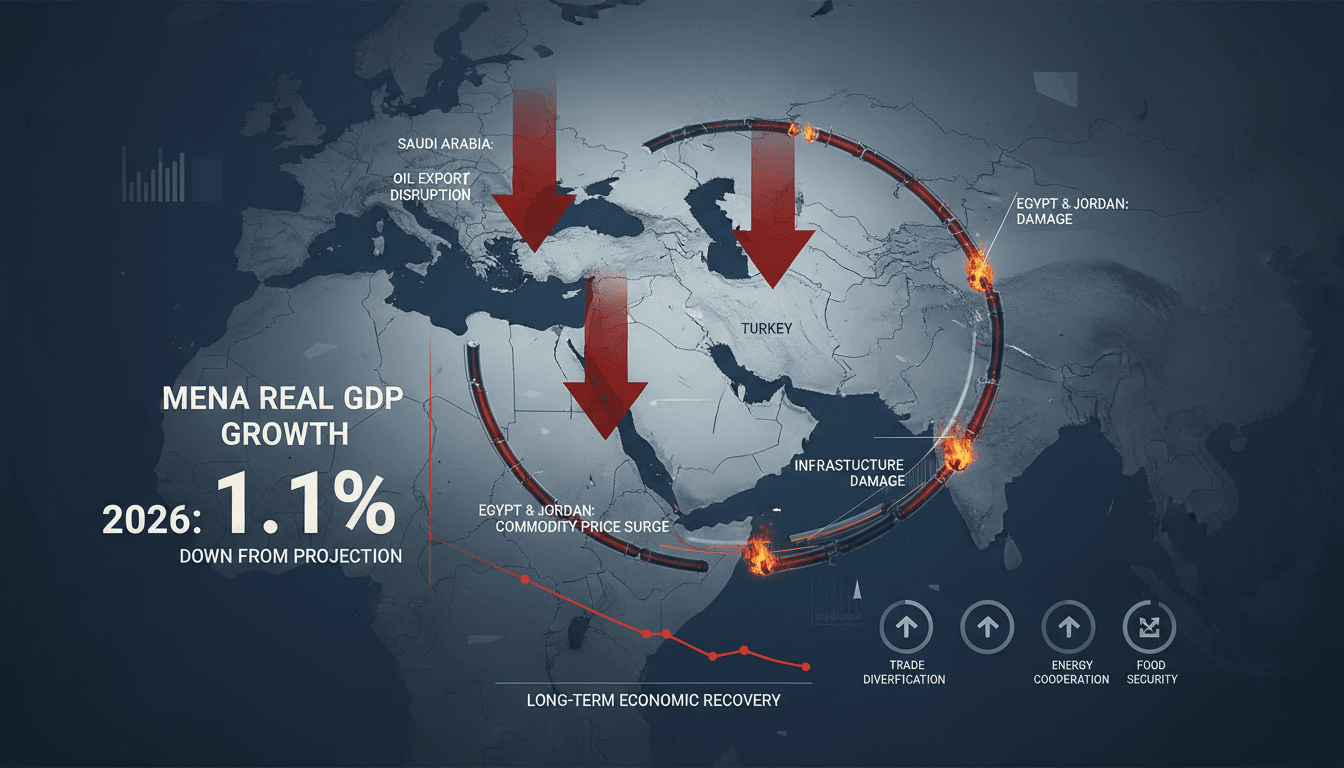
- On April 16, 2026, the IMF reported a significant reduction in MENA's GDP growth forecast to 1.1% for the year, down 2.8 percentage points from pre-war estimates.
- The 2026 Iran war, which began on February 28, has disrupted energy supplies and trade routes, particularly affecting oil exporters and importers alike.
- Jihad Azour, IMF Director for the Middle East, highlighted differentiated impacts across countries, with exporters facing supply issues and importers grappling with rising commodity prices.
The context you actually need
- The 2026 Iran war commenced with U.S.-Israeli strikes on Iranian targets, escalating regional tensions and leading to retaliatory actions from Iran.
- The Strait of Hormuz, a critical shipping route for oil, faced blockades, causing significant disruptions in energy exports and contributing to soaring oil prices.
- IMF forecasts indicate that while the region will experience a downturn in 2026, a recovery is expected in 2027, contingent on geopolitical stability.
What's really happening
The 2026 Iran war has triggered a complex chain of economic repercussions across the Middle East and North Africa (MENA). The conflict began with coordinated military actions by the U.S. and Israel against Iranian military sites, which prompted Iran to retaliate with drone and missile strikes on Gulf states. This escalation has led to blockades in the Strait of Hormuz, a vital artery for global oil shipments, causing immediate spikes in oil prices and disruptions in energy supplies.
The International Monetary Fund (IMF) has responded to these developments by revising its economic growth forecasts for the region. The projected real GDP growth for MENA in 2026 is now at 1.1%, a stark decline from earlier estimates. This downturn is primarily attributed to the war's impact on energy exports, trade routes, and commodity prices. Countries that rely heavily on oil exports, such as those in the Gulf Cooperation Council (GCC), are facing supply chain disruptions, while oil-importing nations like Egypt and Jordan are contending with rising costs for essential goods and declining remittances.
Jihad Azour, the IMF's Director for the Middle East and Central Asia, emphasized that the effects of the war are not uniform across the region. Oil exporters are grappling with logistical challenges and supply shortages, while importers are experiencing price shocks that could lead to inflationary pressures. The IMF has recommended that countries diversify their trade and enhance regional cooperation on energy and food supplies to mitigate these impacts.
As the conflict continues, the economic landscape in MENA is likely to remain volatile. The IMF's forecasts suggest that recovery may begin in 2027, but this is contingent on the resolution of hostilities and stabilization of trade routes. The war's ramifications extend beyond immediate economic metrics; they also threaten to exacerbate existing social and political tensions within affected countries.
Who feels it first (and how)
- Oil exporters (e.g., GCC countries): Facing disruptions in energy supplies and potential revenue losses.
- Importing nations (e.g., Egypt, Jordan): Experiencing elevated commodity prices and reduced remittances.
- Tourism and aviation sectors: Particularly in Dubai, feeling the strain from logistics challenges and reduced travel demand.
- Consumers: Individuals in MENA countries facing higher prices for goods and services due to inflation.
What to watch next
- Oil prices: Monitor fluctuations as they will directly impact economic stability and inflation rates across the region.
- IMF interventions: Watch for potential loans or financial assistance programs aimed at stabilizing economies in distress.
- Geopolitical developments: Keep an eye on ceasefire negotiations or escalations that could further influence economic forecasts.
The IMF has revised MENA's GDP growth forecast to 1.1% for 2026.
Economic recovery in MENA is expected in 2027, contingent on geopolitical stability.
The long-term impacts of the war on regional trade dynamics and social stability remain uncertain.
Frequently Asked Questions
- Why it matters?
- The ongoing conflict in Iran is reshaping economic forecasts across the MENA region, impacting everything from oil prices to consumer goods.
- What happened (in 30 seconds)?
- On April 16, 2026, the IMF reported a significant reduction in MENA's GDP growth forecast to 1.1% for the year, down 2.8 percentage points from pre-war estimates. The 2026 Iran war, which began on February 28, has disrupted energy supplies and trade routes, particularly affecting oil exporters and importers alike. Jihad Azour, IMF Director for the Middle East, highlighted differentiated impacts across countries, with exporters facing supply issues and importers grappling with rising commodity pr
- What's really happening?
- The 2026 Iran war has triggered a complex chain of economic repercussions across the Middle East and North Africa (MENA). The conflict began with coordinated military actions by the U.S. and Israel against Iranian military sites, which prompted Iran to retaliate with drone and missile strikes on Gulf states. This escalation has led to blockades in the Strait of Hormuz, a vital artery for global oil shipments, causing immediate spikes in oil prices and disruptions in energy supplies. The Interna
- Who feels it first (and how)?
- Oil exporters (e.g., GCC countries): Facing disruptions in energy supplies and potential revenue losses. Importing nations (e.g., Egypt, Jordan): Experiencing elevated commodity prices and reduced remittances. Tourism and aviation sectors: Particularly in Dubai, feeling the strain from logistics challenges and reduced travel demand. Consumers: Individuals in MENA countries facing higher prices for goods and services due to inflation.
- What to watch next?
- Oil prices: Monitor fluctuations as they will directly impact economic stability and inflation rates across the region. IMF interventions: Watch for potential loans or financial assistance programs aimed at stabilizing economies in distress. Geopolitical developments: Keep an eye on ceasefire negotiations or escalations that could further influence economic forecasts.
Arabic-language UAE newspaper coverage focused on domestic affairs, public institutions, business, society, and regional developments.
"Al Khaleej coverage generally reflects a mainstream UAE editorial lens with strong attention to public affairs, institutions, and regional developments."
— A47 Editor
صندوق النقد: دول المنطقة تواجه تداعيات متفاوتة للحرب
The International Monetary Fund (IMF) stated on Thursday that the disruptions in energy supplies caused by the war in Iran will significantly impact the economies of oil and gas exporting countries in the region. This assessment highlights the varyin...
Regional and international reporting focused on Middle Eastern politics, diplomacy, and economics.
"Asharq Al-Awsat is a Saudi-owned international newspaper reflecting mainstream Gulf political perspectives."
— A47 Editor
IMF: Middle East Faces Pivotal Economic Moment
The International Monetary Fund (IMF) has indicated that the Middle East is at a critical economic juncture, largely influenced by the ongoing conflict in Iran. This situation is expected to significantly impact the region's economic stability and gr...
UAE-based English-language newspaper covering regional politics, economics, and global affairs.
"The National reflects Emirati policy perspectives while maintaining international editorial standards."
— A47 Editor
Middle East faces one of sharpest downgrades since global financial crisis, IMF warns
The International Monetary Fund (IMF) has issued a stark warning regarding the Middle East, indicating it faces one of the sharpest economic downgrades since the global financial crisis, primarily due to the ongoing war in Iran. This conflict has dis...