
Aluminum prices reach four-year highs amid supply disruptions and production fears
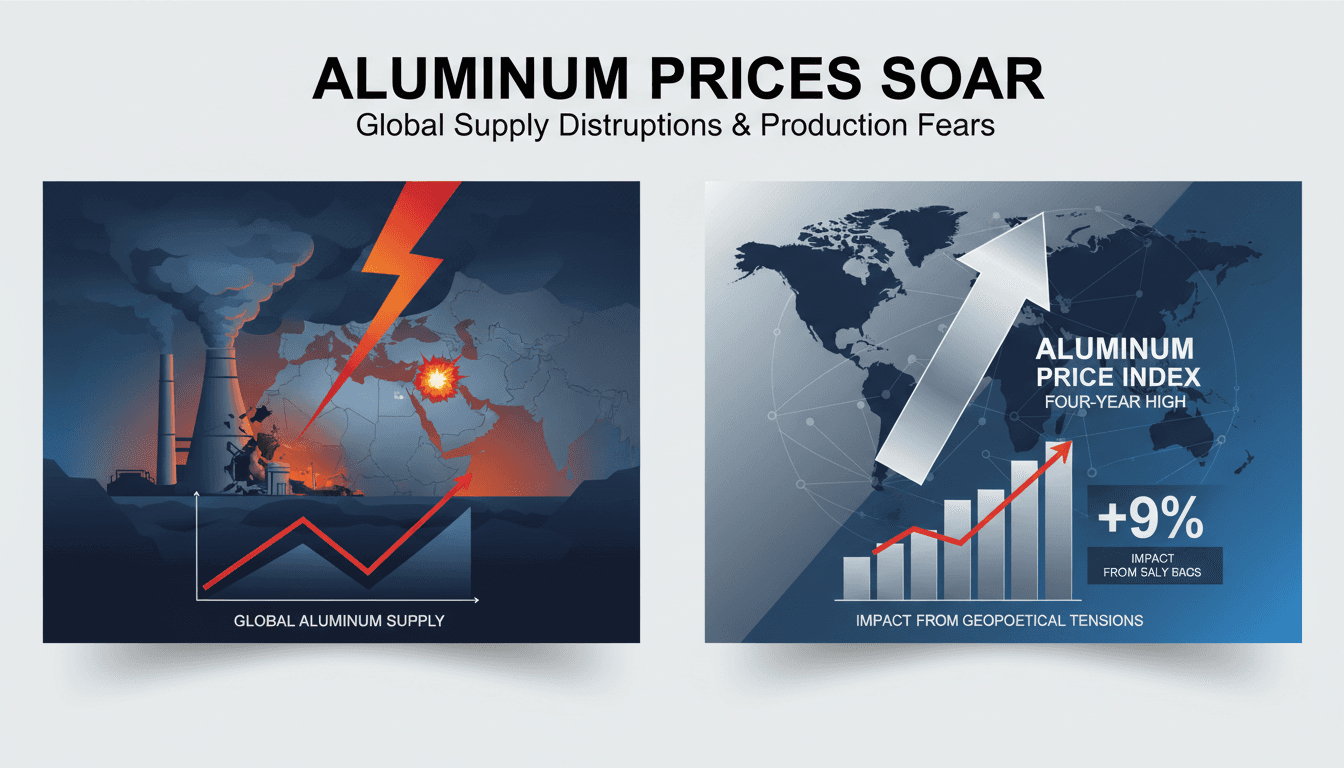
Here's what it means for you.
The surge in aluminum prices signals significant implications for industries reliant on this metal, including construction and automotive sectors. As prices remain elevated, businesses may face increased production costs, potentially leading to higher consumer prices. Stakeholders should prepare for ongoing volatility in the aluminum market, which could affect supply chains and pricing strategies.
What happened
Aluminum prices have recently surged to their highest levels in over four years, driven by fears of production cuts in China and ongoing supply disruptions from the Middle East. The conflict in the Middle East has notably removed approximately 9% of aluminum from the global market, exacerbating supply concerns. This situation has led to a 1% increase in aluminum prices, marking a significant rise since the onset of the conflict in February.
As geopolitical tensions continue, the aluminum market is expected to remain volatile. The interplay between production capabilities in China and the ongoing disruptions in the Middle East is central to the current price dynamics.
The Context
China, the largest producer of aluminum, is under pressure to reduce output due to stringent environmental regulations. This regulatory environment, coupled with the conflict in the Middle East, has created a precarious situation for global aluminum supply. The ongoing geopolitical tensions highlight the interconnectedness of commodity markets and the significant impact that regional conflicts can have on pricing.
The timeline of events shows that the conflict began in February 2026, leading to immediate supply disruptions. By May 2026, reports indicated that aluminum prices were reaching four-year highs, underscoring the urgency of the situation for market participants.
Takeaway
Looking ahead, the aluminum market is poised for continued fluctuations as geopolitical tensions persist. Stakeholders should closely monitor China's production policies and any further developments in the Middle East that could impact supply. The current landscape suggests that high prices may persist for one to two years, necessitating strategic planning for businesses reliant on aluminum.
As the situation evolves, the potential for further price increases remains if supply constraints continue. Companies should remain agile in their operations to adapt to these market dynamics.
Sports reporting with a focus on Saudi and regional competitions.
"Okaz sports coverage is broad and audience-friendly, with strong attention to Saudi teams and leagues."
— A47 Editor
أسعار الألمنيوم تقترب من ذروتها في 4 سنوات
Aluminum prices are nearing their highest closing in over four years, driven by concerns over production cuts in China, the largest producer of the metal, amid ongoing unrest in the Middle East. The industrial metal rose by 1% on the London Metal Exc...
Global markets, investing, and macroeconomics from a premier financial newsroom.
"Bloomberg is respected for in-depth financial reporting and data-driven analysis."
— A47 Editor
Aluminum Heads for Four-Year High on Fears of China Output Cuts
Aluminum prices are poised for their highest close in over four years, driven by concerns over potential output cuts from China, the world's leading producer, alongside ongoing disruptions in the Middle East.
Business, investment, entrepreneurship, leadership, and innovation.
"Forbes is known for its coverage of business leaders, market trends, and entrepreneurial ventures with a pro-business editorial stance."
— A47 Editor
Alcoa Wins From An Aluminum Boom Which Has Further To Run
The ongoing conflict in the Middle East has resulted in a significant reduction of aluminum supply, with estimates indicating a 9% decrease in the global market. This disruption has led to rising aluminum prices, which are expected to remain elevated...