
FAO Food Price Index Increases 2.4% Amid Escalating Near East Conflict
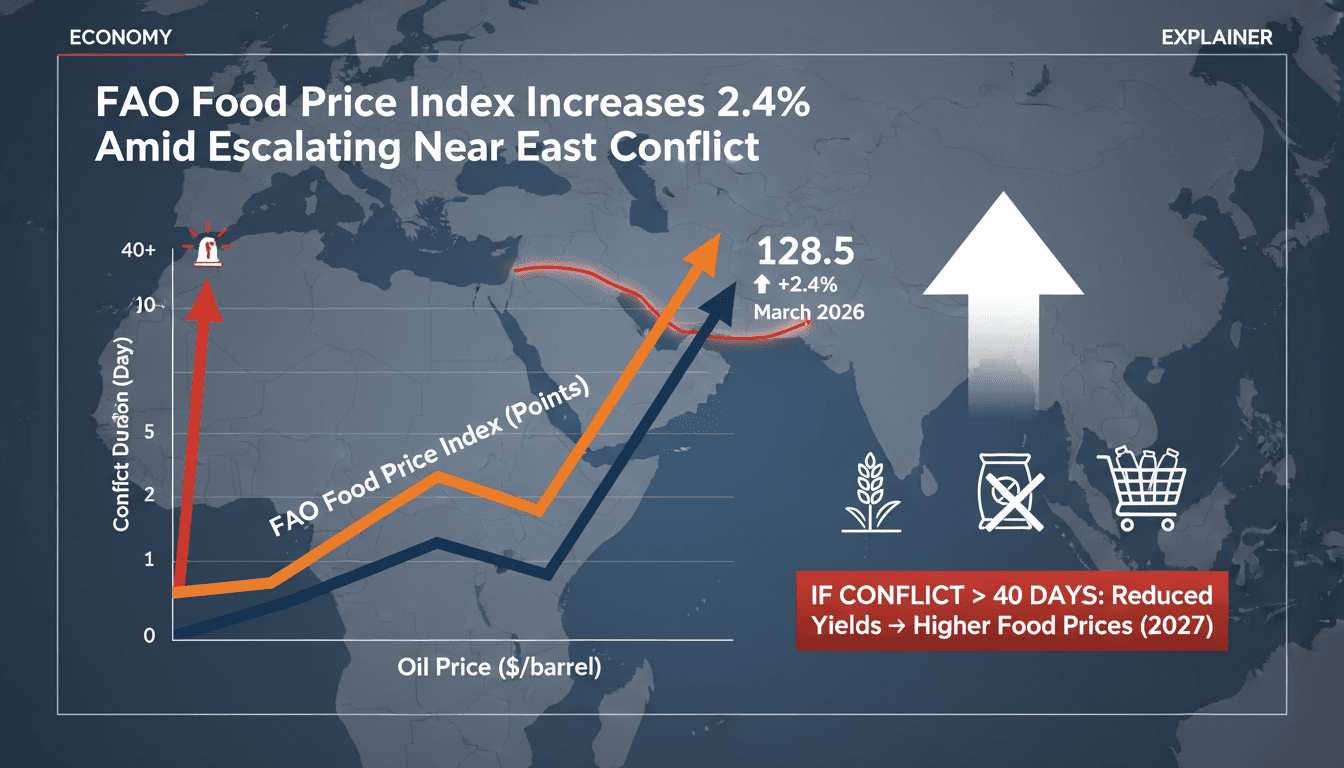
Here's what it means for you.
You may face higher grocery bills as global food prices surge due to geopolitical tensions.
Why it matters
The escalation of conflict in the Near East is driving up food prices, impacting global supply chains and consumer costs.
What happened (in 30 seconds)
- FAO reported a 2.4% increase in the Food Price Index, reaching 128.5 points in March 2026.
- Conflict in the Near East has disrupted oil and fertilizer supplies, pushing costs higher.
- Forecasts indicate potential declines in agricultural outputs if the conflict persists beyond 40 days.
The context you actually need
- Prior to February 2026, global food prices were on a downward trend, but the situation reversed due to escalating conflict.
- Disruptions in the Strait of Hormuz have reduced tanker traffic by over 90%, causing crude oil prices to exceed $110 per barrel.
- Fertilizer costs have risen by 15-20%, affecting agricultural production and increasing food prices across various categories.
What's really happening
The recent spike in the FAO Food Price Index is a direct consequence of the ongoing conflict in the Near East, particularly the tensions surrounding Iran. Since mid-February 2026, U.S. and Israeli military actions against Iranian facilities have led to significant disruptions in the Strait of Hormuz, a critical chokepoint for global oil transportation. This disruption has resulted in a dramatic reduction in tanker traffic, which has in turn driven crude oil prices above $110 per barrel. The rising energy costs are not only affecting transportation but also inflating fertilizer prices by 15-20%, creating a ripple effect throughout the agricultural sector.
As farmers face higher input costs, they may be compelled to adjust their planting strategies. FAO Chief Economist Máximo Torero has warned that if the conflict continues for more than 40 days, farmers might reduce their use of fertilizers or shift to crops that require less fertilizer. This could lead to lower agricultural yields, further exacerbating the rise in food prices through 2027. The FAO's latest report indicates that all sub-indices of the Food Price Index have seen increases, with cereals up 1.5%, vegetable oils up 5.1%, sugar up 7.2%, meat up 1.0%, and dairy up 1.2%.
Despite ample cereal stocks initially providing some buffer against price increases, the ongoing conflict and its associated costs are likely to strain supply chains. The FAO has projected that wheat production for 2026 will be around 820 million tonnes, a decrease of 1.7% year-over-year. This decline in production, combined with rising prices, signals a challenging environment for consumers and producers alike.
In response to these developments, authorities in the UAE have taken steps to monitor prices and ensure stable supplies. The Ministry of Climate Change and Environment has confirmed sufficient strategic stockpiles and has issued over 200 fines for price gouging. This proactive approach aims to mitigate the impact of rising food prices on consumers, particularly during the high-demand period of Ramadan.
Who feels it first (and how)
- Consumers: Households will notice increased prices for essential food items, particularly fruits and vegetables.
- Farmers: Those reliant on fertilizers may face reduced yields and profitability.
- Retailers: Businesses may have to navigate price controls and consumer backlash against price hikes.
- Importers: Companies that import food products will see increased costs, which may be passed on to consumers.
What to watch next
- Fertilizer prices: Continued increases could lead to further adjustments in agricultural practices and crop yields.
- Conflict duration: The length of the Near East conflict will directly impact food supply and pricing.
- Consumer behavior: Watch for shifts in purchasing patterns as consumers react to rising food costs.
The FAO Food Price Index has risen by 2.4% in March 2026.
Continued conflict will exacerbate food price increases and impact agricultural outputs.
The long-term effects on global food security and consumer behavior remain uncertain.
Frequently Asked Questions
- Why it matters?
- The escalation of conflict in the Near East is driving up food prices, impacting global supply chains and consumer costs.
- What happened (in 30 seconds)?
- FAO reported a 2.4% increase in the Food Price Index, reaching 128.5 points in March 2026. Conflict in the Near East has disrupted oil and fertilizer supplies, pushing costs higher. Forecasts indicate potential declines in agricultural outputs if the conflict persists beyond 40 days.
- What's really happening?
- The recent spike in the FAO Food Price Index is a direct consequence of the ongoing conflict in the Near East, particularly the tensions surrounding Iran. Since mid-February 2026, U.S. and Israeli military actions against Iranian facilities have led to significant disruptions in the Strait of Hormuz, a critical chokepoint for global oil transportation. This disruption has resulted in a dramatic reduction in tanker traffic, which has in turn driven crude oil prices above $110 per barrel. The risi
- Who feels it first (and how)?
- Consumers: Households will notice increased prices for essential food items, particularly fruits and vegetables. Farmers: Those reliant on fertilizers may face reduced yields and profitability. Retailers: Businesses may have to navigate price controls and consumer backlash against price hikes. Importers: Companies that import food products will see increased costs, which may be passed on to consumers.
- What to watch next?
- Fertilizer prices: Continued increases could lead to further adjustments in agricultural practices and crop yields. Conflict duration: The length of the Near East conflict will directly impact food supply and pricing. Consumer behavior: Watch for shifts in purchasing patterns as consumers react to rising food costs.
Arabic-language economic and business reporting with strong UAE market relevance.
"Emarat Al Youm business coverage often centers UAE property, banking, consumer issues, and economic policy."
— A47 Editor
«الفاو» تتوقع ارتفاعاً أكبر في أسعار الغذاء العالمية «الفاو» تتوقع ارتفاعاً أكبر في أسعار الغذاء العالمية
The Food and Agriculture Organization (FAO) of the United Nations reported that global food prices rose to their highest level in March, indicating a significant increase in food costs. This rise reflects ongoing challenges in the agricultural sector...
English-language news from Qatar covering domestic and regional affairs.
"Gulf Times reflects Qatari perspectives on regional developments."
— A47 Editor
Global food prices reach highest level since December 2025
Global food prices have surged in March to their highest level since December 2025, marking the second consecutive monthly increase, as reported by the United Nations Food and Agriculture Organization (FAO). This rise in prices reflects ongoing chall...
Sports reporting with a focus on Saudi and regional competitions.
"Okaz sports coverage is broad and audience-friendly, with strong attention to Saudi teams and leagues."
— A47 Editor
ارتفاع أسعار الغذاء عالميًا في مارس بسبب توترات الشرق الأوسط
The Food and Agriculture Organization (FAO) of the United Nations announced a rise in global food prices in March, primarily driven by increased energy costs linked to escalating tensions in the Middle East. The average food price index reached appro...