
UK Services Sector Experiences Record Cost Surge Amid Ongoing Iran War
Here's what it means for you.
If you operate in the UK services sector, prepare for tighter margins and increased pricing pressures.
Why it matters
The ongoing Iran war is creating significant inflationary pressures that could stifle growth in the UK economy, impacting businesses and consumers alike.
What happened (in 30 seconds)
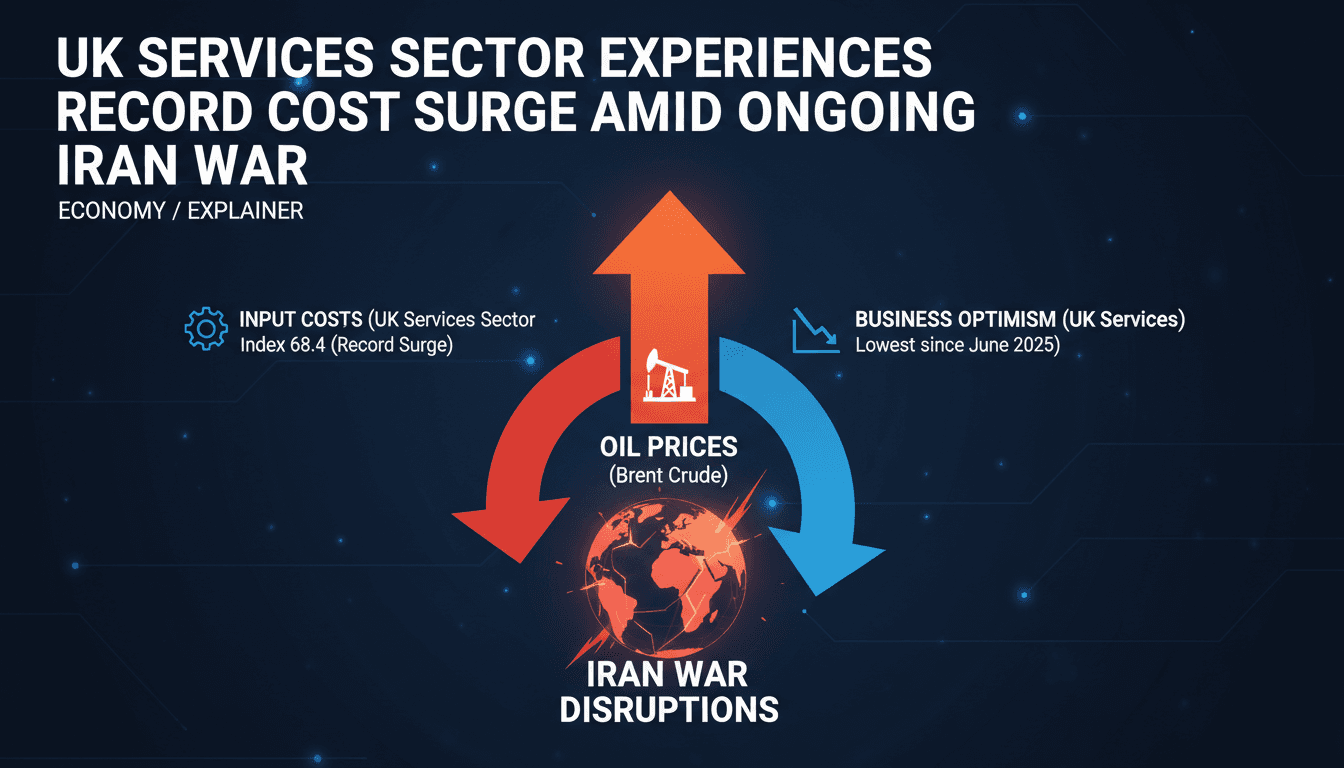
- Input costs surged: The S&P Global UK Services PMI Input Prices Index hit 68.4 in March 2026, marking the sharpest rise since 2021.
- Business optimism declined: The PMI fell to 50.5, indicating the weakest business sentiment since June 2025, as firms face rising costs and client risk aversion.
- Geopolitical tensions escalated: The Iran war, which began on February 28, 2026, has disrupted supply chains and driven energy prices above $100 per barrel.
The context you actually need
- War-induced disruptions: The conflict in Iran has led to significant disruptions in the Strait of Hormuz, affecting global oil supply and increasing shipping costs.
- Economic downgrade: The OECD has issued the largest growth downgrade for the UK among G20 nations, primarily due to elevated energy costs.
- Inflationary pressures: UK firms are experiencing heightened inflation, with input prices rising sharply, which is likely to lead to increased consumer prices.
What's really happening
The recent surge in costs within the UK services sector is a direct consequence of the geopolitical tensions stemming from the Iran war. Initiated by US and Israeli strikes on Iranian nuclear facilities, the conflict has escalated into a broader regional crisis, significantly impacting global oil prices and supply chains. Brent crude oil prices have surged above $100 per barrel, creating a ripple effect that has heightened energy costs and disrupted shipping routes.
As a result, UK services firms are grappling with an unprecedented rise in input costs, reflected in the S&P Global UK Services PMI Input Prices Index, which reached 68.4 in March 2026. This figure represents the highest monthly increase since 2021, underscoring the acute inflationary pressures facing businesses. The rising costs of fuel, raw materials, and transportation are forcing firms to reconsider their pricing strategies, leading to a pass-through of costs to consumers.
Moreover, the decline in business optimism, as indicated by the PMI dropping to 50.5, signals a concerning trend for the UK economy. The index reflects the weakest sentiment among businesses since June 2025, driven by client risk aversion and postponed investments. Firms are increasingly cautious, with many citing the ongoing war as a significant factor in their declining outlook. The new export business index also fell to 46.3, marking an 11-month low, which suggests that international demand is waning amid the geopolitical instability.
The implications of these developments extend beyond the immediate cost pressures. The Organisation for Economic Co-operation and Development (OECD) has downgraded the UK's growth forecast, highlighting the economic vulnerabilities exacerbated by the conflict. Bank of England officials are warning of potential threats to financial stability, which may lead to interest rate adjustments to combat persistent inflation.
In summary, the combination of rising costs and declining optimism is creating a challenging environment for UK services firms, with the potential for prolonged economic repercussions unless the geopolitical situation stabilizes.
Who feels it first (and how)
- Service sector firms: Businesses in hospitality, retail, and logistics face immediate cost pressures and declining consumer confidence.
- Consumers: Households may experience rising prices as firms pass on increased costs, affecting disposable income.
- Exporters: Companies reliant on international markets may see reduced demand due to heightened geopolitical risks and supply chain disruptions.
What to watch next
- Energy prices: Monitor fluctuations in oil prices, as sustained high costs could further exacerbate inflation and impact consumer spending.
- Business confidence surveys: Keep an eye on future PMI releases to gauge sentiment shifts among UK services firms, which can indicate broader economic trends.
- Government interventions: Watch for potential policy responses from the UK government aimed at mitigating the economic impact of the Iran war, particularly regarding energy costs and supply chain management.
Input costs are rising sharply, impacting service sector profitability.
Business optimism will continue to decline unless geopolitical tensions ease.
The duration and extent of the economic impact from the Iran war remain uncertain.
Frequently Asked Questions
- Why it matters?
- The ongoing Iran war is creating significant inflationary pressures that could stifle growth in the UK economy, impacting businesses and consumers alike.
- What happened (in 30 seconds)?
- Input costs surged: The S&P Global UK Services PMI Input Prices Index hit 68.4 in March 2026, marking the sharpest rise since 2021. Business optimism declined: The PMI fell to 50.5, indicating the weakest business sentiment since June 2025, as firms face rising costs and client risk aversion. Geopolitical tensions escalated: The Iran war, which began on February 28, 2026, has disrupted supply chains and driven energy prices above $100 per barrel.
- What's really happening?
- The recent surge in costs within the UK services sector is a direct consequence of the geopolitical tensions stemming from the Iran war. Initiated by US and Israeli strikes on Iranian nuclear facilities, the conflict has escalated into a broader regional crisis, significantly impacting global oil prices and supply chains. Brent crude oil prices have surged above $100 per barrel, creating a ripple effect that has heightened energy costs and disrupted shipping routes. As a result, UK services fi
- Who feels it first (and how)?
- Service sector firms: Businesses in hospitality, retail, and logistics face immediate cost pressures and declining consumer confidence. Consumers: Households may experience rising prices as firms pass on increased costs, affecting disposable income. Exporters: Companies reliant on international markets may see reduced demand due to heightened geopolitical risks and supply chain disruptions.
- What to watch next?
- Energy prices: Monitor fluctuations in oil prices, as sustained high costs could further exacerbate inflation and impact consumer spending. Business confidence surveys: Keep an eye on future PMI releases to gauge sentiment shifts among UK services firms, which can indicate broader economic trends. Government interventions: Watch for potential policy responses from the UK government aimed at mitigating the economic impact of the Iran war, particularly regarding energy costs and supply chain m
Macro commentary, policy analysis, growth/inflation themes, and global outlooks.
"Contextual macro coverage that complements day-to-day market headlines."
— A47 Editor
UK services firms report surge in costs, fading optimism as Iran war takes toll
UK services firms are experiencing a surge in costs and a decline in optimism, primarily due to the ongoing conflict in Iran, which has disrupted supply chains and increased energy prices. This situation has led to heightened inflation pressures acro...
Global markets, investing, and macroeconomics from a premier financial newsroom.
"Bloomberg is respected for in-depth financial reporting and data-driven analysis."
— A47 Editor
UK Private Sector Flatlines in March as Stagflation Fears Rise
The UK private sector experienced a significant slowdown in March, coinciding with the onset of the Iran war, as indicated by a recent survey highlighting a halt in growth and rising stagflation fears.