
Oil Prices Drop Over 15% After U.S.-Iran Ceasefire Agreement
Here's what it means for you.
If you rely on oil prices for business or personal expenses, this ceasefire could lead to immediate savings.
Why it matters
The ceasefire has the potential to stabilize global oil markets, impacting everything from fuel costs to inflation rates.
What happened (in 30 seconds)
- Oil prices dropped over 15% following a two-week ceasefire agreement between the U.S. and Iran, easing supply concerns.
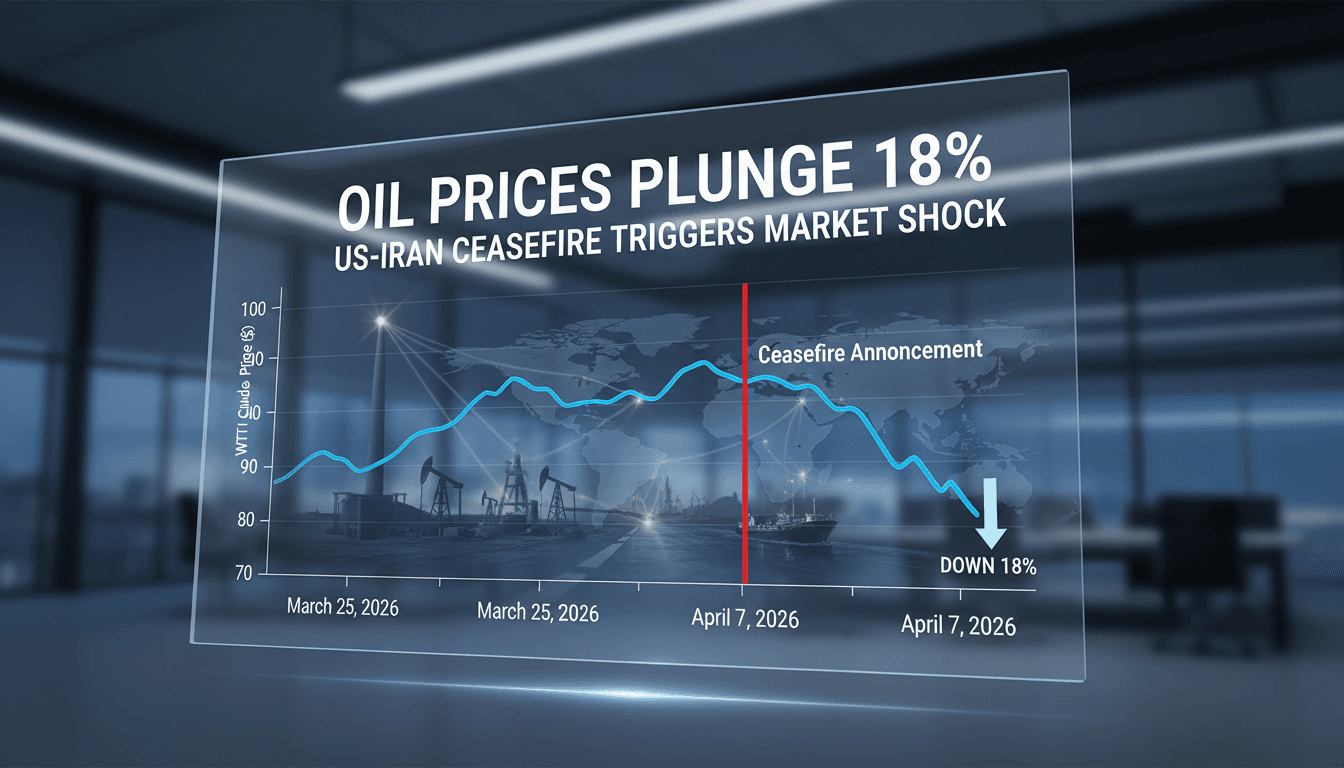
- West Texas Intermediate crude fell to $92.61 per barrel, marking an 18% decline in Asian trading.
- The Strait of Hormuz reopened, a critical chokepoint for global oil shipments, allowing for the resumption of approximately 20% of the world's oil supply.
The context you actually need
- The U.S.-Iran conflict escalated in late February 2026, leading to significant disruptions in oil supply and soaring prices.
- The Strait of Hormuz was effectively closed, reducing oil shipments by over 9 million barrels per day during the conflict.
- Pakistan mediated the ceasefire, which involved a conditional agreement to halt military actions in exchange for safe passage through the strait.
What's really happening
The recent ceasefire between the U.S. and Iran marks a significant turning point in a conflict that has rattled global oil markets for weeks. The Strait of Hormuz, a vital artery for oil transport, had been closed due to military tensions, leading to a surge in oil prices as fears of supply disruptions mounted. The agreement, facilitated by Pakistani mediation, came just hours before a self-imposed deadline set by President Trump, who threatened further military action if the strait remained closed.
The immediate impact of the ceasefire was a dramatic drop in oil prices, with West Texas Intermediate crude futures plummeting by as much as 18%. This price correction reflects the market's swift reaction to the alleviation of supply fears. Analysts note that while prices have dropped, it may take months for physical oil supply to normalize fully. The market's initial response indicates a strong reliance on the stability of the Strait of Hormuz for global oil flows.
For Dubai and the UAE, the implications are particularly relevant. Residents can expect potential reductions in fuel prices, which had spiked due to the conflict. The UAE's economy, heavily reliant on oil and trade, stands to benefit from the reopening of the strait, as it enhances shipping routes and energy sector stability. Additionally, local equities have already begun to reverse losses, signaling a positive outlook for businesses tied to oil and trade.
The ceasefire not only halts immediate military actions but also opens the door for diplomatic negotiations that could lead to a more stable regional environment. However, the situation remains fluid, with both U.S. and Iranian officials affirming that the ceasefire is conditional. The international community will be closely monitoring the situation as the two-week period unfolds, assessing whether further agreements can be reached to ensure long-term stability in the region.
Who feels it first (and how)
- Consumers: Expect lower fuel prices and reduced transportation costs.
- Businesses in the energy sector: May see improved margins and increased activity as oil prices stabilize.
- Shipping companies: Will benefit from resumed operations through the Strait of Hormuz, enhancing trade routes.
- Investors in UAE equities: Could experience gains as markets react positively to reduced geopolitical tensions.
What to watch next
- Oil shipment volumes: Monitoring the resumption of traffic through the Strait of Hormuz will indicate market recovery.
- Global stock market reactions: Watch for trends in equity markets as they respond to oil price fluctuations and geopolitical developments.
- Diplomatic negotiations: Future talks between the U.S. and Iran will be crucial in determining the longevity of the ceasefire and its impact on oil markets.
Oil prices have dropped significantly following the ceasefire announcement.
Fuel prices in Dubai and the UAE will decrease as market conditions stabilize.
The long-term effects of the ceasefire on U.S.-Iran relations and regional stability remain uncertain.
Frequently Asked Questions
- Why it matters?
- The ceasefire has the potential to stabilize global oil markets, impacting everything from fuel costs to inflation rates.
- What happened (in 30 seconds)?
- Oil prices dropped over 15% following a two-week ceasefire agreement between the U.S. and Iran, easing supply concerns. West Texas Intermediate crude fell to $92.61 per barrel, marking an 18% decline in Asian trading. The Strait of Hormuz reopened, a critical chokepoint for global oil shipments, allowing for the resumption of approximately 20% of the world's oil supply.
- What's really happening?
- The recent ceasefire between the U.S. and Iran marks a significant turning point in a conflict that has rattled global oil markets for weeks. The Strait of Hormuz, a vital artery for oil transport, had been closed due to military tensions, leading to a surge in oil prices as fears of supply disruptions mounted. The agreement, facilitated by Pakistani mediation, came just hours before a self-imposed deadline set by President Trump, who threatened further military action if the strait remained clo
- Who feels it first (and how)?
- Consumers: Expect lower fuel prices and reduced transportation costs. Businesses in the energy sector: May see improved margins and increased activity as oil prices stabilize. Shipping companies: Will benefit from resumed operations through the Strait of Hormuz, enhancing trade routes. Investors in UAE equities: Could experience gains as markets react positively to reduced geopolitical tensions.
- What to watch next?
- Oil shipment volumes: Monitoring the resumption of traffic through the Strait of Hormuz will indicate market recovery. Global stock market reactions: Watch for trends in equity markets as they respond to oil price fluctuations and geopolitical developments. Diplomatic negotiations: Future talks between the U.S. and Iran will be crucial in determining the longevity of the ceasefire and its impact on oil markets.
Oil, metals, and agriculture: supply/demand headlines, OPEC chatter, inventories, and price action.
"Solid tape for energy and metals traders tracking macro and micro catalysts."
— A47 Editor
Oil prices slump under $100 after Iran ceasefire, tentative Hormuz reopening
Oil prices have fallen below $100 per barrel following a two-week ceasefire agreement between the United States and Iran, which is contingent upon the reopening of the strategically vital Strait of Hormuz. This development marks a significant shift i...
Corporate news, economic trends, and markets with UK and global scope.
"BBC News is widely regarded as reputable and impartial, with a public service mandate."
— A47 Editor
Oil prices plunge and shares jump on US-Iran ceasefire plan
Oil prices fell sharply by up to 15% following the announcement of a two-week ceasefire between the United States and Iran, as declared by President Trump. This ceasefire is contingent upon Iran's commitment to reopen the strategically important Stra...
International coverage of politics, culture, and current affairs.
"BBC News is widely regarded as a reputable international news organization, known for its impartial tone and public service mandate."
— A47 Editor
Oil prices plunge and shares jump on US-Iran ceasefire plan
Oil prices fell sharply by up to 15% following the announcement of a two-week ceasefire between the United States and Iran, as declared by President Trump. This ceasefire is contingent upon Iran's commitment to reopen the strategically important Stra...
Markets desk coverage, trading insights, and investor updates.
"WSJ’s markets reporting provides in-depth analysis and context for investors."
— A47 Editor
Oil Futures Plunge as Cease-Fire Raises Hopes for Restored Supply
Oil futures experienced their largest single-day drop in six years, plummeting as the U.S. and Iran announced a two-week ceasefire agreement that includes the reopening of the strategically significant Strait of Hormuz. This development has led to a ...
Markets desk coverage, trading insights, and investor updates.
"WSJ’s markets reporting provides in-depth analysis and context for investors."
— A47 Editor
U.S. Stock Futures Surge After Trump Discloses Cease-Fire
U.S. stock futures surged following President Trump's announcement on Truth Social that he would suspend military actions against Iran for two weeks, signaling a potential easing of tensions in the region. This development has led to a positive marke...
National headlines across the United States including breaking stories and societal issues.
"NBC News is a mainstream media outlet known for comprehensive national and international news coverage with a centrist to slightly left-leaning editorial tone."
— A47 Editor
Oil prices drop after ceasefire announcement
Oil prices experienced a significant drop following President Donald Trump's announcement of a two-week ceasefire with Iran, contingent upon the reopening of the strategic Strait of Hormuz. This decision came after escalating tensions and military ac...
Conservative-leaning political and national coverage.
"The Washington Times is a conservative-leaning newspaper known for its political coverage and advocacy of right-of-center viewpoints."
— A47 Editor
Trump agrees to two-week suspension of threatened attacks on Iran
President Trump has agreed to a two-week suspension of military threats against Iran, specifically targeting its infrastructure, contingent upon Iran's agreement to reopen the strategically important Strait of Hormuz. This decision follows a series o...
Capitol Hill news, legislation, and policy insight.
"The Hill specializes in U.S. politics and policy, with a focus on Capitol Hill developments and a reputation for insider reporting."
— A47 Editor
Trump suspends attacks on Iran for 2 weeks amid negotiations
President Trump announced a two-week suspension of military actions against Iran, contingent upon Iran's agreement to reopen the strategically significant Strait of Hormuz. This decision follows a series of escalating threats from Trump regarding mil...
Global markets, investing, and macroeconomics from a premier financial newsroom.
"Bloomberg is respected for in-depth financial reporting and data-driven analysis."
— A47 Editor
Stocks Gain as US-Iran Truce Deal Spurs Oil Plunge: Markets Wrap
A wave of optimism has swept through global financial markets following the announcement of a two-week ceasefire agreement between the United States and Iran, which has led to a significant rally in stocks and cryptocurrencies while causing oil price...
Global markets, investing, and macroeconomics from a premier financial newsroom.
"Bloomberg is respected for in-depth financial reporting and data-driven analysis."
— A47 Editor
Oil Slumps Toward $90 as US, Iran Agree to Two-Week Ceasefire
Oil prices have dropped towards $90 a barrel following a two-week ceasefire agreement between the US and Iran, which is expected to halt military actions in exchange for Iran reopening the Strait of Hormuz. This development comes amid heightened geop...
Breaking news, politics, business, and entertainment from the U.S. and around the world.
"The New York Post is a tabloid-format newspaper known for its sensationalist headlines and conservative-leaning editorial tone."
— A47 Editor
Dow falls 300 points, oil jumps as Trump’s Iran bombing deadline quickly approaches
U.S. stocks fell sharply on Tuesday morning, with the Dow dropping 300 points, as oil prices surged amid escalating tensions surrounding President Trump's deadline for Iran to reopen the Strait of Hormuz. Investors expressed concerns that a resolutio...
Corporate news, economic trends, and markets with UK and global scope.
"BBC News is widely regarded as reputable and impartial, with a public service mandate."
— A47 Editor
Oil price fluctuates ahead of Trump's Iran deal deadline
Oil prices are experiencing fluctuations as President Donald Trump has issued severe threats against Iran, warning that the U.S. could destroy the country 'in one night' if Tehran does not agree to reopen the Strait of Hormuz by the impending deadlin...