
US Dollar Falls as US-Iran Ceasefire Reduces Geopolitical Tensions
Here's what it means for you.
If you’re involved in global trade or finance, the shifting dynamics of the U.S. dollar could impact your costs and investments.
Why it matters
The decline of the U.S. dollar signals changing geopolitical tensions that can affect global markets and inflation rates.
What happened (in 30 seconds)
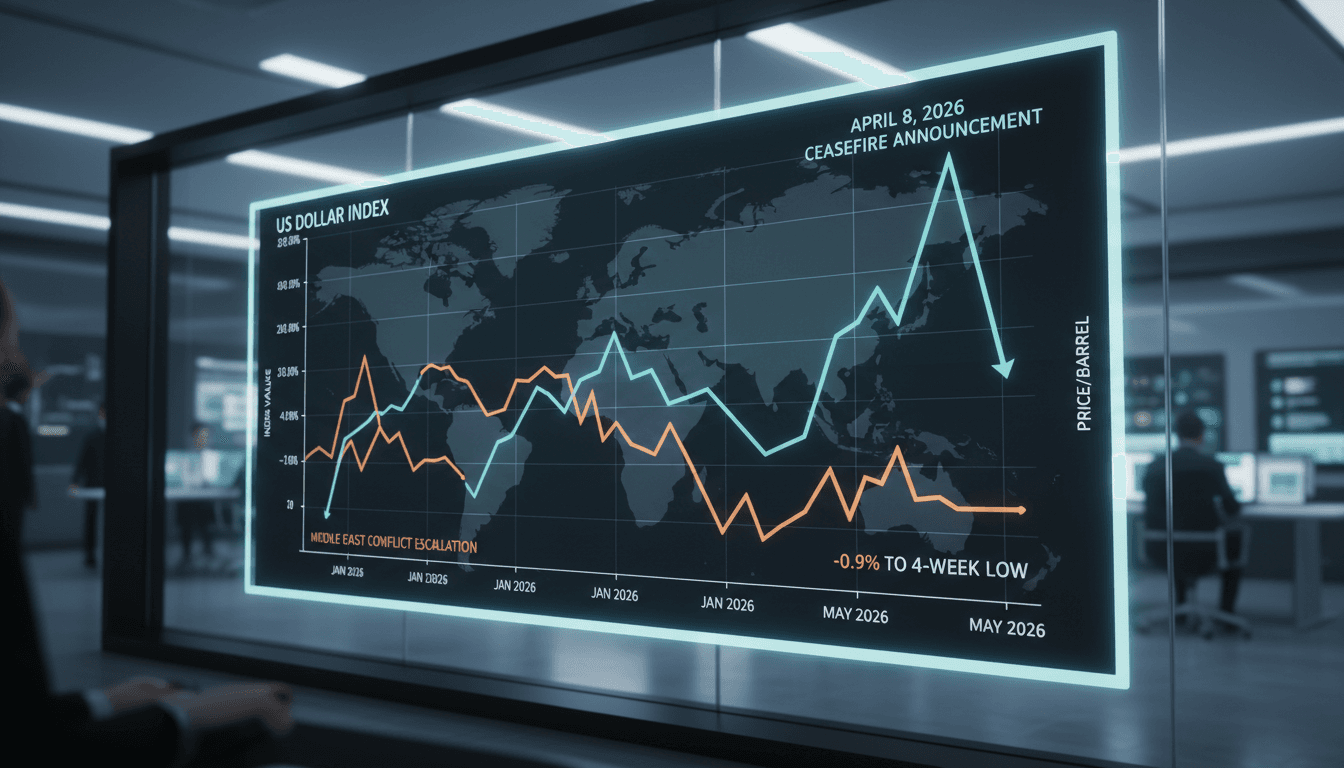
- Dollar slid 0.9% to a four-week low following a ceasefire announcement between the U.S. and Iran.
- Oil prices dropped 15% below $100 per barrel, alleviating inflation concerns.
- Global stocks surged, with S&P 500 futures rising by 2% and Nikkei up by 5%.
The context you actually need
- Conflict origins: The U.S.-Iran conflict began in late February 2026, escalating after U.S. and Israeli strikes prompted Iran to blockade the Strait of Hormuz.
- Safe-haven surge: During the conflict, the dollar strengthened as investors sought safety amid rising oil prices, which surged by 50% in March.
- Ceasefire implications: The recent ceasefire, contingent on Iran reopening the Strait of Hormuz, has reduced immediate geopolitical risks, leading to a decline in dollar demand.
What's really happening
The recent decline of the U.S. dollar is intricately tied to the evolving geopolitical landscape surrounding the U.S.-Iran conflict. Initially, the dollar gained strength as investors flocked to safe-haven assets amid heightened tensions and soaring oil prices. The conflict, which began with U.S. and Israeli military actions against Iran, resulted in a blockade of the Strait of Hormuz—critical for global oil transit. This blockade caused oil prices to spike by 50% in March, intensifying inflation fears and positioning the dollar as the preferred currency for safe-haven investments.
However, the announcement of a two-week ceasefire on April 7, 2026, significantly shifted market sentiment. This ceasefire, contingent on Iran reopening the Strait of Hormuz, marked a reduction in geopolitical tensions, which diminished the dollar's appeal as a safe-haven asset. The immediate market reaction was notable: the U.S. Dollar Index fell to 98.956, its lowest point in a month, as traders recalibrated their expectations in light of the ceasefire. Concurrently, oil prices plummeted to $96.39 per barrel, alleviating some inflationary pressures and prompting a rally in global stock markets.
The ceasefire has also led to a complex interplay of reactions among key stakeholders. While global stocks surged and U.S. Treasuries rallied, analysts remain cautious. They warn that the market rally may be short-lived without a lasting peace agreement. The focus now shifts to the upcoming negotiations in Islamabad, where the future of the ceasefire and the reopening of the Strait of Hormuz will be discussed.
Moreover, the U.S. government, led by President Trump, has expressed optimism about a long-term accord, citing Iran's 10-point plan as "workable." However, skepticism remains, particularly among UAE officials who have voiced distrust in Tehran's commitments. This skepticism reflects broader concerns about the stability of the region and the potential for renewed conflict, which could once again bolster the dollar as a safe-haven asset.
In summary, the dollar's decline is a direct response to reduced geopolitical risks, but the underlying tensions in the region remain unresolved, leaving the future uncertain.
Who feels it first (and how)
- Global traders: Currency traders will adjust their strategies based on the dollar's performance and emerging market trends.
- Oil importers: Companies relying on oil imports will benefit from lower prices, impacting their operational costs.
- Investors in equities: Stock market investors will experience volatility as market sentiment shifts with geopolitical developments.
What to watch next
- Ceasefire negotiations: The outcome of talks in Islamabad will be crucial for determining the future of the ceasefire and its impact on the dollar.
- Oil price trends: Continued fluctuations in oil prices will influence inflation rates and the dollar's safe-haven status.
- Market reactions: Watch for shifts in global stock markets and treasury yields as new information emerges regarding the conflict.
The U.S. dollar has declined following the ceasefire announcement.
Oil prices will continue to fluctuate based on geopolitical developments.
The long-term stability of the ceasefire and its implications for the dollar remain uncertain.
Frequently Asked Questions
- Why it matters?
- The decline of the U.S. dollar signals changing geopolitical tensions that can affect global markets and inflation rates.
- What happened (in 30 seconds)?
- Dollar slid 0.9% to a four-week low following a ceasefire announcement between the U.S. and Iran. Oil prices dropped 15% below $100 per barrel, alleviating inflation concerns. Global stocks surged, with S&P 500 futures rising by 2% and Nikkei up by 5%.
- What's really happening?
- The recent decline of the U.S. dollar is intricately tied to the evolving geopolitical landscape surrounding the U.S.-Iran conflict. Initially, the dollar gained strength as investors flocked to safe-haven assets amid heightened tensions and soaring oil prices. The conflict, which began with U.S. and Israeli military actions against Iran, resulted in a blockade of the Strait of Hormuz—critical for global oil transit. This blockade caused oil prices to spike by 50% in March, intensifying inflatio
- Who feels it first (and how)?
- Global traders: Currency traders will adjust their strategies based on the dollar's performance and emerging market trends. Oil importers: Companies relying on oil imports will benefit from lower prices, impacting their operational costs. Investors in equities: Stock market investors will experience volatility as market sentiment shifts with geopolitical developments.
- What to watch next?
- Ceasefire negotiations: The outcome of talks in Islamabad will be crucial for determining the future of the ceasefire and its impact on the dollar. Oil price trends: Continued fluctuations in oil prices will influence inflation rates and the dollar's safe-haven status. Market reactions: Watch for shifts in global stock markets and treasury yields as new information emerges regarding the conflict.
Markets desk coverage, trading insights, and investor updates.
"WSJ’s markets reporting provides in-depth analysis and context for investors."
— A47 Editor
The WSJ Dollar Index Falls 0.67% to 95.82
The WSJ Dollar Index has decreased by 0.67%, reaching a value of 95.82, marking its third consecutive day of decline. This downturn reflects ongoing volatility in the currency market, influenced by various economic factors and geopolitical tensions.
Global markets, investing, and macroeconomics from a premier financial newsroom.
"Bloomberg is respected for in-depth financial reporting and data-driven analysis."
— A47 Editor
Dollar Slides as Ceasefire Dents War’s Most High-Profile Haven
The dollar has declined against all major currencies following the announcement of a two-week ceasefire between the US and Iran, which has diminished the demand for the dollar as a safe haven asset. This agreement aims to reduce military tensions in ...