
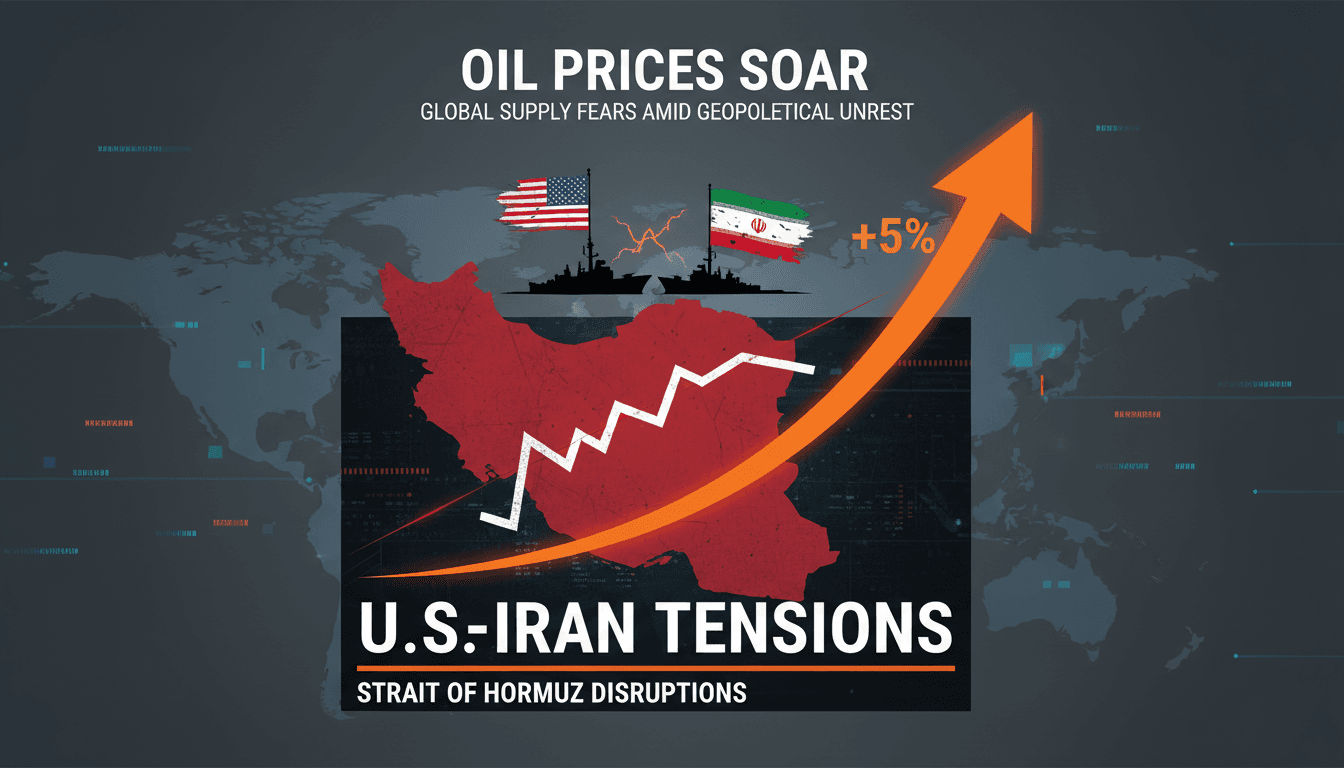
Oil prices rise over 5% amid U.S.-Iran tensions and Strait of Hormuz disruptions
Here's what it means for you.
Rising oil prices may impact global markets and consumer costs.
What happened
Oil prices increased by more than 5% due to rising tensions between the U.S. and Iran and the closure of the Strait of Hormuz.
The Context
- The U.S. and Iran are experiencing heightened military tensions.
- The Strait of Hormuz is a critical chokepoint for global oil shipments.
- Recent incidents, including the detention of an Iranian vessel, have exacerbated fears of supply disruptions.
Takeaway
Continued geopolitical instability in the region could lead to further fluctuations in oil prices.
Arabic-language coverage of international news and geopolitics.
"RT Arabic is a Russian state-funded outlet often criticized for promoting Kremlin-aligned narratives."
— A47 Editor
قفزة لأسعار النفط مع عودة إغلاق مضيق هرمز
Oil prices surged by over 5% on Monday amid rising concerns over the collapse of the ceasefire between Washington and Tehran following the detention of an Iranian ship, alongside ongoing disruptions in the Strait of Hormuz.
Algerian and regional news coverage.
"Echorouk is a major Algerian outlet with broad national reporting."
— A47 Editor
ارتفاع النفط بأكثر من 5% مع تصاعد التوترات وإغلاق مضيق هرمز
Oil prices surged by over 5%, driven by escalating tensions between the United States and Iran, alongside significant disruptions in maritime traffic through the Strait of Hormuz. Futures contracts for Brent crude rose by $5.08 per barrel, representi...
Pan-Arab news coverage spanning politics, business, sports, and regional affairs.
"Asharq Al-Awsat reflects a broad Arab editorial perspective with strong attention to regional geopolitics."
— A47 Editor
النفط يرتفع 5 % مع تجدد التوتر بين الولايات المتحدة وإيران
Oil prices surged by over 5% on Monday amid concerns over the potential collapse of the ceasefire between the United States and Iran. This increase reflects heightened tensions in the region, which could impact global oil supply and market stability.